KI-Beratung Beta

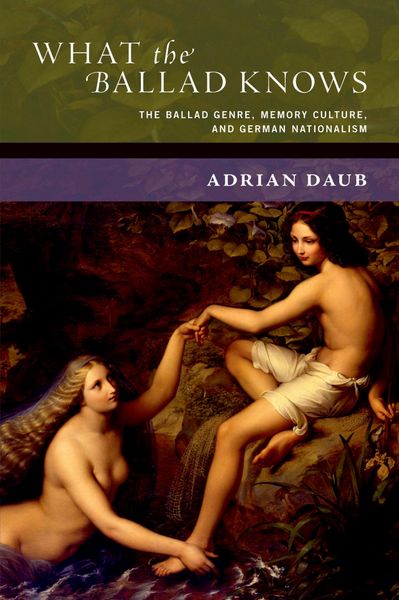
Produktbild: What the Ballad Knows

What the Ballad Knows The Ballad Genre, Memory Culture, and German Nationalism

74,60 €

inkl. gesetzl. MwSt.

Beschreibung

Over the course of the 19th century, ballads proliferated in German-speaking Europe in a truly remarkable range of contexts. Audiences were of course likely encounter balladry in the volumes of Goethe and Schiller, in various anthologies or illustrated editions. But they were just as likely to come across...

Beschreibung

Over the course of the 19th century, ballads proliferated in German-speaking Europe in a truly remarkable range of contexts. Audiences were of course likely encounter balladry in the volumes of Goethe and Schiller, in various anthologies or illustrated editions. But they were just as likely to come across objects billed as ballads in recitation evenings by popular actors, in song-settings by Schubert and Loewe, in piano pieces by Chopin, in the opera house and the concert hall, in mass-produced drawings, paintings and even chinaware. Ballads were poems one could use - schoolteachers used them to train their students' memory (or punish them), women composers used them to assert their place in the musical canon, actors used them to bolster their income, mothers used them to put their children to sleep. Ballads intersected with gender and class, promising to democratize art, while in fact helping make distinctions. In What the Ballad Knows: The Ballad Genre, Memory Culture and German Nationalism, Adrian Daub tells the story of this itinerant genre across media, periods, regions and social strata and shows that, even though it was often positioned as an authentic product of "German spirit," the ballad frequently unsettled and subverted the national project. The popular imagination rooted these poems in pre-modern oral culture, among bards and peasants in the everyday life of common folk. But in fact nineteenth-century ballads were in the end all about modernity - modern modes of association, of attention, of dissemination.

Produktdetails

Format

ePUB

Kopierschutz

Ja

Family Sharing

Nein

Text-to-Speech

Ja

Produktdetails

Format

ePUB

Format

eBooks im ePUB-Format erlauben eine dynamische Anpassung des Inhalts an die jeweilige Display-Größe des Lesegeräts. Das Format eignet sich daher besonders für das Lesen auf mobilen Geräten, wie z.B. Ihrem tolino, Tablets oder Smartphones.

Kopierschutz

Ja

Kopierschutz

Zum Lesen dieses eBooks auf Geräten der tolino Familie sowie auf sonstigen eReadern und am PC benötigen Sie eine ByteBook-ID. Weitere Hinweise zum Lesen von kopiergeschützten eBooks finden Sie unter Hilfe/Downloads.

Family Sharing

Nein

Family Sharing

Mit Family Sharing können Sie eBooks innerhalb Ihrer Familie (max. sechs Mitglieder im gleichen Haushalt) teilen. Sie entscheiden selbst, welches Buch Sie mit welchem Familienmitglied teilen möchten. Auch das parallele Lesen durch verschiedene Familienmitglieder ist durch Family Sharing möglich. Um eBooks zu teilen oder geteilt zu bekommen, muss jedes Familienmitglied ein Konto bei Thalia oder einem anderen tolino-Buchhändler haben. Weitere Informationen finden Sie unter Hilfe/Family-Sharing.

Text-to-Speech

Ja

Text-to-Speech

Bedeutet Ihnen Stimme mehr als Text? Mit der Funktion Text-to-Speech können Sie sich im tolino webReader und in der aktuellen Thalia – Lesen & Hören App das eBook vorlesen lassen. Weitere Informationen finden Sie unter Hilfe/Text-to-Speech.

Erscheinungsdatum

12.08.2022

Verlag Oxford University Press
Seitenzahl

320 (Printausgabe)

Dateigröße

5393 KB

Sprache

Englisch

EAN

9780190885519

Barrierefreiheit
  • keine Information zur Barrierefreiheit bekannt

Noch keine Bewertungen vorhanden

Verfassen Sie die erste Bewertung zu diesem Artikel

Helfen Sie anderen Kundinnen und Kunden durch Ihre Meinung.

Kundinnen und Kunden meinen

Bewertungen (0)

Weitere Artikel finden Sie in

Die Leseprobe wird geladen.
  • Produktbild: What the Ballad Knows