KI-Beratung Beta

Gutscheinbedingungen

**Gültig am 27.11.2026 auf Spielzeug, Schreibwaren, Filme, Geschenke & Trends, Musik, tolino eReader & Zubehör, Hörbücher und Hörbuch-Downloads, nicht preisgebundene Bücher und Kalender online auf thalia.at und in der Thalia App. Einzelne Artikel können ausgeschlossen sein. Aufgrund der Buchpreisbindung sind deutschsprachige Bücher und eBooks ausgenommen. Zusätzlich ausgenommen sind Abos & Flatrates, Games, Geschenkkarten/-boxen, Shelfies, Software, Zeitschriften sowie einzelne Artikel von tonies®. Pro Einkauf einmal einlösbar. Click & Collect nur bei Onlinevorabzahlung möglich. Keine Barauszahlung. Nicht kombinierbar mit anderen Aktionen und Gutscheinen. Gutschein wird auf max. 500€ Bestellwert angerechnet. Nicht gültig für Versandkosten und Services.

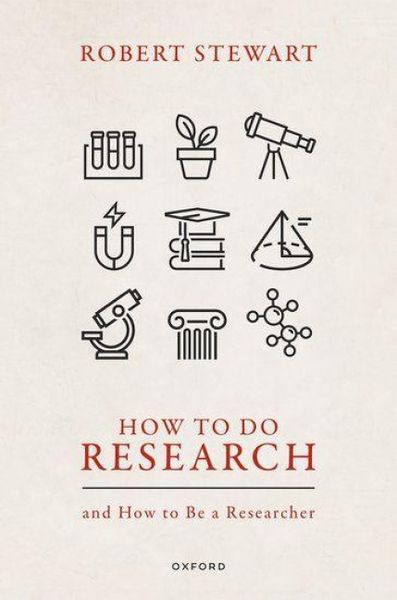
Produktbild: How to Do Research

How to Do Research and How to Be a Researcher

32,99 €

inkl. gesetzl. MwSt., Versandkostenfrei


Beschreibung

There are many textbooks on research methods, plenty of books on popular science, and specialist texts on a whole range of academic fields. However, few bring these together as a framework for a career involving research, and few attempt a practical appraisal of the challenges and opportunities involved...

Beschreibung

There are many textbooks on research methods, plenty of books on popular science, and specialist texts on a whole range of academic fields. However, few bring these together as a framework for a career involving research, and few attempt a practical appraisal of the challenges and opportunities involved in being 'a researcher'. Here, the principles underlying humanity's past and continuing acquisition of knowledge are illustrated across a variety of academic fields, from history to quantum physics - telling stories of clever and inventive people with good ideas, but also of personalities, politics, and power. This book draws together these strands to provide an informal and concise account of knowledge acquisition in all its guises.
Having set out what research hopes to achieve, and why we are all researchers at heart, early chapters describe the basic principles underlying this - ways of thinking which may date back to the philosophers of the Athenian marketplace but are still powerful influences on the way research is carried out today. Drawing on a broad range of disciplines, Stewart takes the reader well beyond the pure 'scientific method', which might work well enough in physics or chemistry but falls apart in life sciences, let alone humanities. Later chapters consider the realities of carrying out research and the ways in which these continue to shape its progress - researchers and their personalities, their employers, funding, publication, political forces, and power structures.
Written in an accessible and engaging style, this book is for anyone embarking on a research project or beginning to think about a career involving research, and for those in need of refocusing on why they started research in the first place.

Rezension

New and Noteworthy! The Lunar and Planetary Information Bulletin

Produktdetails

Einband

Gebundene Ausgabe

Erscheinungsdatum

24.11.2022

Verlag Oxford University Press
Seitenzahl

272

Produktdetails

Einband

Gebundene Ausgabe

Erscheinungsdatum

24.11.2022

Verlag Oxford University Press
Seitenzahl

272

Maße (L/B/H)

16,3/24,1/2,1 cm

Gewicht

614 g

Sprache

Englisch

ISBN

978-0-19-286865-7

EU-Ansprechpartner

Kolibri 360 GmbH
Ettore-Bugatti-Straße 6-14
51149 Köln
DE
produktsicherheit@kolibri360.de

Herstelleradresse

Oxford University Press
Great Clarendon Street
OX2 6DP Oxford
GB
EXPORTtradequeries@oup.com

Noch keine Bewertungen vorhanden

Verfassen Sie die erste Bewertung zu diesem Artikel

Helfen Sie anderen Kundinnen und Kunden durch Ihre Meinung.

Kundinnen und Kunden meinen

Bewertungen (0)

  • Produktbild: How to Do Research
    • 1: Introduction
    • 2: Origin stories
    • 3: God or clockwork? The importance of ignorance
    • 4: Careful observation
    • 5: Ideas under pressure
    • 6: Choosing a solution
    • 7: The ideal and the reality
    • 8: Consensus
    • 9: Designing research - from description to theory-building
    • 10: Designing research - experiments
    • 11: Designing research - alternatives to experiments
    • 12: Designing research - RandD
    • 13: Communication 1 - getting published
    • 14: Communication 2 - getting known
    • 15: Money
    • 16: Power and politics
    • 17: How to be a researcher - some conclusions