Gutscheinbedingungen

**Gültig von 22.06.2026 ab 19 Uhr bis 23.06.2026 24 Uhr auf Spielzeug, Schreibwaren, Filme, Geschenke & Trends, Musik, tolino eReader & Zubehör, Hörbücher und Hörbuch-Downloads (außer Abo), nicht preisgebundene Bücher und Kalender online auf thalia.at und in der Thalia App. Einzelne Artikel können ausgeschlossen sein. Aufgrund der Buchpreisbindung sind deutschsprachige Bücher und eBooks ausgenommen. Zusätzlich ausgenommen sind preisgebundene Artikel, Abos & Flatrates, eBooks, Games, Geschenkkarten/-boxen, Shelfies, Software, Zeitschriften sowie einzelne Artikel von tonies®. Pro Einkauf einmal einlösbar. Click & Collect nur bei Onlinevorabzahlung möglich. Keine Barauszahlung. Nicht kombinierbar mit anderen Aktionen und Gutscheinen. Gutschein wird auf max. 500€ Bestellwert angerechnet. Nicht gültig für Versandkosten und Services.

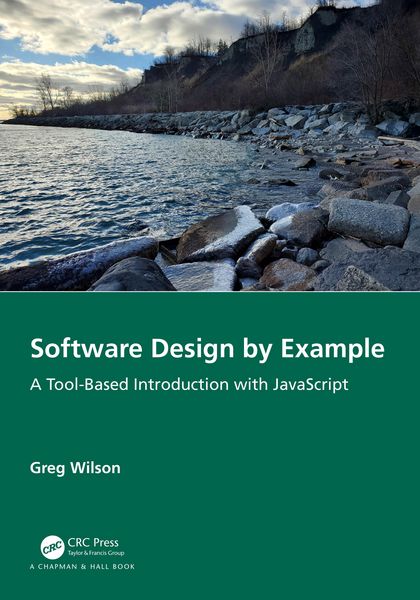
Produktbild: Software Design by Example

Software Design by Example A Tool-Based Introduction with JavaScript

62,99 €

inkl. gesetzl. MwSt., Versandkostenfrei


Beschreibung

Produktdetails

Einband

Taschenbuch

Erscheinungsdatum

29.12.2022

Abbildungen

schwarz-weiss Illustrationen, Zeichnungen, schwarz-weiss

Verlag

Taylor & Francis

Seitenzahl

339

Maße (L/B/H)

25,2/17,6/2,2 cm

Gewicht

617 g

Sprache

Englisch

ISBN

978-1-03-233023-5

Beschreibung

Produktdetails

Einband

Taschenbuch

Erscheinungsdatum

29.12.2022

Abbildungen

schwarz-weiss Illustrationen, Zeichnungen, schwarz-weiss

Verlag

Taylor & Francis

Seitenzahl

339

Maße (L/B/H)

25,2/17,6/2,2 cm

Gewicht

617 g

Sprache

Englisch

ISBN

978-1-03-233023-5

Herstelleradresse

Libri GmbH
Europaallee 1
36244 Bad Hersfeld
DE

Email: gpsr@libri.de

Kundinnen und Kunden meinen

0 Bewertungen

Informationen zu Bewertungen

Zur Abgabe einer Bewertung ist eine Anmeldung im Konto notwendig. Die Authentizität der Bewertungen wird von uns nicht überprüft. Wir behalten uns vor, Bewertungstexte, die unseren Richtlinien widersprechen, entsprechend zu kürzen oder zu löschen.

Die Bewertungen sind nach Format, Anzahl Sterne und Datum sortiert.

Verfassen Sie die erste Bewertung zu diesem Artikel

Helfen Sie anderen Kund*innen durch Ihre Meinung

Kundinnen und Kunden meinen

0 Bewertungen filtern

Die Leseprobe wird geladen.
  • Produktbild: Software Design by Example
  • 1. Introduction. 1.1. Who is our audience? 1.2. What tools and ideas do we cover? 1.3. How are these lessons laid out? 1.4. How did we get here? 1.5. How can people use and contribute to this material? 1.6. Who helped us? 2. Systems Programming. 2.1. How can we list a directory? 2.2. What is a callback function? 2.3. What are anonymous functions? 2.4. How can we select a set of files? 2.5. How can we copy a set of files? 2.6. Exercises. 3. Asynchronous Programming. 3.1. How can we manage asynchronous execution? 3.2. How do promises work? 3.3. How can we chain operations together? 3.4. How are real promises different? 3.5. How can we build tools with promises? 3.6. How can we make this more readable? 3.7. How can we handle errors with asynchronous code? 3.8. Exercises. 4. Unit Testing. 4.1. How should we structure unit testing? 4.2. How can we separate registration, execution, and reporting? 4.3. How should we structure test registration? 4.4. How can we build a command-line interface for testing? 4.5. Exercises. 5. File Backup. 5.1. How can we uniquely identify files? 5.2. How can we back up files? 5.3. How can we track which files have already been backed up? 5.4. How can we test code that modifies files? 5.5. Exercises. 6. Data Tables. 6.1. How can we implement data tables? 6.2. How can we test the performance of our implementations? 6.3. What is the most efficient way to save a table? 6.4. Does binary storage improve performance? 6.5. Exercises. 7. Pattern Matching. 7.1. How can we match query selectors? 7.2. How can we implement a simple regular expression matcher? 7.3. How can we implement an extensible matcher? 7.4. Exercises. 8. Parsing Expressions. 8.1. How can we break text into tokens? 8.2. How can we turn a list of tokens into a tree? 8.3. Exercises. 9. Page Templates. 9.1. What will our system look like? 9.2. How can we keep track of values? 9.3. How do we handle nodes? 9.4. How do we implement node handlers? 9.5. How can we implement control flow? 9.6. How did we know how to do all of this? 9.7. Exercises. 10. Build Manager. 10.1. What's in a build manager? 10.2. Where should we start? 10.3. How can we specify that a file is out of date? 10.4. How can we update out-of-date files? 10.5. How can we add generic build rules? 10.6. What should we do next? 10.7. Exercises. 11. Layout Engine. 11.1. How can we size rows and columns? 11.2. How can we position rows and columns? 11.3. How can we render elements? 11.4. How can we wrap elements to fit? 11.5. What subset of CSS will we support? 11.6. Exercises. 12. File Interpolator. 12.1. How can we evaluate JavaScript dynamically? 12.2. How can we manage files? 12.3. How can we find files? 12.4. How can we interpolate pieces of code? 12.5. What did we do instead? 12.6. Exercises. 13. Module Loader. 13.1. How can we implement namespaces? 13.2. How can we load a module? 13.3. Do we need to handle circular dependencies? 13.4. How can a module load another module? 13.5. Exercises. 14. Style Checker. 14.1. How can we parse JavaScript to create an AST? 14.2. How can we find things in an AST? 14.3. How can we apply checks? 14.4. How does the AST walker work? 14.5. How else could the AST walker work? 14.6. What other kinds of analysis can we do? 14.7. Exercises. 15. Code Generator. 15.1. How can we replace a function with another function? 15.2. How can we generate JavaScript? 15.3. How can we count how often functions are executed? 15.4. How can we time function execution? 15.5. Exercises. 16. Documentation Generator. 16.1. How can we extract documentation comments? 16.2. What input will we try to handle? 16.3. How can we avoid duplicating names? 16.4. Exercises. 17. Module Bundler. 17.1. What will we use as test cases? 17.2. How can we find dependencies? 17.3. How can we safely combine several files into one? 17.4. How can files access each other? 17.5. Exercises. 18. Package Manager. 18.1. What is semantic versioning? 18.2. How can we find a consistent set of packages? 18.3. How can we satisfy constraints? 18.4. How can we do less work? 18.5. Exercises. 19. Virtual Machine. 19.1. What is the architecture of our virtual machine? 19.2. How can we execute these instructions? 19.3. What do assembly programs look like? 19.4. How can we store data? 19.5. Exercises. 20. Debugger. 20.1. What is our starting point? 20.2. How can we make a tracing debugger? 20.3. How can we make the debugger interactive? 20.4. How can we test an interactive application? 20.5. Exercises. 21. Conclusion.