KI-Beratung Beta

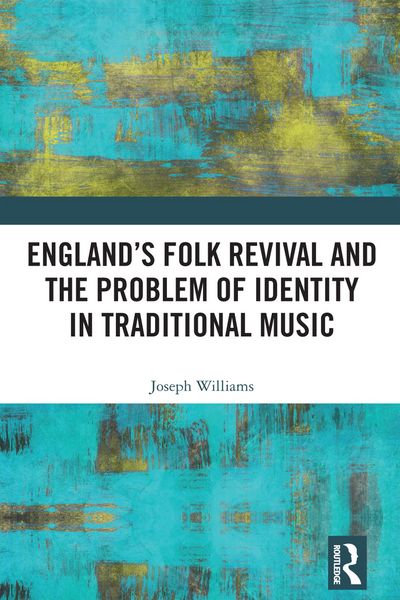
Produktbild: England's Folk Revival and the Problem of Identity in Traditional Music

England's Folk Revival and the Problem of Identity in Traditional Music

61,70 €

inkl. gesetzl. MwSt.

Beschreibung

Establishing an intersection between the fields of traditional music studies, English folk music history and the philosophy of Gilles Deleuze and Félix Guattari, this book responds to the problematic emphasis on cultural identity in the way traditional music is understood and valued.

Williams locates...

Beschreibung

Establishing an intersection between the fields of traditional music studies, English folk music history and the philosophy of Gilles Deleuze and Félix Guattari, this book responds to the problematic emphasis on cultural identity in the way traditional music is understood and valued.

Williams locates the roots of contemporary definitions of traditional music, including UNESCO-designated intangible cultural heritage, in the theory of English folk music developed in 1907 by Cecil Sharp. Through a combination of Deleuzian philosophical analysis and historical revision of England's folk revival of the Victorian and Edwardian eras, Williams makes a compelling argument that identity is a restrictive ideology that runs counter to the material processes of traditional music's production. Williams reimagines Sharp's appropriation of Darwinian evolutionary concepts, asking what it would mean today to say that traditional music 'evolves', in light of recent advances in evolutionary theory. The book ultimately advances a concept of traditional music that eschews the term's long-standing ontological and axiological foundations in the principle of identity.

For scholars and graduate students in musicology, cultural studies, and ethnomusicology, the book is an ambitious and provocative challenge to entrenched habits of thought in the study of traditional music and the historiography of England's folk revival.

Produktdetails

Format

PDF

Kopierschutz

Ja

Family Sharing

Nein

Text-to-Speech

Nein

Produktdetails

Format

PDF

Format

eBooks im PDF-Format haben eine festgelegte Seitengröße und eignen sich daher nur bedingt zum Lesen auf einem tolino eReader oder Smartphone. Für den vollen Lesegenuss empfehlen wir Ihnen bei PDF-eBooks die Verwendung eines Tablets oder Computers.

Kopierschutz

Ja

Kopierschutz

Zum Lesen dieses eBooks auf Geräten der tolino Familie sowie auf sonstigen eReadern und am PC benötigen Sie eine ByteBook-ID. Weitere Hinweise zum Lesen von kopiergeschützten eBooks finden Sie unter Hilfe/Downloads.

Family Sharing

Nein

Family Sharing

Mit Family Sharing können Sie eBooks innerhalb Ihrer Familie (max. sechs Mitglieder im gleichen Haushalt) teilen. Sie entscheiden selbst, welches Buch Sie mit welchem Familienmitglied teilen möchten. Auch das parallele Lesen durch verschiedene Familienmitglieder ist durch Family Sharing möglich. Um eBooks zu teilen oder geteilt zu bekommen, muss jedes Familienmitglied ein Konto bei Thalia oder einem anderen tolino-Buchhändler haben. Weitere Informationen finden Sie unter Hilfe/Family-Sharing.

Text-to-Speech

Nein

Text-to-Speech

Bedeutet Ihnen Stimme mehr als Text? Mit der Funktion Text-to-Speech können Sie sich im tolino webReader und in der aktuellen Thalia – Lesen & Hören App das eBook vorlesen lassen. Weitere Informationen finden Sie unter Hilfe/Text-to-Speech.

Erscheinungsdatum

12.08.2022

Verlag Taylor & Francis eBooks
Seitenzahl

230 (Printausgabe)

Auflage

1. Auflage

Sprache

Englisch

EAN

9781000582574

Barrierefreiheit
  • navigierbares Inhaltsverzeichnis
  • kurze Alternativtexte (z.B. für Abbildungen) vorhanden
  • keine Vorlesefunktionen des Lesesystems deaktiviert
  • navigierbarer Index
  • Seitennummerierung folgt dem gedruckten Werk

Noch keine Bewertungen vorhanden

Verfassen Sie die erste Bewertung zu diesem Artikel

Helfen Sie anderen Kundinnen und Kunden durch Ihre Meinung.

Kundinnen und Kunden meinen

Bewertungen (0)

Weitere Artikel finden Sie in

Die Leseprobe wird geladen.
  • Produktbild: England's Folk Revival and the Problem of Identity in Traditional Music