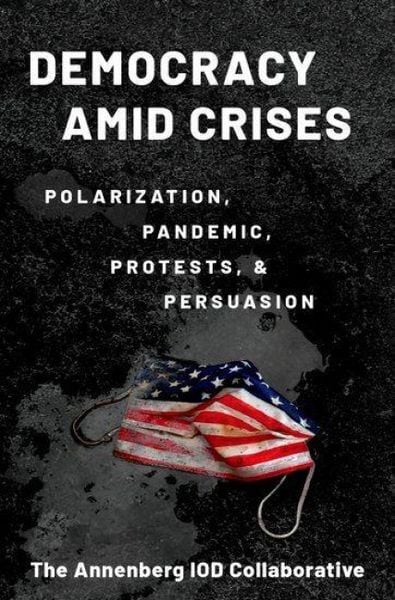
Democracy Amid Crises Polarization, Pandemic, Protests, and Persuasion
-
- Taschenbuch ausgewählt
- eBook
-
Sprache:Englisch
35,99 €
inkl. gesetzl. MwSt.,
Beschreibung
Produktdetails
Einband
Taschenbuch
Erscheinungsdatum
13.01.2023
Verlag
Oxford University PressSeitenzahl
488
Maße (L/B/H)
23,4/15,6/2,3 cm
Gewicht
814 g
Sprache
Englisch
ISBN
978-0-19-764470-6
A data-rich analysis of how the four inter-related crises of 2020 -- the COVID-19 pandemic, the economic collapse and K-shaped recovery, the clashes over the legacy of racism and policing, and assaults on the legitimacy of democratic institutions (abetted by conspiracy theories) -- shaped not only the 2020 election, but also the future of our democracy. The 2020 election cycle was one of the most tumultuous in the nation's history. Early in the cycle, a global pandemic hit the US, paralyzing much of the economy and raising a multitude of questions about how people would go about voting. Then, beginning in late spring, a series of police brutality cases set off a nationwide wave of protests and civil disturbances related to racial justice concerns. In the final phase, the president of the United States refused to accept the results and incited his followers to storm the US Capitol. How did all of these momentous events shape voters' opinions? And what impact did they have on the outcome? To answer these questions, Kathleen Hall Jamieson and her collaborators surveyed 9,000 Americans over the course of the year to determine how voters reacted to the events on the ground, the campaigns' attempts at persuasion, and the post-election chaos that followed Biden's victory. Generally, American voters saw the multitude of crises through the lens of their polarized partisan predispositions. But why? Jamieson and her co-authors first stress that America has multiple electorates, and they are exposed to different informational environments. The divergent messages they received shaped not only their vote choice, but also how they made sense of these crises. Interestingly, though, while many voters were locked in place by their partisan priors, a majority of those who ended up voting for either Biden or Trump were unsure of their choice and whether they would actually vote at some point during the year. What led to both the wavering in people's choices and the attitudes they eventually adopted were in large part due to the differing media environments enveloping them: the messages from the campaigns, from their family and friends, as well from those in mass and social media. But this is not a simple story of "echo chambers," where individuals are immersed in only one type of media -- far from it. The distinct media environments in which these electorates experienced the election were in fact complex and varied, and the interaction between these different types of media was key. Indeed, most voters were subject to cross-cutting information pressures and not only one type of partisan source. This book's focus on the ebb and flow of the campaign over time and the centrality of wavering voters makes this an authoritative and essential account of one of the most momentous American elections ever.
Noch keine Bewertungen vorhanden
Verfassen Sie die erste Bewertung zu diesem Artikel
Helfen Sie anderen Kundinnen und Kunden durch Ihre Meinung.
Kurze Frage zu unserer Seite
Vielen Dank für Ihr Feedback
Wir nutzen Ihr Feedback, um unsere Produktseiten zu verbessern. Bitte haben Sie Verständnis, dass wir Ihnen keine Rückmeldung geben können. Falls Sie Kontakt mit uns aufnehmen möchten, können Sie sich aber gerne an unseren Kund*innenservice wenden.
zum Kundenservice