Gutscheinbedingungen

**Gültig bis 25.08.2026 ab einem Mindestbestellwert von 30€ auf Spielzeug, Schreibwaren, Filme, Geschenke & Trends, Musik, tolino eReader & Zubehör, Hörbücher und Hörbuch-Downloads (außer Abo), nicht preisgebundene Bücher und Kalender online auf thalia.at und in der Thalia App. Einzelne Artikel können ausgeschlossen sein. Aufgrund der Buchpreisbindung sind deutschsprachige Bücher und eBooks ausgenommen. Zusätzlich ausgenommen sind preisgebundene Artikel, Abos & Flatrates, eBooks, Games, Geschenkkarten/-boxen, Shelfies, Software, Zeitschriften sowie einzelne Artikel von tonies®. Pro Einkauf einmal einlösbar. Click & Collect nur bei Onlinevorabzahlung möglich. Keine Barauszahlung. Nicht kombinierbar mit anderen Aktionen und Gutscheinen. Gutschein wird auf max. 500€ Bestellwert angerechnet. Nicht gültig für Versandkosten und Services. Preisgebundene Artikel sind vom Mindestbestellwert ausgeschlossen.

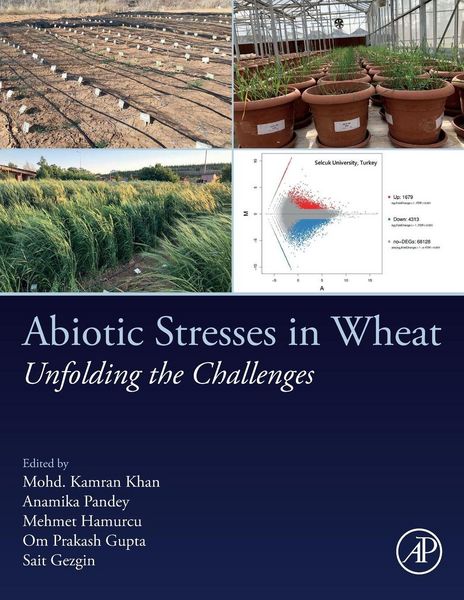
  • Produktbild: Abiotic Stresses in Wheat
  • Produktbild: Abiotic Stresses in Wheat
- 13%

Abiotic Stresses in Wheat Unfolding the Challenges

13% sparen

155,99 € UVP 180,00 €

inkl. gesetzl. MwSt., Versandkostenfrei


Beschreibung

Produktdetails

Einband

Taschenbuch

Erscheinungsdatum

27.01.2023

Herausgeber

Mohd. Kamran Khan + weitere

Verlag

Elsevier Science & Technology

Seitenzahl

454

Maße (L/B/H)

27,9/21,6/2,3 cm

Gewicht

1046 g

Sprache

Englisch

ISBN

978-0-323-95368-9

Beschreibung

Produktdetails

Einband

Taschenbuch

Erscheinungsdatum

27.01.2023

Herausgeber

Verlag

Elsevier Science & Technology

Seitenzahl

454

Maße (L/B/H)

27,9/21,6/2,3 cm

Gewicht

1046 g

Sprache

Englisch

ISBN

978-0-323-95368-9

Herstelleradresse

Libri GmbH
Europaallee 1
36244 Bad Hersfeld
DE

Email: gpsr@libri.de

Noch keine Bewertungen vorhanden

Verfassen Sie die erste Bewertung zu diesem Artikel

Helfen Sie anderen Kundinnen und Kunden durch Ihre Meinung.

Kundinnen und Kunden meinen

Bewertungen (0)

Die Leseprobe wird geladen.
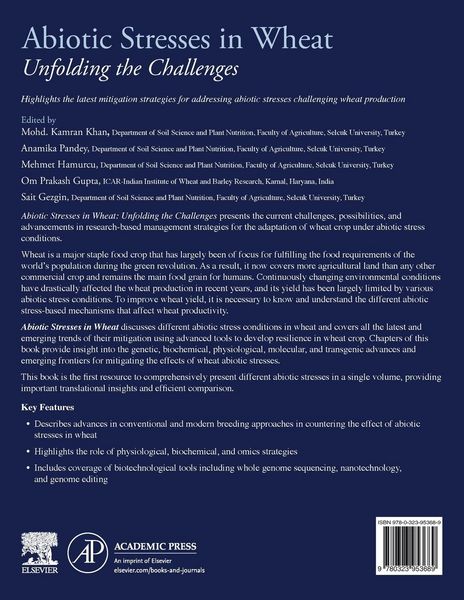
  • Produktbild: Abiotic Stresses in Wheat
  • Produktbild: Abiotic Stresses in Wheat
  • 1. Wheat and abiotic stress challenges: an overview
    2. Mitigation of abiotic stress tolerance in wheat through conventional breeding
    3. Speed breeding: a powerful tool for mitigating abiotic stresses in wheat
    4. Marker assisted breeding for abiotic stress tolerance in wheat crop
    5. Epigenetics and abiotic stress tolerance in wheat crops: consequences and application
    6. Physiological and biochemical approaches for mitigating the effect of abiotic stresses in wheat
    7. Role of phytohormones in regulating abiotic stresses in wheat
    8. Abiotic stresses induced ROS production in Wheat: Consequences, survival mechanisms and mitigation strategies
    9. Regulation of circadian for enhancing abiotic stress tolerance in wheat
    10. Changes in root behaviour of wheat species under abiotic stress conditions
    11. Role of photosynthesis in regulating abiotic stress conditions in wheat
    12. CRISPR-Cas Genome Editing for the Development of Abiotic Stress Tolerance in Wheat
    13. Functional genomics approaches for combating the effect of abiotic stresses in wheat
    14. Role of Transcriptomics in countering the effect of abiotic stresses in wheat
    15. Patterns of protein expression in wheat under stress conditions and its identification by proteomics tools
    16. Crosstalk between small-RNAs and wheat abiotic stresses
    17. Combined abiotic stresses in wheat species
    18. Wheat responses to radiation stress and its adaptive mechanism
    19. Advancement in mitigating the effects of drought stress in wheat
    20. Advancement in mitigating the effects of heavy metals toxicity in wheat
    21. Advancement in mitigating the effects of boron stress in wheat
    22. Advancement in mitigating the effects of waterlogging stress in wheat
    23. Advancement of transgenic wheat (Triticum aestivum L.) to survive against abiotic stresses in the era of the changing climate
    24. Plant-microbes interactions in wheat to deal with abiotic stress
    25. Role of nanotechnology in combating abiotic stresses in wheat
    26. Climate change as a cause of abiotic stresses in wheat