KI-Beratung Beta

Gutscheinbedingungen

**Gültig bis 30.11.2026 auf Spielzeug, Schreibwaren, Filme, Geschenke & Trends, Musik, tolino eReader & Zubehör, Hörbücher und Hörbuch-Downloads, nicht preisgebundene Bücher und Kalender online auf thalia.at und in der Thalia App. Einzelne Artikel können ausgeschlossen sein. Aufgrund der Buchpreisbindung sind deutschsprachige Bücher und eBooks ausgenommen. Zusätzlich ausgenommen sind Abos & Flatrates, Games, Geschenkkarten/-boxen, Shelfies, Software, Zeitschriften sowie einzelne Artikel von tonies®. Pro Einkauf einmal einlösbar. Nur gültig mit im Onlineshop hinterlegter Bonuscard. Click & Collect nur bei Onlinevorabzahlung möglich. Keine Barauszahlung. Nicht kombinierbar mit anderen Aktionen und Gutscheinen. Gutschein wird auf max. 500€ Bestellwert angerechnet. Nicht gültig für Versandkosten und Services.

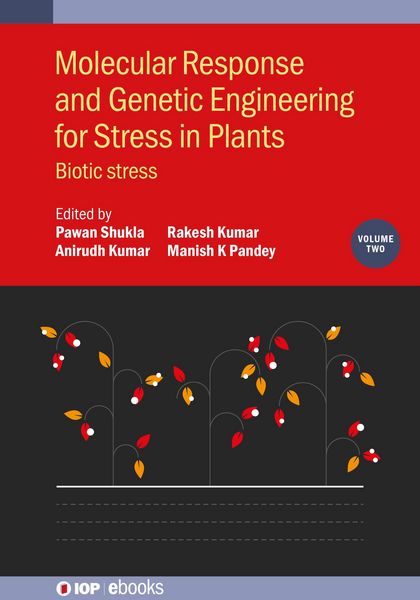
  • Produktbild: Molecular Response and Genetic Engineering for Stress in Plants, Volume 2
  • Produktbild: Molecular Response and Genetic Engineering for Stress in Plants, Volume 2

Molecular Response and Genetic Engineering for Stress in Plants, Volume 2 Biotic stress

139,99 €

inkl. gesetzl. MwSt., Versandkostenfrei


Beschreibung

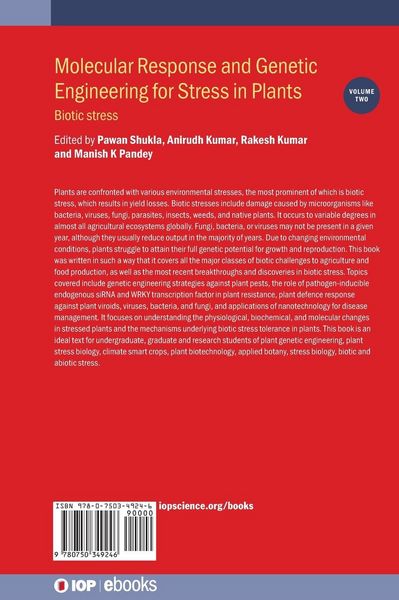
Plants are confronted with various environmental stresses, the most prominent of which is biotic stress, which results in yield losses. Biotic stresses include damage caused by microorganisms like bacteria, viruses, fungi, parasites, insects, weeds, and native plants. It occurs to variable degrees in...

Beschreibung

Plants are confronted with various environmental stresses, the most prominent of which is biotic stress, which results in yield losses. Biotic stresses include damage caused by microorganisms like bacteria, viruses, fungi, parasites, insects, weeds, and native plants. It occurs to variable degrees in almost all agricultural ecosystems globally. Fungi, bacteria, or viruses may not be present in a given year, although they usually reduce output in the majority of years. Due to changing environmental conditions, plants struggle to attain their full genetic potential for growth and reproduction. This book focuses on understanding the physiological, biochemical, and molecular changes in stressed plants and the mechanisms underlying biotic stress tolerance in plants.

Key Features:

  • Explains the different molecular mechanisms and genetic engineering strategies which have been developed and adopted to cope with consistent environmental changes and global climate change.
  • It explores the latest developments concerning abiotic and biotic stress response at the molecular level for the improvement of crop quality and sustainable agriculture.
  • It presents an exploration of the challenges and conceivable solutions to improve yields of the staple of food crops using data on agricultural sciences and omics technology.
  • It discovers how the better understanding of molecular mechanisms of plant response to different stress would be used to improve the quantitative and qualitative features of crop plants and allied areas.
  • There will be an inclusion of end-of-chapter problems and case studies.

Produktdetails

Einband

Gebundene Ausgabe

Erscheinungsdatum

14.11.2022

Abbildungen

With figures in colour and black and white

Herausgeber Pawan Shukla + weitere

Produktdetails

Einband

Gebundene Ausgabe

Erscheinungsdatum

14.11.2022

Abbildungen

With figures in colour and black and white

Herausgeber
Verlag Institute Of Physics Publishing
Seitenzahl

300

Maße (L/B/H)

25,4/17,8/1,8 cm

Gewicht

721 g

Sprache

Englisch

ISBN

978-0-7503-4924-6

Herstelleradresse

Libri GmbH
Europaallee 1
36244 Bad Hersfeld
DE

Email: gpsr@libri.de

Noch keine Bewertungen vorhanden

Verfassen Sie die erste Bewertung zu diesem Artikel

Helfen Sie anderen Kundinnen und Kunden durch Ihre Meinung.

Kundinnen und Kunden meinen

Bewertungen (0)

Weitere Artikel finden Sie in

Die Leseprobe wird geladen.
  • Produktbild: Molecular Response and Genetic Engineering for Stress in Plants, Volume 2
  • Produktbild: Molecular Response and Genetic Engineering for Stress in Plants, Volume 2