KI-Beratung Beta

Gutscheinbedingungen

**Gültig am 27.11.2026 auf Spielzeug, Schreibwaren, Filme, Geschenke & Trends, Musik, tolino eReader & Zubehör, Hörbücher und Hörbuch-Downloads, nicht preisgebundene Bücher und Kalender online auf thalia.at und in der Thalia App. Einzelne Artikel können ausgeschlossen sein. Aufgrund der Buchpreisbindung sind deutschsprachige Bücher und eBooks ausgenommen. Zusätzlich ausgenommen sind Abos & Flatrates, Games, Geschenkkarten/-boxen, Shelfies, Software, Zeitschriften sowie einzelne Artikel von tonies®. Pro Einkauf einmal einlösbar. Click & Collect nur bei Onlinevorabzahlung möglich. Keine Barauszahlung. Nicht kombinierbar mit anderen Aktionen und Gutscheinen. Gutschein wird auf max. 500€ Bestellwert angerechnet. Nicht gültig für Versandkosten und Services.

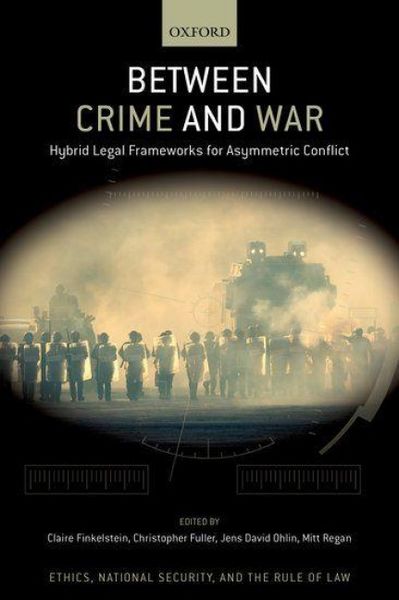
Produktbild: Between Crime and War

Between Crime and War Hybrid Legal Frameworks for Asymmetric Conflict

185,99 €

inkl. gesetzl. MwSt., Versandkostenfrei


Beschreibung

The threat posed by the recent rise of transnational non-state armed groups does not fit easily within either of the two basic paradigms for state responses to violence. The civilian paradigm focuses on the interception of demonstrable immediate threats to the safety of others. The military paradigm...

Beschreibung

The threat posed by the recent rise of transnational non-state armed groups does not fit easily within either of the two basic paradigms for state responses to violence. The civilian paradigm focuses on the interception of demonstrable immediate threats to the safety of others. The military paradigm focuses on threats posed by collective actors who pose a danger to the state's ability to maintain basic social order and, at times, the very existence of the state. While the United States has responded to the threat posed by non-state armed groups by using tools from both paradigms, it has placed substantially more emphasis on the military paradigm than have other states. While several reasons may contribute to this approach, one may be the assumption that a state must use each set of tools strictly according in accordance with the principles that underlie each paradigm. Implicit in this assumption may be the sense that the only alternative to the civilian paradigm is the unqualified military one. The chapters in this book suggest, however that we need not see the options as confined to this binary choice. It may be profitable to consider borrowing elements from each paradigm on some occasions to act more expansively than the conventional civilian paradigm allows, but less expansively than the conventional military paradigm would permit. At the same time, the mixing of the categories comes with its own ethical and legal risks that should be scrutinized.

Produktdetails

Einband

Gebundene Ausgabe

Erscheinungsdatum

11.12.2022

Herausgeber Ohlin Jens David + weitere
Verlag Oxford University Press

Produktdetails

Einband

Gebundene Ausgabe

Erscheinungsdatum

11.12.2022

Herausgeber
Verlag Oxford University Press
Seitenzahl

592

Maße (L/B/H)

24,1/16/4,1 cm

Gewicht

960 g

Sprache

Englisch

ISBN

978-0-19-763879-8

Herstelleradresse

Libri GmbH
Europaallee 1
36244 Bad Hersfeld
DE

Email: gpsr@libri.de

Noch keine Bewertungen vorhanden

Verfassen Sie die erste Bewertung zu diesem Artikel

Helfen Sie anderen Kundinnen und Kunden durch Ihre Meinung.

Kundinnen und Kunden meinen

Bewertungen (0)

Die Leseprobe wird geladen.
  • Produktbild: Between Crime and War
    • Forward
    • Lieutenant General Charles N. Pede
    • Introduction
    • Jens David Ohlin and Mitt Regan
    • Part I: The Framework Problem in Modern Conflict: Can we Still Distinguish War From Crime?
    • Chapter 1. Non-State Actors, Terrorism, and the War Paradigm Revisited
    • Seth Cantey
    • Chapter 2. The Limits of Law and the Value of Rights in Addressing Terrorism: A Study of the UN Counter-Terrorism Architecture
    • Fionnuala Ní Aoláin
    • Chapter 3. The Paradox of Discrimination: When More Violence Triggers Fewer Legal Constraints
    • Jens David Ohlin
    • Chapter 4. Fighting Terrorism under All Applicable Law
    • Joshua Andresen
    • Chapter 5. When Conflict Recurs: Classification of Conflict when Hostilities Break Out Anew
    • Laurie Blank
    • Part II: War as Criminal Enforcement
    • Chapter 6. Non-State Actors in a Post-War World: Conceptualizing War as Criminal Enforcement
    • Claire Finkelstein
    • Chapter 7. Urban Warfare: Policing Conflict
    • Ken Watkin
    • Chapter 8. Ratchet Down or Ramp Up? Contemporary Threats, Armed Conflict, and Tailored Authority
    • Geoff Corn
    • Chapter 9. Using Law as a Weapon Against Nuclear Proliferation and Terrorism: The U.S. Government's Financial Lawfare Against Iran
    • Orde F. Kittrie
    • Chapter 10. Human Rights Law as an Alternative to Jus in Bello
    • Christopher J. Fuller
    • Part III: Fighting Crime as War
    • Chapter 11. National Security Policymaking in the Shadow of International Law
    • Laura Dickinson
    • Chapter 12. Emerging Transnational Self-Defense Norms and Unrealized Liberal Values
    • John Dehn
    • Chapter 13. Finding Peace in the Law of War
    • Lieutenant Colonel Bailey Brown
    • Chapter 14. From Armed Conflict to Countering Threat Networks: Counterterrorism and Social Network Analysis
    • Todd Huntley and Mitt Regan
    • Part IV: crime and war: prosecuting terrorism and war crimes
    • Chapter 15. Counting the Ripples: The Challenge of Extraterritorial Jurisdiction to Prosecute Non-State Actors
    • Evan R. Seamone
    • Chapter 16. Diversifying the Sources of Evidence in Terrorism Cases Before Criminal Courts in (Post-)Conflict and High-Risk Situations: The Role of The Military
    • Bibi Van Ginkel, Christophe Paulussen, and Tanya Mehra
    • Chapter 17. U.S. Military Prosecutions During Non-International Armed Conflict
    • Chris Jenks