KI-Beratung Beta

Gutscheinbedingungen

**Gültig am 27.11.2026 auf Spielzeug, Schreibwaren, Filme, Geschenke & Trends, Musik, tolino eReader & Zubehör, Hörbücher und Hörbuch-Downloads, nicht preisgebundene Bücher und Kalender online auf thalia.at und in der Thalia App. Einzelne Artikel können ausgeschlossen sein. Aufgrund der Buchpreisbindung sind deutschsprachige Bücher und eBooks ausgenommen. Zusätzlich ausgenommen sind Abos & Flatrates, Games, Geschenkkarten/-boxen, Shelfies, Software, Zeitschriften sowie einzelne Artikel von tonies®. Pro Einkauf einmal einlösbar. Click & Collect nur bei Onlinevorabzahlung möglich. Keine Barauszahlung. Nicht kombinierbar mit anderen Aktionen und Gutscheinen. Gutschein wird auf max. 500€ Bestellwert angerechnet. Nicht gültig für Versandkosten und Services.

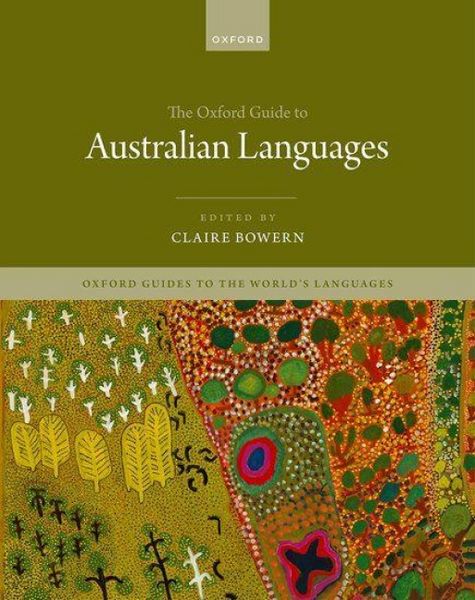
Produktbild: The Oxford Guide to Australian Languages

The Oxford Guide to Australian Languages

259,99 €

inkl. gesetzl. MwSt., Versandkostenfrei


Beschreibung

This book is a wide-ranging reference work covering the more than 550 Indigenous languages of Australia. The chapters in the book explore typology and classification; linguistic structures; sociolinguistics and language variation; and language in the community. The final part offers sketches of a selection...

Beschreibung

This book is a wide-ranging reference work covering the more than 550 Indigenous languages of Australia. The chapters in the book explore typology and classification; linguistic structures; sociolinguistics and language variation; and language in the community. The final part offers sketches of a selection of languages, sub-groups, and families.

Produktdetails

Einband

Gebundene Ausgabe

Erscheinungsdatum

13.09.2023

Herausgeber Claire Bowern
Verlag Oxford Academic

Produktdetails

Einband

Gebundene Ausgabe

Erscheinungsdatum

13.09.2023

Herausgeber Claire Bowern
Verlag Oxford Academic
Seitenzahl

1178

Maße (L/B/H)

17/24,4/7,1 cm

Gewicht

2880 g

Sprache

Englisch

ISBN

978-0-19-882497-8

Herstelleradresse

Libri GmbH
Europaallee 1
36244 Bad Hersfeld
DE

Email: gpsr@libri.de

Noch keine Bewertungen vorhanden

Verfassen Sie die erste Bewertung zu diesem Artikel

Helfen Sie anderen Kundinnen und Kunden durch Ihre Meinung.

Kundinnen und Kunden meinen

Bewertungen (0)

  • Produktbild: The Oxford Guide to Australian Languages
    • Detailed contents
    • Series preface
    • Abbreviations and conventions
    • The contributors
    • Language maps
    • Australian language families and linguistic classifications
    • Foreword
    • 1: Claire Bowern: Introduction
    • Part I: Background
    • 2: Clara Stockigt: A history of the early description of Australian languages
    • 3: Nicholas Thieberger: Documentation of Australian languages
    • 4: Rachel Nordlinger: Australian languages and syntactic theory
    • 5: Luisa Miceli and Claire Bowern: Australian languages and interdisciplinary approaches to the past
    • 6: Clara Stockigt: Nineteenth-century classifications of Australian languages
    • 7: Claire Bowern: How many languages are and were spoken in Australia?
    • 8: John Giacon and Harold Koch: Philological methods for Australian languages
    • Part II: Structures
    • A: Phonetics and phonology
    • 9: Marija Tabain: Articulatory and acoustic phonetics
    • 10: Erich R. Round: Segment inventories
    • 11: Erich R. Round: Phonotactics
    • 12: Erich R. Round: Morphophonology: Lenition and assimilation
    • 13: Erich R. Round: Nasal cluster dissimilation
    • 14: Kathleen Jepson and Thomas Ennever: Lexical stress
    • 15: Janet Fletcher: Intonation
    • 16: Barry Alpher: Sound change
    • B: Morphosyntax
    • 17: Oliver Shoulson: Word classes
    • 18: Dana Louagie: The noun phrase
    • 19: Amalia Skilton: Noun classes
    • 20: Vivien Dunn and Felicity Meakins: Ergativity
    • 21: Jane Simpson: Semantic case
    • 22: Maïa Ponsonnet: Possession
    • 23: Dana Louagie: Demonstratives
    • 24: Alice Gaby and Oliver Shoulson: Pronouns
    • 25: Juhyae Kim: Adjectives and adverbs
    • 26: David Osgarby and Claire Bowern: Complex predication and serialization
    • 27: Harold Koch: Conjugation classes
    • 28: Parker Brody: Agreement morphology
    • 29: Erich R. Round and Xavier Bach: Suppletion
    • 30: Stef Spronck: Valency change and causation
    • 31: Alice Gaby: Reflexives and reciprocals
    • 32: James Bednall: Tense and aspect
    • 33: James Bednall: Modality and mood
    • 34: Josh Phillips: Negation
    • 35: Magda Andrews-Hoke and Parker Brody: Word order
    • 36: Juhyae Kim and Claire Bowern: Questions
    • 37: Marie-Elaine van Egmond: Subordination
    • 38: Rachel Hendery: Relative clauses
    • 39: Jessica Denniss: Antipassives
    • 40: Barry Alpher and Claire Bowern: Morphological change
    • C: Semantics, pragmatics, and discourse
    • 41: Margit Bowler and Ivan Kapitonov: Quantification
    • 42: Dorothea Hoffmann: Direction and location
    • 43: Patrick McConvell: Kinship, marriage, and skins
    • 44: Katherine Rosenberg, Jane Simpson, and Claire Bowern: Toponyms
    • 45: Joe Blythe and Ilana Mushin: Discourse and social interaction
    • 46: Francesca Merlan: Narrative
    • 47: Maïa Ponsonnet: Interjections
    • 48: Michael Walsh: Insults and compliments
    • 49: Katherine Rosenberg and Claire Bowern: Language names
    • Part III: Sociolinguistics and language variation
    • 50: Jennifer Green, Inge Kral, and Sally Treloyn: The verbal arts in Indigenous Australia
    • 51: John Mansfield: Sociolinguistic variation
    • 52: Jennifer Green: Australian Indigenous sign languages
    • 53: John Bradley and Alice Gaby: Gender-based dialects
    • 54: Jill Vaughan: Multilingualism
    • 55: Amanda Hamilton-Hollaway: Code-switching
    • 56: Denise Angelo: Language contact
    • 57: Greg Dickson: Kriol
    • 58: Carmel O'Shannessy: Young people's varieties
    • 59: Michael Walsh: Restricted respect registers and auxiliary languages
    • 60: Lucinda Davidson, Barbara Kelly, Gillian Wigglesworth, and Rachel Nordlinger: Language input and child-directed speech
    • Part IV: Language in the Community
    • 61: Rob Amery: Language policy, planning, and standardization
    • 62: Gillian Wigglesworth and Samantha Disbray: Indigenous children's language practices in Australia
    • 63: Catherine Bow: Technology for Australian languages
    • 64: Maryanne Gale: Language revival
    • 65: Rob Amery and Maryanne Gale: Language, land, identity, and well-being
    • Part V: Structural sketches of languages, subgroups, and families
    • 66: Denise Angelo: Contact language case studies
    • 67: Nicholas Evans and Alexandra Marley: The Gunwinyguan languages
    • 68: Marie-Elaine van Egmond: Anindilyakwa
    • 69: Stef Spronck: Languages of the Kimberley region
    • 70: Margaret Carew and David Felipe Guerrero Beltran: The Maningrida languages
    • 71: K. Eira: Living languages of Victoria
    • 72: Jean-Christophe Verstraete: Lamalamic (Paman)
    • 73: Margaret Sharpe: The Bandialangic languages and dialects
    • 74: Denise Smith-Ali, Sue Hanson, George Hayden, Claire Bowern, Akshay Aitha, Lydia Ding, and Sarah Mihuc: Noongar
    • 75: Sarah Babinski, Luis-Miguel Rojas-Berscia, and Claire Bowern: The Wati (Western Desert) subgroup of Pama-Nyungan
    • 76: Felicity Meakins, Thomas Ennever, David Osgarby, Mitchell Browne, and Amanda Hamilton-Hollaway: Ngumpin-Yapa languages
    • 77: Doug Marmion: Wajarri
    • 78: Annie Reynolds and Theresa Sainty: The revitalization of the sleeping Tasmanian Aboriginal languages: palawa kani
    • References
    • Index