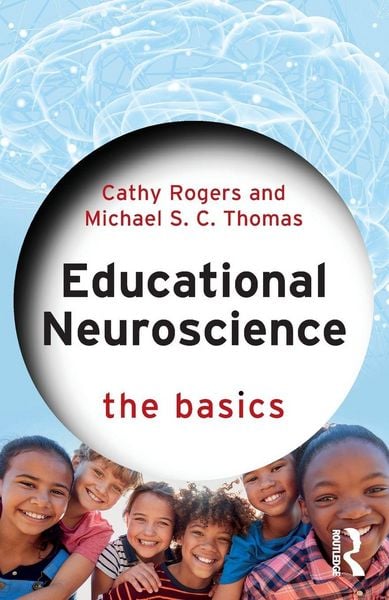
Educational Neuroscience The Basics
-
- Hardcover
- Taschenbuch ausgewählt
- eBook
-
Sprache:Englisch
-
Verlag:Taylor & Francis
22,99 €
inkl. gesetzl. MwSt.,
- Kostenlose Lieferung ab 30 € Einkaufswert
- Versandkostenfrei für Bonuscard-Kund*innen
Beschreibung
Produktdetails
Einband
Taschenbuch
Erscheinungsdatum
15.11.2022
Abbildungen
21 Line drawings, black and white; 9 Halftones, black and white; 30 Illustrations, black and white
Verlag
Taylor & FrancisSeitenzahl
226
Maße (L/B/H)
19,8/12,9/1,3 cm
Gewicht
260 g
Sprache
Englisch
ISBN
978-1-03-202855-2
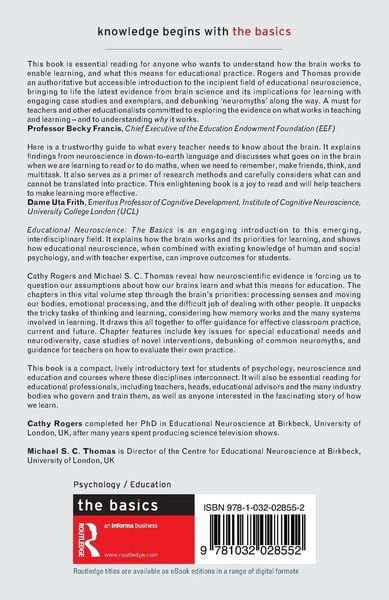
Educational Neuroscience: The Basics is an engaging introduction to this emerging, interdisciplinary field. It explains how the brain works and its priorities for learning, and shows how educational neuroscience, when combined with existing knowledge of human and social psychology, and with teacher expertise, can improve outcomes for students.
Cathy Rogers and Michael S. C. Thomas reveal how neuroscientific evidence is forcing us to question our assumptions about how our brains learn and what this means for education. The chapters in this vital volume step through the brain's priorities: processing senses and moving our bodies, emotional processing, and the difficult job of dealing with other people. It unpacks the tricky tasks of thinking and learning, considering how memory works and the many systems involved in learning. It draws this all together to offer guidance for effective classroom practice, current and future. Chapter features include key issues for special educational needs and neurodiversity, case studies of novel interventions, debunking of common neuromyths, and guidance for teachers on how to evaluate their own practice.
This book is a compact, lively introductory text for students of psychology, neuroscience and education and courses where these disciplines interconnect. It will also be essential reading for educational professionals, including teachers, heads, educational advisors and the many industry bodies who govern and train them, as well as anyone interested in the fascinating story of how we learn.
Noch keine Bewertungen vorhanden
Verfassen Sie die erste Bewertung zu diesem Artikel
Helfen Sie anderen Kundinnen und Kunden durch Ihre Meinung.
Kurze Frage zu unserer Seite
Vielen Dank für Ihr Feedback
Wir nutzen Ihr Feedback, um unsere Produktseiten zu verbessern. Bitte haben Sie Verständnis, dass wir Ihnen keine Rückmeldung geben können. Falls Sie Kontakt mit uns aufnehmen möchten, können Sie sich aber gerne an unseren Kund*innenservice wenden.
zum Kundenservice