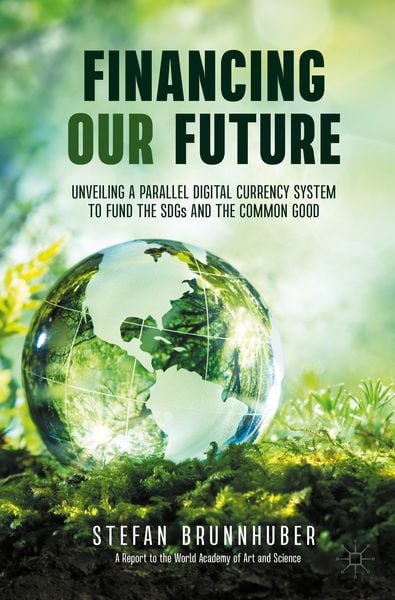
Financing Our Future Unveiling a Parallel Digital Currency System to Fund the SDGs and the Common Good
-
- Hardcover
- Taschenbuch ausgewählt
- eBook
-
Sprache:Englisch
29,99 €
inkl. gesetzl. MwSt.,
- Kostenlose Lieferung ab 30 € Einkaufswert
- Versandkostenfrei für Bonuscard-Kund*innen
Beschreibung
Produktdetails
Einband
Taschenbuch
Erscheinungsdatum
15.04.2022
Verlag
SpringerSeitenzahl
221
Maße (L/B/H)
23,5/15,5/1,5 cm
Gewicht
394 g
Auflage
1st ed. 2021
Sprache
Englisch
ISBN
978-3-030-64828-2
The monetary system is the indispensable missing link in the debate of sustainability, and whether the current financial system can handle these evolved needs. To date, the UN Sustainable Development Goals (SDGs) primarily have been financed either through the private sector, through conventional public sector taxes and fees, or through philanthropic commitment. Assuming a need of 4 to 5 trillion dollars annually in the 10 to 15 years left to finance our future, these conventional sources of finance are insufficient in terms of both the scale and speed of funding required to finance our future. Furthermore, the inherent instability of our financial system forces the world community to focus first and foremost on repairing and stabilizing the existing system.
The development of cryptocurrencies using distributed ledger technologies (mainly blockchain) has prompted leading central banks to study the potential application of this approach to independently create purchasing power. In this vein, this book offers a new approach, namely introducing a parallel electronic currency specifically designed to finance global common goods and provide the resources necessary to achieve the SDGs. Furthermore, this mechanism would have a stabilizing effect on the existing monetary system. The book argues that one way this could be achieved is by giving central banks a modified monetary mandate to inject new liquidity into the system using a top-down approach. Alternatively, liquidity could come from corporate or communal initiatives with crypto- or communal currencies in a bottom-up approach. The author maintains that by issuing a blockchain-enabled parallel electronic currency earmarked for SDG-related projects and using other channels for monetary flow rather than the conventional ones, the future could be financed in a different manner. In the long run, abandoning our current monetary monoculture and introducing a monetary ecosystem would stabilize international financial markets, increase monetary regulatory efforts, reduce negative externalities, create a social Pareto optimum and stabilize democracies. This book presents, in the same spirit as Fritjof Capra’s The Tao of Physics , a Tao of finance—an outside-of-the-box approach to financing global common goods.Noch keine Bewertungen vorhanden
Verfassen Sie die erste Bewertung zu diesem Artikel
Helfen Sie anderen Kundinnen und Kunden durch Ihre Meinung.
Kurze Frage zu unserer Seite
Vielen Dank für Ihr Feedback
Wir nutzen Ihr Feedback, um unsere Produktseiten zu verbessern. Bitte haben Sie Verständnis, dass wir Ihnen keine Rückmeldung geben können. Falls Sie Kontakt mit uns aufnehmen möchten, können Sie sich aber gerne an unseren Kund*innenservice wenden.
zum Kundenservice