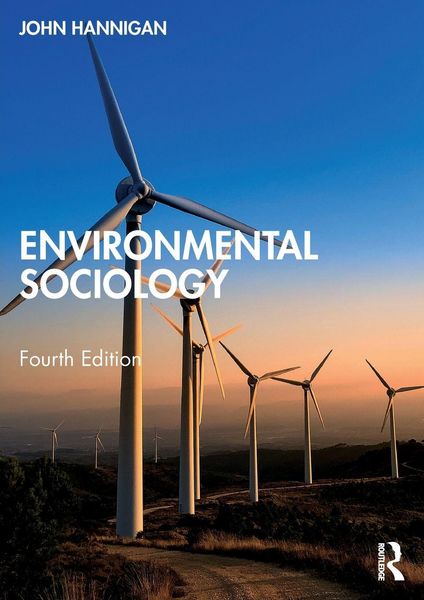
Environmental Sociology
-
- Hardcover
- Taschenbuch ausgewählt
- eBook
-
Sprache:Englisch
55,99 €
inkl. gesetzl. MwSt.,
Beschreibung
Produktdetails
Einband
Taschenbuch
Erscheinungsdatum
09.09.2022
Abbildungen
2 SW-Abb., 2 SW-Fotos, 2 Tabellen
Verlag
Taylor & FrancisSeitenzahl
242
Maße (L/B/H)
24,6/17,4/1,3 cm
Gewicht
439 g
Auflage
4. Auflage
Sprache
Englisch
ISBN
978-1-03-204559-7
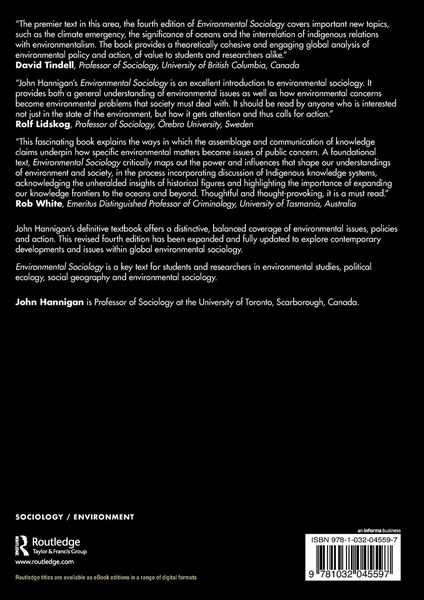
John Hannigan's definitive textbook offers a distinctive, balanced coverage of environmental issues, policies and action. This revised fourth edition has been expanded and fully updated to explore contemporary developments and issues within global environmental sociology.
Environmental Sociology reconciles Hannigan's widely cited model of the social construction of environmental problems and controversies, which states that incipient environmental issues must be identified, researched, promoted and persuasively argued in the form of "claims", with an environmental justice perspective that stresses inequality and threats to local communities. For example, this new edition explores the interconnections between indigenous communities and environmental activists via a study of the difficult relationship between Aboriginal people and environmentalists in Australia. The updated fourth edition also discusses new direct action protest groups, such as Extinction Rebellion, who have reframed the discourse around the "climate emergency" using apocalyptic language and imagery. Environmental Sociology also signposts exciting new directions for future research. The fourth edition re-interrogates the classical roots of environmental theory with a focus of the work of Alexander von Humboldt. Hannigan also asserts the need for environmental sociologists to turn their attention to "The Forgotten Ocean", arguing that the discipline should incorporate cutting-edge concepts such as marine justice, striated space and volumetrics.
Environmental Sociology is a key text for students and researchers in environmental studies, political ecology, social geography and environmental sociology.
Noch keine Bewertungen vorhanden
Verfassen Sie die erste Bewertung zu diesem Artikel
Helfen Sie anderen Kundinnen und Kunden durch Ihre Meinung.
Kurze Frage zu unserer Seite
Vielen Dank für Ihr Feedback
Wir nutzen Ihr Feedback, um unsere Produktseiten zu verbessern. Bitte haben Sie Verständnis, dass wir Ihnen keine Rückmeldung geben können. Falls Sie Kontakt mit uns aufnehmen möchten, können Sie sich aber gerne an unseren Kund*innenservice wenden.
zum Kundenservice