KI-Beratung Beta

Gutscheinbedingungen

**Gültig am 20.11.2026 ab einem Mindestbestellwert von 30€ auf Spielzeug, Schreibwaren, Filme, Geschenke & Trends, Musik, tolino eReader & Zubehör, Hörbücher und Hörbuch-Downloads, nicht preisgebundene Bücher und Kalender online auf thalia.at und in der Thalia App. Einzelne Artikel können ausgeschlossen sein. Aufgrund der Buchpreisbindung sind deutschsprachige Bücher und eBooks ausgenommen. Zusätzlich ausgenommen sind Abos & Flatrates, Games, Geschenkkarten/-boxen, Shelfies, Software, Zeitschriften sowie einzelne Artikel von tonies®. Pro Einkauf einmal einlösbar. Click & Collect nur bei Onlinevorabzahlung möglich. Keine Barauszahlung. Nicht kombinierbar mit anderen Aktionen und Gutscheinen. Gutschein wird auf max. 500€ Bestellwert angerechnet. Nicht gültig für Versandkosten und Services. Preisgebundene Artikel sind vom Mindestbestellwert ausgeschlossen.

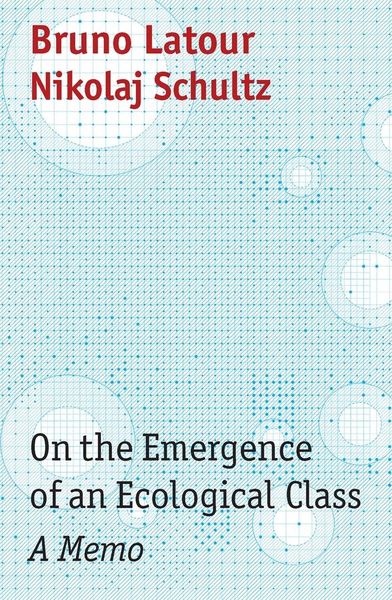
Produktbild: On the Emergence of an Ecological Class

On the Emergence of an Ecological Class A Memo

48,99 €

inkl. gesetzl. MwSt., Versandkostenfrei


Beschreibung

Under what conditions could ecology, instead of being one cluster of movements among others, organise politics around an agenda and a set of beliefs? Can ecology aspire to define the political horizon in the way that liberalism, socialism, conservatism and other political ideologies have done at various...

Beschreibung

Under what conditions could ecology, instead of being one cluster of movements among others, organise politics around an agenda and a set of beliefs? Can ecology aspire to define the political horizon in the way that liberalism, socialism, conservatism and other political ideologies have done at various times and places? What can ecology learn from history about how new political movements emerge, and how they win the struggle for ideas long before they translate their ideas into parties and elections? In this short text, consisting of seventy-six talking points, Bruno Latour and Nikolaj Schultz argue that if the ecological movement is to gain ideological consistency and autonomy it must offer a political narrative that recognises, embraces and effectively represents its project in terms of social conflict. Political ecology must accept that it brings along division. It must provide a convincing cartography of the conflicts it generates and, based on this, it must try to define a common horizon of collective action. In order to represent and describe these conflicts, Latour and Schultz propose to reuse the old notions of 'class' and 'class struggle', albeit infused with a new meaning in line with the ecological concerns of our New Climate Regime. Advancing the idea of a new ecological class, assembled by its collective interests in fighting the logic of production and safeguarding our planet's conditions of habitability, they ask: how can a proud and self-aware ecological class emerge and take effective action to shape our collective future?

Rezension

"Elusive and magnificent by turns.... There's nothing anyone can tell us about the politics of climate change that we don't already think we know, and this is a problem. All the more reason, as Schultz and Latour see it, to build a new class movement - quite possibly the last of its kind."
--Jeremy Harding, London Review of Books
 
"sharp-witted, refreshing, and deeply convincing"
--Modern Times Review
 
"this readable little book includes a number of relevant questions and insights"
--The Ecologist
 
"An insightful and timely political 'memo' addressed to all sensitive humans."
--Counterpunch
 
"This short book contains just 76 paragraphs, but each one packs a punch. Written with style and wit"
--The Revelator
Praise for the French edition:
 
"A visionary ecology...in this book, which is as incisive as it is inspiring, Bruno Latour and Nikolaj Schultz assign a political dimension to ecology."
--La Croix
 
"A guidebook for terrestrials... a book which will no doubt proudly revive the political struggle."
--Le Monde
 
"An arresting and incisive text."
--Télérama
 
"This Memo could inspire a whole new generation."
--La Vie
 
"A stimulating essay which is as concise as it is prescient, which helps us to rethink contemporary ecology."
--Blast
 
"Interesting and deserving of being widely discussed."
--L'anticapitaliste
 
"Ecologists from around the world, jump into action!"
--Nonfiction
 
"A new and stimulating book... its punchy prose is a tonic which will line the spirit with goodwill and give rise to new affective dimensions."
--L'ADN
 
"Better than Marx."
--L'AntiÉditiorial
 
"This book must be passed round and read urgently."
--COMBAT
 
Praise for the German edition:
 
"The authors reach an important climax in their search for a positive ecology, and many of their discussion points are worthy of reflection."
--Neue Zürcher Zeitung
 
"Latour and Schultz's book On the Emergence of an Ecological Class - a Memo is a manifesto and guide, and one of the most important books of our time, clarifying and showing us the way forward.
--Der Tagesspiegel
 
"This short text is the pinnacle of recently-deceased philosopher Bruno Latour's political-ecological project, which encompassed many years' work."
--Frankfurter Rundschau
 
"This ecological manifesto never loses sight of the need for literary edification."
--Berliner Zeitung

Produktdetails

Einband

Gebundene Ausgabe

Erscheinungsdatum

18.01.2023

Verlag John Wiley & Sons Inc
Seitenzahl

92

Produktdetails

Einband

Gebundene Ausgabe

Erscheinungsdatum

18.01.2023

Verlag John Wiley & Sons Inc
Seitenzahl

92

Maße (L/B/H)

19,2/12,4/1,4 cm

Gewicht

206 g

Auflage

1. Auflage

Übersetzt von

Julie Rose

Sprache

Englisch

ISBN

978-1-5095-5505-5

Herstelleradresse

Libri GmbH
Europaallee 1
36244 Bad Hersfeld
DE

Email: gpsr@libri.de

Noch keine Bewertungen vorhanden

Verfassen Sie die erste Bewertung zu diesem Artikel

Helfen Sie anderen Kundinnen und Kunden durch Ihre Meinung.

Kundinnen und Kunden meinen

Bewertungen (0)

Die Leseprobe wird geladen.
  • Produktbild: On the Emergence of an Ecological Class
  • Table of contents:I: Class struggles and classification struggles
     
    II: A prodigious extension of materialism
     
    III: The great turnaround
     
    IV: A class that's legitimate again
     
    V: A misalignment of affects
     
    VI: A different sense of history in a different cosmos
     
    VII: The ecological class is potentially in the majority
     
    VIII: The indispensable and too often abandoned battle of ideas
     
    IX: Winning power, but what kind?
     
    X: Filling the emptiness of the public space from below