KI-Beratung Beta

Gutscheinbedingungen

**Gültig am 20.11.2026 ab einem Mindestbestellwert von 30€ auf Spielzeug, Schreibwaren, Filme, Geschenke & Trends, Musik, tolino eReader & Zubehör, Hörbücher und Hörbuch-Downloads, nicht preisgebundene Bücher und Kalender online auf thalia.at und in der Thalia App. Einzelne Artikel können ausgeschlossen sein. Aufgrund der Buchpreisbindung sind deutschsprachige Bücher und eBooks ausgenommen. Zusätzlich ausgenommen sind Abos & Flatrates, Games, Geschenkkarten/-boxen, Shelfies, Software, Zeitschriften sowie einzelne Artikel von tonies®. Pro Einkauf einmal einlösbar. Click & Collect nur bei Onlinevorabzahlung möglich. Keine Barauszahlung. Nicht kombinierbar mit anderen Aktionen und Gutscheinen. Gutschein wird auf max. 500€ Bestellwert angerechnet. Nicht gültig für Versandkosten und Services. Preisgebundene Artikel sind vom Mindestbestellwert ausgeschlossen.

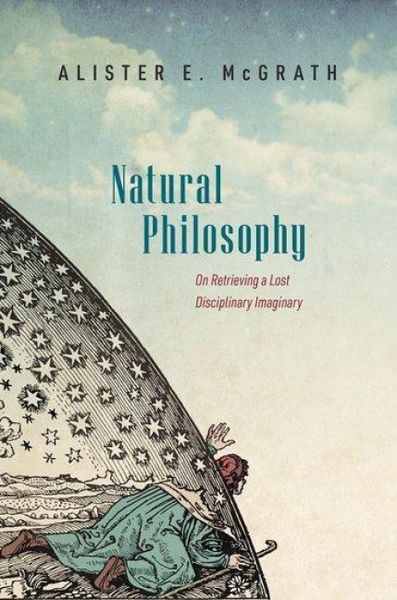
Produktbild: Natural Philosophy

Natural Philosophy On Retrieving a Lost Disciplinary Imaginary

39,99 €

inkl. gesetzl. MwSt., Versandkostenfrei


Beschreibung

Recovering the forgotten discipline of Natural Philosophy for the modern world This book argues for the retrieval of 'natural philosophy', a concept that faded into comparative obscurity as individual scientific disciplines became established and institutionalized. Natural philosophy was understood in...

Beschreibung

Recovering the forgotten discipline of Natural Philosophy for the modern world
This book argues for the retrieval of 'natural philosophy', a concept that faded into comparative obscurity as individual scientific disciplines became established and institutionalized. Natural philosophy was understood in the early modern period as a way of exploring the human relationship with the natural world, encompassing what would now be seen as the distinct disciplines of the natural sciences, mathematics, music, philosophy, and theology.
The first part of the work represents a critical conversation with the tradition, identifying the essential characteristics of natural philosophy, particularly its emphasis on both learning about and learning from nature. After noting the factors which led to the disintegration of natural philosophy during the nineteenth century, the second part of the work sets out the reasons why natural philosophy should be retrieved, and a creative and innovative proposal for how this might be done. This draws on Karl Popper's 'Three Worlds' and Mary Midgley's notion of using multiple maps in bringing together the many aspects of the human encounter with the natural world. Such a retrieved or 're-imagined' natural philosophy is able to encourage both human attentiveness and respectfulness towards Nature, while enfolding both the desire to understand the natural world, and the need to preserve the affective, imaginative, and aesthetic aspects of the human response to nature.

Rezension

In my opinion, this is McGrath's most important work to date, and might even be a candidate of 21st century classics. Michael Borowski, Reviews in Science, Religion and Theology

Produktdetails

Einband

Gebundene Ausgabe

Erscheinungsdatum

10.02.2023

Verlag Oxford University Press
Seitenzahl

258

Produktdetails

Einband

Gebundene Ausgabe

Erscheinungsdatum

10.02.2023

Verlag Oxford University Press
Seitenzahl

258

Maße (L/B/H)

23,5/15,8/2,2 cm

Gewicht

550 g

Sprache

Englisch

ISBN

978-0-19-286573-1

EU-Ansprechpartner

Kolibri 360 GmbH
Ettore-Bugatti-Straße 6-14
51149 Köln
DE
produktsicherheit@kolibri360.de

Herstelleradresse

Oxford University Press
Great Clarendon Street
OX2 6DP Oxford
GB
EXPORTtradequeries@oup.com

Noch keine Bewertungen vorhanden

Verfassen Sie die erste Bewertung zu diesem Artikel

Helfen Sie anderen Kundinnen und Kunden durch Ihre Meinung.

Kundinnen und Kunden meinen

Bewertungen (0)

Die Leseprobe wird geladen.
  • Produktbild: Natural Philosophy
    • Introduction: On Retrieving Natural Philosophy
    • Part One: A Critical Conversation with the Tradition
    • 1: The Origins of Natural Philosophy: Aristotle
    • 2: The Consolidation of Natural Philosophy: The Middle Ages
    • 3: Skywatching: The Natural Philosophy of Copernicus, Kepler, and Galileo
    • 4: English Natural Philosophy: Bacon, Boyle, and Newton
    • 5: The Parting of the Ways: From Natural Philosophy to Natural Science
    • Part Two: A Reconceived Natural Philosophy: Exploring a Disciplinary Imaginary
    • 6: Reconceiving Natural Philosophy: Laying the Foundations
    • 7: Theory: The Contemplation of Nature
    • 8: Objectivity: Understanding the External World
    • 9: Subjectivity: An Affective Engagement with Nature
    • 10: Natural Philosophy: Recasting a Vision
    • Acknowledgements
    • Works Consulted
    • Index