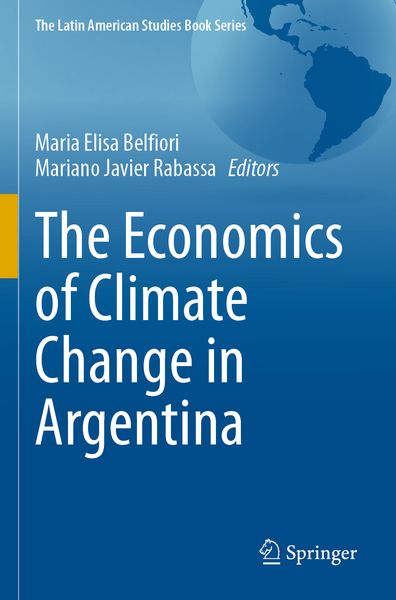
The Economics of Climate Change in Argentina
-
- Hardcover
- Taschenbuch ausgewählt
- eBook
-
Sprache:Englisch
49,99 €
inkl. gesetzl. MwSt.,
Beschreibung
Produktdetails
Einband
Taschenbuch
Erscheinungsdatum
23.03.2022
Abbildungen
XVI, 150 p. 36 illus., 30 illus. in color.
Herausgeber
Maria Elisa Belfiori + weitereVerlag
SpringerSeitenzahl
150
Maße (L/B/H)
23,5/15,5/1 cm
Gewicht
265 g
Sprache
Englisch
ISBN
978-3-030-62254-1
In this volume, the contributors discuss some of the most remarkable global warming effects in Argentina and examine policies that Latin American countries could follow to achieve their individual climate goals. Climate change is one of the most pressing issues today. However, after many years of climate negotiations, the world has failed to introduce a common global policy. Differences in countries' climate agendas have led to unsuccessful efforts. Countries willing to pursue a climate policy have sought alternative strategies to mitigate and adapt to global warming's consequences within their jurisdiction. In this context, Latin American countries' role in shaping the regional climate agenda is yet to be explored.
The book covers some papers from the well-received "First Workshop on Environmental Economics and Energy" in Argentina. Using data from Argentina, the contributors analyze the effects of global warming on agricultural yields and the impact of extreme weather on human health. From a global perspective, the contributors also describe the interactions between a reduction in carbon emissions, carbon emissions intensity, and economic growth; the role that trade policies can play to reduce carbon emissions; and the paradoxes that arise from promoting renewable energies in the region. The contributors also address the relationship between sustainability and economic growth; the private sector's role in shaping policies and providing sustainable solutions; and the Latin American challenges for the next generation.The book will be of interest to policy-makers, academics, researchers, and professionals worldwide working in climate change impacts and policy. It will also appeal to a general audience interested in climate change economics, its consequences, and the steps that countries in Latin America can take to move forward.
Noch keine Bewertungen vorhanden
Verfassen Sie die erste Bewertung zu diesem Artikel
Helfen Sie anderen Kundinnen und Kunden durch Ihre Meinung.
Kurze Frage zu unserer Seite
Vielen Dank für Ihr Feedback
Wir nutzen Ihr Feedback, um unsere Produktseiten zu verbessern. Bitte haben Sie Verständnis, dass wir Ihnen keine Rückmeldung geben können. Falls Sie Kontakt mit uns aufnehmen möchten, können Sie sich aber gerne an unseren Kund*innenservice wenden.
zum Kundenservice