Gutscheinbedingungen

**Gültig bis 06.07.2026 auf fremdsprachige Bücher online auf thalia.at, in der Thalia App ab einem Mindestbestellwert von 30€ und in allen Thalia Buchhandlungen in Österreich. In den Buchhandlungen nur gültig auf lagernde Ware. Einzelne Artikel können ausgeschlossen sein. Ausgenommen sind preisgebundene Artikel & eBooks. Pro Einkauf einmal einlösbar. Nur gültig gegen Vorlage oder im Onlineshop hinterlegter Bonuscard. Infos zur Einlösung in der Buchhandlung sind auf der Bonuscard-Vorteilspreisseite zu finden. Click & Collect nur bei Onlinevorabzahlung möglich. Keine Einlösung bei Scan & Go-Bezahlung. Keine Barauszahlung. Nicht kombinierbar mit anderen Aktionen und Gutscheinen. Gutschein wird auf max. 500€ Bestellwert angerechnet. Nicht gültig für Versandkosten und Services.

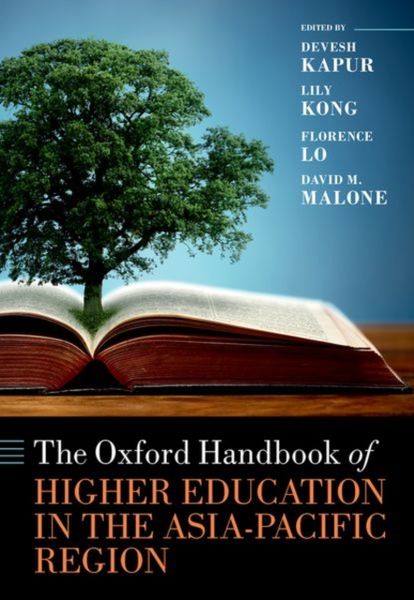
Produktbild: The Oxford Handbook of Higher Education in the Asia-Pacific Region

The Oxford Handbook of Higher Education in the Asia-Pacific Region

285,99 €

inkl. gesetzl. MwSt., Versandkostenfrei


Beschreibung

Produktdetails

Einband

Gebundene Ausgabe

Erscheinungsdatum

15.03.2023

Herausgeber

Kapur Devesh + weitere

Verlag

Oxford Academic

Seitenzahl

976

Maße (L/B/H)

25,3/18/6 cm

Gewicht

1838 g

Sprache

Englisch

ISBN

978-0-19-284598-6

Beschreibung

Produktdetails

Einband

Gebundene Ausgabe

Erscheinungsdatum

15.03.2023

Herausgeber

Verlag

Oxford Academic

Seitenzahl

976

Maße (L/B/H)

25,3/18/6 cm

Gewicht

1838 g

Sprache

Englisch

ISBN

978-0-19-284598-6

Herstelleradresse

Libri GmbH
Europaallee 1
36244 Bad Hersfeld
DE

Email: gpsr@libri.de

Noch keine Bewertungen vorhanden

Verfassen Sie die erste Bewertung zu diesem Artikel

Helfen Sie anderen Kundinnen und Kunden durch Ihre Meinung.

Kundinnen und Kunden meinen

Bewertungen (0)

Weitere Artikel finden Sie in

Die Leseprobe wird geladen.
  • Produktbild: The Oxford Handbook of Higher Education in the Asia-Pacific Region
    • Introduction

    • I. History

    • 1: Deane Neubauer: History of Higher Education in Asia-Pacific

    • II. Goals, Growth, and Massification

    • 2: Malcolm Tight: From Elite Higher Education to Massification: The Asia-Pacific Experience

    • 3: Roslyn Cameron and John Burgess: Employment and Labour Markets

    • 4: Arnoud De Meyer: Productive Workers or Better Citizens?

    • III. Who Learns?

    • 5: Prompilai Buasuwan and Arisara Leksansern: Access

    • 6: Elizabeth M. King: Gender in Higher Education in The Asia-Pacific Region: Vertical Progress, Horizontal Segregation, and a Leaky Pipeline

    • IV. What: Content and Learning in Higher Education

    • 7: Johanna Waters: The Relationship Between Credentials and Learning: A Focus on International Educational Value and Distinction

    • 8: Mikiko Nishimura: Liberal Arts and Sciences Education for the 21st Century in Asia

    • 9: Aki Yamada: STEM Field Demand and Educational Reform in Asia-Pacific Countries

    • 10: William Yat Wai Lo and Ryan M. Allen: The Rankings Game

    • 11: Sheng-Ju Chan and Hua-Chi Chou: Professional Education: Models and Issues

    • V. How and Who?

    • 12: Angela Yung Chi Hou, I-Jung Grace Lu, Karen Hui Jung Chen, and Chao Yu Guo: Quality Regulation in Higher Education in Asia-Pacific: Roles of Quality Assurance and National Qualification Frameworks

    • 13: K.C. Ho, Ravinder Sidhu, and Brenda S.A. Yeoh: Internationalisation and Education-Related Mobility in Asia-Pacific Universities

    • 14: Christopher S. Collins and Alexander H. Jones: Internationalization and Mobility: Providers, Academic Collaborators and Recognition of Qualifications

    • 15: Kris Olds: Education Hubs in the Asia-Pacific

    • 16: Melinda dela Peña Bandalaria and Alexandra Ivanovic: Open University Systems

    • 17: Helen Farley: MOOCs in Asia: Promise Unfulfilled or Promise Realised?

    • VI. Costs: Who Pays?

    • 18: Xi Wang and W. James Jacob: Public Financing

    • 19: Swee-Sum Lam: Private Philanthropy in Higher Education in Asia

    • 20: Adrian Ziderman: Student Loans in Practice: Benefits and Pitfalls of Loans Schemes in Asia

    • VII. Consequences and Challenges

    • 21: Rennie J. Moon: Returning Talent

    • 22: Youngsuk Chi and John Van Orden: Asia as a Producer of Knowledge

    • 23: Jack T. Lee: Asian Higher Education as Soft Power?

    • 24: Christopher D. Hammond: Higher Education and Nationalism in the Asia-Pacific

    • 25: Hongxia Shan and Zheng Ren: Lifelong Learning as a Globally Diffused Policy Discourse in Asia

    • VIII. Country Studies

    • 26: Wenqin Shen and Wanhua Ma: China: Historical and Contemporary Development of Higher Education

    • 27: Lan Xue, Zhen Yu, and Zhou Zhong: Elite Universities in China

    • 28: Niraja Gopal Jayal: India: History and Thrust of Overall Higher Education and Research Patterns

    • 29: Pratap Bhanu Mehta: Private Universities in India: New Dawn or False Dawn?

    • 30: Akiyoshi Yonezawa: Japan: The Changing Role of Higher Education for Nation-Building

    • 31: Miki Sugimura and Shinobu Yume Yamaguchi: Japan: Challenges in Internationalization of its Higher Education Sector

    • 32: Jang Wan Ko: Higher Education in the Republic of Korea

    • 33: S. Gopinathan and Michael H. Lee: Singapore: The Making of Higher Education in an Asian Education Hub

    • 34: Jin Jiang: Higher Education in Hong Kong: Recent Developments and Challenges

    • 35: Anthony Welch: Australia: History Versus Geography in an Evolving National System

    • 36: Kathryn A. Sutherland and Stephen J. Marshall: Education for All? Higher Education at a Crossroads in Aotearoa New Zealand

    • 37: Chiara Logli and Hermin Indah Wahyuni: Indonesia: The Politics of Equity and Quality in Higher Education

    • 38: Chang Da Wan: Higher Education in Malaysia

    • 39: Prachayani Praphamontripong Kanwar and Florence Lo: Privatized Higher Education in Thailand: In Pursuit of Legitimacy and Profitability

    • 40: Marie Lall, Camille Kandiko Howson, and Aye Aye Tun: Higher Education in Myanmar

    • 41: Maria Cynthia Rose Bautista, Vicente Paqueo, and Aniceto Orbeta Jr: Philippine Higher Education: A Case for Public-Private Complementarity in the Next Normal