KI-Beratung Beta

Gutscheinbedingungen

**Gültig bis 30.11.2026 auf Spielzeug, Schreibwaren, Filme, Geschenke & Trends, Musik, tolino eReader & Zubehör, Hörbücher und Hörbuch-Downloads, nicht preisgebundene Bücher und Kalender online auf thalia.at und in der Thalia App. Einzelne Artikel können ausgeschlossen sein. Aufgrund der Buchpreisbindung sind deutschsprachige Bücher und eBooks ausgenommen. Zusätzlich ausgenommen sind Abos & Flatrates, Games, Geschenkkarten/-boxen, Shelfies, Software, Zeitschriften sowie einzelne Artikel von tonies®. Pro Einkauf einmal einlösbar. Nur gültig mit im Onlineshop hinterlegter Bonuscard. Click & Collect nur bei Onlinevorabzahlung möglich. Keine Barauszahlung. Nicht kombinierbar mit anderen Aktionen und Gutscheinen. Gutschein wird auf max. 500€ Bestellwert angerechnet. Nicht gültig für Versandkosten und Services.

Produktbild: In the Beginning Was the State

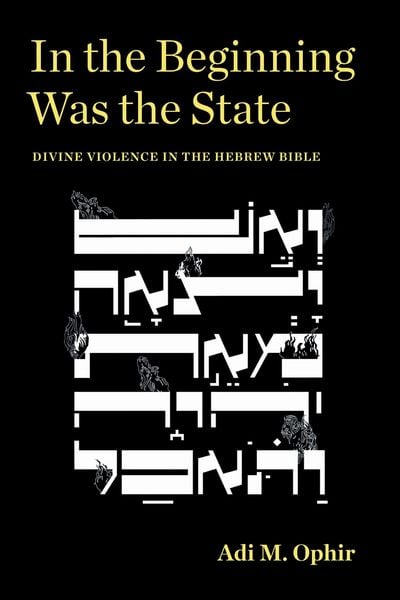
In the Beginning Was the State Divine Violence in the Hebrew Bible

34,99 €

inkl. gesetzl. MwSt., Versandkostenfrei


Beschreibung

This book explores God's use of violence as depicted in the Hebrew Bible. Focusing on the Pentateuch, it reads biblical narratives and codes of law as documenting formations of theopolitical imagination. Ophir deciphers the logic of divine rule that these documents betray, with a special attention to...

Beschreibung

This book explores God's use of violence as depicted in the Hebrew Bible. Focusing on the Pentateuch, it reads biblical narratives and codes of law as documenting formations of theopolitical imagination. Ophir deciphers the logic of divine rule that these documents betray, with a special attention to the place of violence within it. The book draws from contemporary biblical scholarship, while also engaging critically with contemporary political theory and political theology, including the work of Walter Benjamin, Giorgio Agamben, Jan Assmann, Regina Schwartz, and Michael Walzer.
Ophir focuses on three distinct theocratic formations: the rule of disaster, where catastrophes are used as means of governance; the biopolitical rule of the holy, where divine violence is spatially demarcated and personally targeted; and the rule of law where divine violence is vividly remembered and its return is projected, anticipated, and yet postponed, creating a prolonged lull for the text's present.
Different as these formations are, Ophir shows how they share an urform that anticipates the main outlines of the modern European state, which has monopolized the entire globe. A critique of the modern state, the book argues, must begin in revisiting the deification of the state, unpacking its mostly repressed theological dimension.

Produktdetails

Einband

Taschenbuch

Erscheinungsdatum

06.12.2022

Verlag Fordham University Press
Seitenzahl

336

Produktdetails

Einband

Taschenbuch

Erscheinungsdatum

06.12.2022

Verlag Fordham University Press
Seitenzahl

336

Maße (L/B/H)

15,1/22,8/2,6 cm

Gewicht

562 g

Sprache

Englisch

ISBN

978-1-5315-0141-9

Herstelleradresse

Libri GmbH
Europaallee 1
36244 Bad Hersfeld
DE

Email: gpsr@libri.de

Noch keine Bewertungen vorhanden

Verfassen Sie die erste Bewertung zu diesem Artikel

Helfen Sie anderen Kundinnen und Kunden durch Ihre Meinung.

Kundinnen und Kunden meinen

Bewertungen (0)

Die Leseprobe wird geladen.
  • Produktbild: In the Beginning Was the State
  • Acknowledgments vii
    Introduction 1
    1. Staying with the Violence 13
    Divine Violence-A Trailer, 13 - A Brief Note on Counting and Explaining
    Away, 21 - Violence, as It Is Unfolding: A Phenomenological Sketch, 24 -
    Literal Reading and the Biblical Language of Violence, 36
    2. Theocracy: The Persistence of an Ancient Lacuna 45
    Theocracy, with and beyond Flavius Josephus, 45 - The Blind Spot:
    Three Contemporary Readings of Biblical Violence, 53 - On the
    Attribution of Power and Authority, 74 - Kingship, Anarchy,
    Theocracy, 79 - Hypothesis, Method, and Stakes, 86
    3. The Rule of Disaster: Extinction, Genocides, and Other Calamities 96
    Becoming Political, 96 - From Extinction to Genocide, 99 -
    Beyond Destruction, 105 - Separation and Disaster, 113 -
    Violence and Law, 124 - The Sovereign's Moment, 130 - Scouts
    in the Land of the Giants: Three Theocratic Formations, 139
    4. Holy Power: States of Exception, Targeted Killings, and the Logic of Substitution 145
    Holiness, 145 - Rebellions in the Wilderness, 160 - Substitution
    and Containment, 178
    5. The Time of the Covenant and the Temporalization of Violence 193
    The Experimental Setting: Recalling Violence and Regulating It, 196 -
    The Covenant and the Curses, 204 - The Weight of the Present, 214 -
    The Subjects' Trap, or the People's Irony, 222 - A Midianite Utopia, 230
    Afterword: The Pentateuchal State, and Ours 241
    Notes 257
    Works Cited 317
    Index 335