KI-Beratung Beta

Gutscheinbedingungen

**Gültig bis 30.11.2026 auf Spielzeug, Schreibwaren, Filme, Geschenke & Trends, Musik, tolino eReader & Zubehör, Hörbücher und Hörbuch-Downloads, nicht preisgebundene Bücher und Kalender online auf thalia.at und in der Thalia App. Einzelne Artikel können ausgeschlossen sein. Aufgrund der Buchpreisbindung sind deutschsprachige Bücher und eBooks ausgenommen. Zusätzlich ausgenommen sind Abos & Flatrates, Games, Geschenkkarten/-boxen, Shelfies, Software, Zeitschriften sowie einzelne Artikel von tonies®. Pro Einkauf einmal einlösbar. Nur gültig mit im Onlineshop hinterlegter Bonuscard. Click & Collect nur bei Onlinevorabzahlung möglich. Keine Barauszahlung. Nicht kombinierbar mit anderen Aktionen und Gutscheinen. Gutschein wird auf max. 500€ Bestellwert angerechnet. Nicht gültig für Versandkosten und Services.

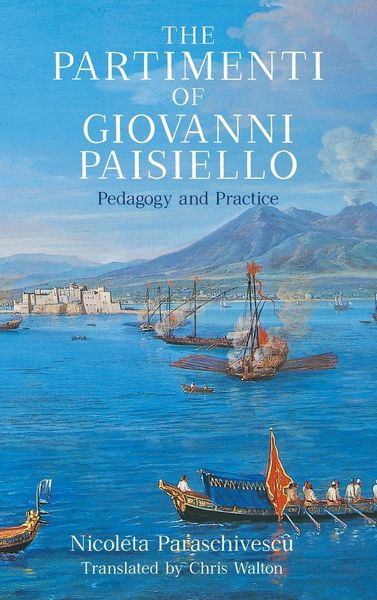
Produktbild: The Partimenti of Giovanni Paisiello

The Partimenti of Giovanni Paisiello Pedagogy and Practice

137,99 €

inkl. gesetzl. MwSt., Versandkostenfrei


Beschreibung

Reveals the brilliant musical and pedagogical thinking of the famed eighteenth- and early nineteenth-century Neapolitan composer and teacher of royal students. WINNER: The Giovanni Paisiello Festival Prize 2025 Giovanni Paisiello (1740-1816) was one of the most important composers of opera in the eighteenth...

Beschreibung

Reveals the brilliant musical and pedagogical thinking of the famed eighteenth- and early nineteenth-century Neapolitan composer and teacher of royal students. WINNER: The Giovanni Paisiello Festival Prize 2025 Giovanni Paisiello (1740-1816) was one of the most important composers of opera in the eighteenth century. His operas were performed throughout Europe, and his fame led to appointments as a maestro di cappella and composer at prominent European courts. This book is the first study to address his work as a teacher of composition and what we would today call music theory. The practice of partimento (figured or unfigured bass lines) was an integral part of the training of musicians at the renowned conservatories in eighteenth-century Naples. By employing these often-unprepossessing partimento bass lines, young musicians learned the techniques of variation, improvisation, and composition while seated at the harpsichord. Paisiello's Regole per bene accompagnare il Partimento (Rules for Harpsichordists; 1782) survives in both autograph and printed forms. It contains forty-six partimenti that have long been considered the core of his pedagogic oeuvre. However, two recently discovered manuscripts contain a further forty-one unknown partimenti, notated as two- and three-part disposizioni (realizations). The present study offers numerous insights gleaned from the surviving sources and bolsters our understanding of how to perform the music of Paisiello and his contemporaries: music that has often survived in an incomplete form. These findings are relevant not just for keyboard players but also for singers, instrumentalists, and anyone interested in the inner workings of eighteenth- and early nineteenth-century music.

Produktdetails

Einband

Gebundene Ausgabe

Erscheinungsdatum

13.09.2022

Verlag University of Rochester Press
Seitenzahl

324

Produktdetails

Einband

Gebundene Ausgabe

Erscheinungsdatum

13.09.2022

Verlag University of Rochester Press
Seitenzahl

324

Maße (L/B/H)

23,5/15,7/2,2 cm

Gewicht

574 g

Sprache

Englisch

ISBN

978-1-64825-036-1

Herstelleradresse

Libri GmbH
Europaallee 1
36244 Bad Hersfeld
DE

Email: gpsr@libri.de

Noch keine Bewertungen vorhanden

Verfassen Sie die erste Bewertung zu diesem Artikel

Helfen Sie anderen Kundinnen und Kunden durch Ihre Meinung.

Kundinnen und Kunden meinen

Bewertungen (0)

  • Produktbild: The Partimenti of Giovanni Paisiello
  • Preface and Acknowledgments Preliminary Remarks Abbreviations Illustrations Introduction Chapter 1 Giovanni Paisiello, Composer and Teacher Chapter 2 The Sources Chapter 3 Instruction at the Conservatories Chapter 4 Paisiello's Regole (1782) Chapter 5 Practical Examples from Paisiello's Circle Chapter 6 The Practical Application of Partimenti Today Afterword Appendix I Incipits and Sources for the Partimenti of Giovanni Paisiello Appendix II Concordance for the Sources of Giovanni Paisiello's Partimenti Appendix III Disposizioni à 2 and Disposizioni à 3 on Partimento Gj2319 by Giovanni Paisiello Appendix IV Partimenti from Giovanni Paisiello's Regole (1782) Appendix V Historical Realizations of Partimenti by Francesco Durante from The Vessella Manuscript and The Gallipoli Manuscript Appendix VI "Preludio" and "Rondò" in B-flat major by Giovanni Paisiello, both in the Original Version and in a Suggested Variation by This Author Appendix VII Emanuele Imbimbo: Observations sur l'enseignement mutuel (1821) Appendix VIII A Solfeggio Attributed to Giovanni Paisiello in its Original Version and with a Varied Upper Voice by This Author Appendix IX Giovanni Paisiello, Regole per bene accompagnare il Partimento, St. Petersburg, 1782 Appendix X Newly Discovered Partimenti by Giovanni PaisielloPrimary sources Manuscripts Publications Bibliography Electronic Resources Index