KI-Beratung Beta

Gutscheinbedingungen

**Gültig am 01.10.2026 ab einem Mindestbestellwert von 30€ auf Spielzeug, Schreibwaren, Filme, Geschenke & Trends, Musik, tolino eReader & Zubehör, Hörbücher und Hörbuch-Downloads, nicht preisgebundene Bücher und Kalender online auf thalia.at und in der Thalia App. Einzelne Artikel können ausgeschlossen sein. Aufgrund der Buchpreisbindung sind deutschsprachige Bücher und eBooks ausgenommen. Zusätzlich ausgenommen sind Abos & Flatrates, Games, Geschenkkarten/-boxen, Shelfies, Software, Zeitschriften sowie einzelne Artikel von tonies®. Pro Einkauf einmal einlösbar. Click & Collect nur bei Onlinevorabzahlung möglich. Keine Barauszahlung. Nicht kombinierbar mit anderen Aktionen und Gutscheinen. Gutschein wird auf max. 500€ Bestellwert angerechnet. Nicht gültig für Versandkosten und Services. Preisgebundene Artikel sind vom Mindestbestellwert ausgeschlossen.

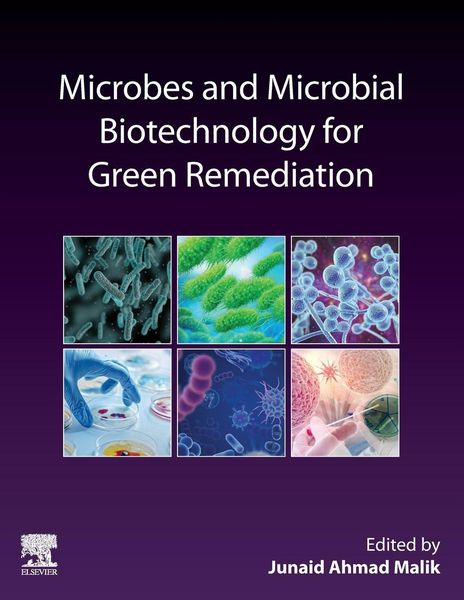
  • Produktbild: Microbes and Microbial Biotechnology for Green Remediation
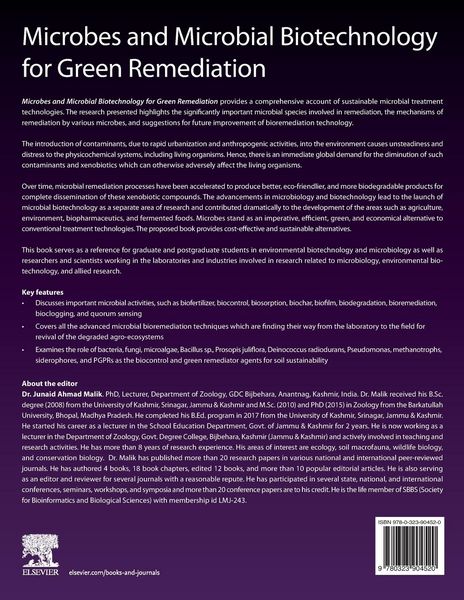
  • Produktbild: Microbes and Microbial Biotechnology for Green Remediation

Microbes and Microbial Biotechnology for Green Remediation

164,99 €

inkl. gesetzl. MwSt., Versandkostenfrei


Beschreibung

Produktdetails

Einband

Taschenbuch

Erscheinungsdatum

22.06.2022

Herausgeber

Junaid Ahmad Malik

Verlag

Elsevier Science & Technology

Seitenzahl

922

Maße (L/B/H)

27,9/21,6/4,6 cm

Gewicht

2092 g

Sprache

Englisch

ISBN

978-0-323-90452-0

Beschreibung

Portrait

Dr. Malik got his B.Sc. degree (2008) from the University of Kashmir, Srinagar, Jammu & Kashmir and M.Sc. (2010) and PhD (2015) in zoology from the Barkatullah University, Bhopal, Madhya Pradesh. He completed his B.Ed. program in 2017 from the University of Kashmir, Srinagar, Jammu & Kashmir. He started his career as a lecturer in the School Education Department, Govt. of Jammu & Kashmir for 2 years. He is now working as a lecturer in the Department of Zoology, Govt. Degree College, Bijbehara, Kashmir (Jammu & Kashmir) and actively involved in teaching and research activities. He has more than 8 years of research experience. His areas of interest are ecology, soil macrofauna, wildlife biology, and conservation biology.
Dr. Malik has published more than 20 research papers in various national and international peer-reviewed journals. He has authored 4 books, 18 book chapters, edited 12 books, and more than 10 popular editorial articles. He is also serving as an editor and a reviewer of several journals with a reasonable repute. He has participated in several state, national, and international conferences, seminars, workshops, and symposia and more than 20 conference papers are to his credit. He is the life member of SBBS (Society for Bioinformatics and Biological Sciences) with membership id LMJ-243.

Produktdetails

Einband

Taschenbuch

Erscheinungsdatum

22.06.2022

Herausgeber

Junaid Ahmad Malik

Verlag

Elsevier Science & Technology

Seitenzahl

922

Maße (L/B/H)

27,9/21,6/4,6 cm

Gewicht

2092 g

Sprache

Englisch

ISBN

978-0-323-90452-0

Herstelleradresse

Libri GmbH
Europaallee 1
36244 Bad Hersfeld
DE

Email: gpsr@libri.de

Noch keine Bewertungen vorhanden

Verfassen Sie die erste Bewertung zu diesem Artikel

Helfen Sie anderen Kundinnen und Kunden durch Ihre Meinung.

Kundinnen und Kunden meinen

Bewertungen (0)

Die Leseprobe wird geladen.
  • Produktbild: Microbes and Microbial Biotechnology for Green Remediation
  • Produktbild: Microbes and Microbial Biotechnology for Green Remediation
  • Part I. Microbial Bioremediation: An Introduction
    1. Microbial Biotechnology: An Introduction
    2. Bioremediation of Soil: An Overview
    3. Microbial Interaction With Metals And Metalloids
    4. Emerging Issues and Challenges for Microbe Assisted Remediation

    Part II. Microbes for Sustainable Agriculture and Green Remediation
    5. Microbe-Mediated Biotic and Abiotic Stress Tolerance in Crop Plants
    6. Promoting Crop Growth with Symbiotic Microbes in Agro-Ecosystems - I
    7. Promoting Crop Growth with Symbiotic Microbes in Agro-Ecosystems - II
    8. Plant Growth Promoting Rhizobacteria: An Alternative for NPK Fertilizers
    9. Biochar and its Potential Use for Bioremediation of Contaminated Soils
    10. Bioremediation with Biochar and its Microbial Aspects
    11. Role of Biofilms in Bioremediation
    12. Microalgal Adsorption of Carbon Dioxide (CO2): A Green Approach
    13. Photosynthesis in Bioremediation
    14. Lipase and Lactic Acid Bacteria for Biodegradation and Bioremediation
    15. Unique Extremophillic Bacillus: Their Application in Plant Growth Promotion and Sustainable Agriculture
    16. The Role of White Rot Fungi in Bioremediation
    17. Biodiversity and Application of Native AM Fungal Species with Rhizobacteria on Growth and Yield Enhancements in Cowpea and Aromatic Black Rice from North Eastern India
    18. Bacterial Retting Agents: Sustainable Bioremediation of Bast Fiber Farming Strains
    19. Streptomyces Sp. - A Feasible Bio-Control Agent for Sustainable Management of Crop Diseases

    Part III. Emerging Contaminants and their Remediation
    20. Microbial-Assisted Remediation of Food Processing Industry Waste
    21. Role of Biosorption Technology in Removing Cadmium from Water and Soil
    22. Role of Biosurfactants on Microbial Degradation of Oil-Contaminated Soils
    23. Bio-Clogging and Microbial Enhanced Oil Recovery (MEOR)
    24. Microbial Degradation of Phenolic Compounds
    25. Microbial Biofilm-Mediated Bioremediation of Heavy Metals: A Sustainable Approach
    26. Arsenic Accumulating and Transforming Bacteria: Isolation, Potential Use, Effects, and Transformation in Agricultural Soil
    27. Microbial Remediation of Hexavalent Chromium from the Contaminated Soils
    28. Microbial Bioremediation of Polythene and Plastics - A Green Sustainable Approach
    29. Biodegradation of Microplastics and Synthetic Polymers in Agricultural Soils
    30. Microalgae - A Promising Tool for Plastic Degradation
    31. Emerging Issues and Challenges for Plastic Bioremediation
    32. Usage of Microbes for the Degradation of Paint Contaminated Soil and Water
    33. Microbial Degradation of Pharmaceuticals and Personal Care Products
    34. Microbial Remediation of Mercury-Contaminated Soils
    35. Mercury Pollution and Bioremediation by Microbes
    36. Role of Bacterial Nanocellulose Polymer Composites on the Adsorption of Organic Dyes from Waste Water
    37. Environmental Risk Assessment of Fluoride (F) Contaminated Soil on Prosopis Juliflora Seedlings using Biochemical and Molecular Parameters
    38. Arsenic Toxicity and its Clinical Manifestations in Murshidabad District with Some Potential Remedial Measures
    39. Application of Deinococcus radiodurans for Bioremediation of Radioactive Wastes
    40. Microbial Bioremediation and Biodegradation of Radioactive Waste Contaminated Sites

    Part IV. Recent Trends and Tools
    41. New Insights of Cellulosic Ethanol Production from Lignocellulosic Feedstocks
    42. Mycorrhizal Product Glomalin: A Proficient Agent of Nutrient Sequestration And Soil Fertility Restoration under Jeopardized Agroecosystem
    43. Microbial Quorum Sensing Systems: New and Emerging Trends of Biotechnology in Bioremediation
    44. Metagenomics - A Genomic Tool For Monitoring Microbial Communities During Bioremediation
    45. Nanobioremediation: A Novel Application of Green-Nanotechnology in Environmental Clean-Up
    46. Nanotechnology and Green Nano-Synthesis for Nano-Bioremediation