
Gutscheinbedingungen

**Gültig bis 25.06.2026 auf fremdsprachige Bücher online auf thalia.at und in der Thalia App. Einzelne Artikel können ausgeschlossen sein. Ausgenommen sind preisgebundene Artikel & eBooks. Pro Einkauf einmal einlösbar. Click & Collect nur bei Onlinevorabzahlung möglich. Keine Barauszahlung. Nicht kombinierbar mit anderen Aktionen und Gutscheinen. Gutschein wird auf max. 500€ Bestellwert angerechnet. Nicht gültig für Geschenkkarten, Versandkosten und Services.

  • Produktbild: The Changing Organization
  • Produktbild: The Changing Organization

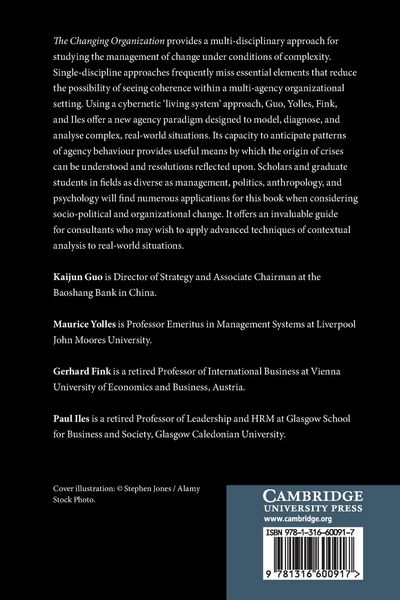
The Changing Organization Agency Theory in a Cross-Cultural Context

69,99 €

inkl. gesetzl. MwSt., Versandkostenfrei


Beschreibung

Produktdetails

Einband

Taschenbuch

Erscheinungsdatum

24.03.2022

Verlag

Cambridge Academic

Seitenzahl

466

Maße (L/B/H)

22,9/15,2/2,5 cm

Gewicht

679 g

Sprache

Englisch

ISBN

978-1-316-60091-7

Beschreibung

Produktdetails

Einband

Taschenbuch

Erscheinungsdatum

24.03.2022

Verlag

Cambridge Academic

Seitenzahl

466

Maße (L/B/H)

22,9/15,2/2,5 cm

Gewicht

679 g

Sprache

Englisch

ISBN

978-1-316-60091-7

Herstelleradresse

Libri GmbH
Europaallee 1
36244 Bad Hersfeld
DE

Email: gpsr@libri.de

Kundinnen und Kunden meinen

0 Bewertungen

Informationen zu Bewertungen

Zur Abgabe einer Bewertung ist eine Anmeldung im Konto notwendig. Die Authentizität der Bewertungen wird von uns nicht überprüft. Wir behalten uns vor, Bewertungstexte, die unseren Richtlinien widersprechen, entsprechend zu kürzen oder zu löschen.

Die Bewertungen sind nach Format, Anzahl Sterne und Datum sortiert.

Verfassen Sie die erste Bewertung zu diesem Artikel

Helfen Sie anderen Kund*innen durch Ihre Meinung

Kundinnen und Kunden meinen

0 Bewertungen filtern

Die Leseprobe wird geladen.
  • Produktbild: The Changing Organization
  • Produktbild: The Changing Organization
  • Part I. The Agency: 1. The cultural agency; 1.1 Introduction; 1.2 The configuration approach; 1.3 Viable living systems and cultural agency; 2. The instrumental and strategic agencies; 2.1 Introduction; 2.2 The strategic agency; 2.3 Two views on strategic management; 2.4 The knowledge management paradigm; 2.5 Complexity and viable systems; 2.6 Knowledge cybernetics; 2.7 Agency pathology; 3. Agency personality; 3.1 Introduction; 3.2 Modelling the collective agency; 3.3 Agency trait theory and Maruyama types; 3.4 Intelligences and efficacy in agency traits; 3.5 Conclusion; 4. The intelligent agency; 4.1 Introduction; 4.2 Theories of intelligence; 4.3 Organisational intelligences; 4.4 Agency process intelligences and efficacy; 4.5 Knowledge strategy agency case; 5. Agency types and traits; 5.1 Introduction; 5.2 Traits, enantiomers and agency type; 5.3 Individualism and collectivism; 5.4 Some thoughts; 6. Agency consciousness; 6.1 Introduction; 6.2 Undecidability and generic system hierarchies; 6.3 Substructure modelling; 6.4 Illustration of superstructure modelling; 6.5 The case of negotiation and agency internalisation; Part II. Agency Change: 7. Joint alliances; 7.1 Introduction; 7.2 International alliances in Central Europe; 7.3 Knowledge management and knowledge transfer in a cross-cultural context; 7.4 Viable knowledge creation and learning in international alliances; 7.5 Modelling alliances; 7.6 Application of the model to a case study of the Czech Academic Link Project (CZALP); 7.7 Application of the model to a case study of the Czech Academic Link project (CZALP); The CZALP Project Phase 1; The CZALP Project Phase 2 and 3; 7.7 Outcome; 8. Agency dynamics; 8.1 Introduction; 8.2 Kuhn, Piaget: from paradigm crisis to transformation; 8.3 Understanding paradigms; 8.4 Paradigms under change; 8.5 Transformation and paradigms; 8.6 Trait system dynamics; 8.7 Baoshang Bank case study; 8.8 Some thoughts; Part III. Agency as Society: 9. The sociological and political agencies; 9.1 Introduction; 9.2 Parsons; 9.3 Luhmann; 9.4 Habermas; 9.5 Agency and socio-cultural processes; 9.6 The political dimension of agency; 9.7 Luhmann, Habermas, agency and practice; 10. The economic agency; 10.1 Introduction; 10.2 Economics and policy; 10.3 Macroeconomic modelling; 10.4 Economic agency; 10.5 Traits, policy and macroeconomics; 10.6 Case situation: the 2008 European Recession and mindscapes; 10.7 Observations; 11. The financial agency; 11.1 Introduction; 11.2 The Chinese context; 11.3 The impact of shadow banking; 11.4 Viewing banking through agency; 11.5 Agency pathologies and corruption; 11.6 Conclusions; Notes; References; Index.