Gutscheinbedingungen

**Gültig am 28.09.2026 auf fremdsprachige Bücher online auf thalia.at und in der Thalia App. Einzelne Artikel können ausgeschlossen sein. Ausgenommen sind preisgebundene Artikel & eBooks. Pro Einkauf einmal einlösbar. Click & Collect nur bei Onlinevorabzahlung möglich. Keine Barauszahlung. Nicht kombinierbar mit anderen Aktionen und Gutscheinen. Gutschein wird auf max. 500€ Bestellwert angerechnet. Nicht gültig für Geschenkkarten, Versandkosten und Services.

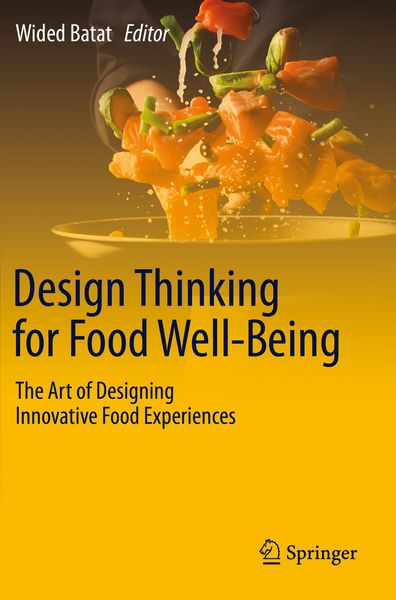
Produktbild: Design Thinking for Food Well-Being

Design Thinking for Food Well-Being The Art of Designing Innovative Food Experiences

161,99 €

inkl. gesetzl. MwSt., Versandkostenfrei


Beschreibung

Produktdetails

Einband

Taschenbuch

Erscheinungsdatum

07.01.2022

Abbildungen

XXXIII, 277 p. 64 illus.

Herausgeber

Wided Batat

Verlag

Springer

Seitenzahl

277

Maße (L/B/H)

23,5/15,5/1,7 cm

Gewicht

476 g

Auflage

22001 Auflage 1st edition 2021

Sprache

Englisch

ISBN

978-3-030-54298-6

Beschreibung

Portrait


Wided BATAT
is a marketing professor and an internationally renowned expert and speaker on experiential and digital marketing specialized in the fields of food, luxury, well-being, design, retail, youth cultures, generation Z&Y, millennials and postmillennials, and tourism. She has published dozens of books in English and French, and articles in top‐tier academic journals that have received several awards. Professor Batat introduced an innovative and disruptive approach to the global and digital customer experience by providing a strategic framework of the customer experience offline and online and the new experiential marketing mix (7Es). Entrepreneur, Professor Batat is also a bilingual (French and English) international professional trainer and the founder of B&C Consulting Group, an innovative market research and consumer insights company specialized in global and digital customer experience design, buying behavior, and consumer trends.


Produktdetails

Einband

Taschenbuch

Erscheinungsdatum

07.01.2022

Abbildungen

XXXIII, 277 p. 64 illus.

Herausgeber

Wided Batat

Verlag

Springer

Seitenzahl

277

Maße (L/B/H)

23,5/15,5/1,7 cm

Gewicht

476 g

Auflage

22001 Auflage 1st edition 2021

Sprache

Englisch

ISBN

978-3-030-54298-6

Herstelleradresse

Springer-Verlag KG
Sachsenplatz 4-6
1201 Wien
AT

Email: ProductSafety@springernature.com

Noch keine Bewertungen vorhanden

Verfassen Sie die erste Bewertung zu diesem Artikel

Helfen Sie anderen Kundinnen und Kunden durch Ihre Meinung.

Kundinnen und Kunden meinen

Bewertungen (0)

  • Produktbild: Design Thinking for Food Well-Being

  • Part I- Design Thinking For Food Well-Being: Foundations And Origins.- Chapter 1. From design thinking (DT) to experiential design thinking (EDT): New tool to rethink food innovation for consumer well-being.- Chapter 2. The history of design thinking and its contributions to food experiences and well-being.- Chapter 3. How can design thinking influence food choices and healthy eating experiences among consumers?.- Chapter 4. How to use co-creation in design thinking to promote and enhance healthy food experience among vulnerable populations.- Chapter 5. How will empathetic design thinking influence food experience innovation? A practitioner perspective on food well-being.- Part II- Implementation Of Design Thinking For Food Experience Innovation And Well-Being.- Chapter 6. Psychological mechanisms underlying design thinking’s impact on gustatory perception: Implications for food experiences and well-being.- Chapter 7. How food experience through ambiance and food design can promote thewell-being of consumers.- Chapter 8. The role of emotions in designing innovative food experiences for consumer well-being: Contributions to design thinking.- Chapter 9. Design thinking for food well-being: An adolescent language perspective.- Chapter 10. Luxury foodservices: The design thinking approach and contributions to food well-being.- Chapter 11. Food well-being in the higher education sector: How to leverage design thinking to create healthy and pleasurable food experiences among college students.- Part III - Design Thinking For Innovative Food Experiences And Well-Being: What’s Next? Chapter 12. Integrating consumer food experience with health and sustainability outcomes: The critical role of design imperatives.- Chapter 13. An experiential view of food design thinking: Expanding consumer centricity for food well-being.- Chapter 14. Precision retailing: Building upon design thinking for societal-scale food convergence innovation and well-being.- Chapter 15. Design thinking to engage consumers in achieving zero waste food experiences: The CEASE framework.- Chapter 16. From food product to food experience: How to use design thinking to service vulnerable populations and improve their food well-being.