Gutscheinbedingungen

**Gültig bis 12.08.2026 auf fremdsprachige Bücher online auf thalia.at und in der Thalia App. Einzelne Artikel können ausgeschlossen sein. Ausgenommen sind preisgebundene Artikel & eBooks. Pro Einkauf einmal einlösbar. Click & Collect nur bei Onlinevorabzahlung möglich. Keine Barauszahlung. Nicht kombinierbar mit anderen Aktionen und Gutscheinen. Gutschein wird auf max. 500€ Bestellwert angerechnet. Nicht gültig für Geschenkkarten, Versandkosten und Services.

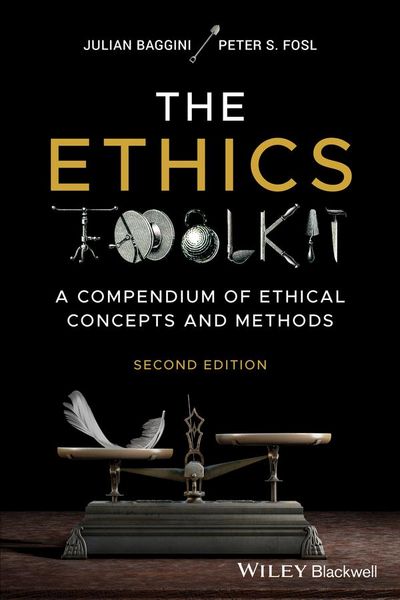
Produktbild: The Ethics Toolkit

The Ethics Toolkit A Compendium of Ethical Concepts and Methods

25,99 €

inkl. gesetzl. MwSt., zzgl. Versandkosten


  • Kostenlose Lieferung ab 30 € Einkaufswert
  • Versandkostenfrei für Bonuscard-Kund*innen

Beschreibung

Produktdetails

Einband

Taschenbuch

Erscheinungsdatum

08.12.2023

Verlag

John Wiley & Sons Inc

Seitenzahl

380

Maße (L/B/H)

22,8/14,8/2,2 cm

Gewicht

596 g

Auflage

2. Auflage

Sprache

Englisch

ISBN

978-1-119-89197-0

Beschreibung

Produktdetails

Einband

Taschenbuch

Erscheinungsdatum

08.12.2023

Verlag

John Wiley & Sons Inc

Seitenzahl

380

Maße (L/B/H)

22,8/14,8/2,2 cm

Gewicht

596 g

Auflage

2. Auflage

Sprache

Englisch

ISBN

978-1-119-89197-0

EU-Ansprechpartner

Zeitfracht Medien GmbH
Ferdinand-Jühlke-Straße 7
99095 Erfurt
DE
produktsicherheit@zeitfracht.de

Herstelleradresse

Wiley & Sons
1 Oldlands Way
PO22 9NQ Bognor Regis
GB
trade@wiley.com

Noch keine Bewertungen vorhanden

Verfassen Sie die erste Bewertung zu diesem Artikel

Helfen Sie anderen Kundinnen und Kunden durch Ihre Meinung.

Kundinnen und Kunden meinen

Bewertungen (0)

Die Leseprobe wird geladen.
  • Produktbild: The Ethics Toolkit
  • Introduction ix
     
    Part I The Grounds of Ethics 1
     
    1.1 Aesthetics 1
     
    1.2 Agency 5
     
    1.3 Authority 8
     
    1.4 Autonomy 12
     
    1.5 Awareness and Consciousness 16
     
    1.6 Character and Self-Cultivation 20
     
    1.7 Conscience 23
     
    1.8 Constraints 26
     
    1.9 Evolution 28
     
    1.10 Flourishing 31
     
    1.11 Harmony 33
     
    1.12 Hierarchy 36
     
    1.13 Interest 39
     
    1.14 Intuition 42
     
    1.15 Natural Law 45
     
    1.16 Need and Desire 49
     
    1.17 Obligation 52
     
    1.18 Pain, Pleasure, and Happiness 54
     
    1.19 Power 58
     
    1.20 Revelation 61
     
    1.21 Rights 64
     
    1.22 Salvation 68
     
    1.23 Sympathy 71
     
    1.24 Tradition and History 73
     
    Part II Central Concepts in Ethics 77
     
    2.1 Act/Omission 77
     
    2.2 Act/Rule 80
     
    2.3 Bad/Evil/Good 82
     
    2.4 Beneficence/Non-Maleficence 85
     
    2.5 Can/Ought 88
     
    2.6 Cause/Reason 90
     
    2.7 Cognitivism/Non-Cognitivism 93
     
    2.8 Consent 97
     
    2.9 Dharma 100
     
    2.10 Excuse/Explanation/Justification 102
     
    2.11 Exploitation 106
     
    2.12 Golden Mean 110
     
    2.13 Harm 113
     
    2.14 Honour/Shame 116
     
    2.15 Identity 121
     
    2.16 Individual/Collective 124
     
    2.17 Intentions/Consequences 127
     
    2.18 Internalism/Externalism 130
     
    2.19 Intersectionality 133
     
    2.20 Intrinsic/Instrumental Value 136
     
    2.21 Karma 139
     
    2.22 Legal/Moral 142
     
    2.23 Liberty, Freedom 145
     
    2.24 Metaethics/Normative Ethics 149
     
    2.25 Moral Subjects and Agents 152
     
    2.26 Public/Private 155
     
    2.27 Responsibility 158
     
    Part III Frameworks for Ethics 162
     
    3.1 Buddhist Ethics 162
     
    3.2 Care 165
     
    3.3 Confucian Role Ethics 168
     
    3.4 Consequentialism 171
     
    3.5 Contractarianism 175
     
    3.6 Cosmopolitanism 178
     
    3.7 Critical Theory and Culture Critique 181
     
    3.8 Discourse Ethics 183
     
    3.9 Divine Command 185
     
    3.10 Duty and Deontological Ethics 188
     
    3.11 Egoism 192
     
    3.12 Naturalism 195
     
    3.13 Particularism 198
     
    3.14 Perfectionism 200
     
    3.15 Rationalism 203
     
    3.16 Relativism 205
     
    3.17 Relationality and Ubuntu 209
     
    3.18 Subjectivism 213
     
    3.19 Virtue Ethics 216
     
    Part IV Assessment, Judgement, and Critique 221
     
    4.1 Ability 221
     
    4.2 Alienation 224
     
    4.3 Authenticity 226
     
    4.4 Class 229
     
    4.5 Common Sense 232
     
    4.6 Consistency 236
     
    4.7 Counterexamples 238
     
    4.8 Equality and Equity 241
     
    4.9 Fairness 244
     
    4.10 Fallacies 248
     
    4.11 Impartiality and Objectivity 251
     
    4.12 The Is/Ought Gap 255
     
    4.13 Justice and Lawfulness 259
     
    4.14 Moral Sentiment 262
     
    4.15 Paternalism 265
     
    4.16 Politics 268
     
    4.17 Race 271
     
    4.18 Reflective Equilibrium 275
     
    4.19 Sex and Gender 277
     
    4.20 Speciesism 280
     
    4.21 Thought Experiments 284
     
    4.22 Universality and Universalizability 286
     
    Part V The Limits of Ethics 290
     
    5.1 Akrasia 290
     
    5.2 Casuistry and Rationalization 293
     
    5.3 Extreme Circumstances, Grey Areas, and Liminal Cases 296
     
    5.4 Fallenness 299
     
    5.5 False Consciousness 302
     
    5.6 Forgiveness and Mercy 306
     
    5.7 Free Will and Determinism 309
     
    5.8 Historical Distance and Time 313
    &n