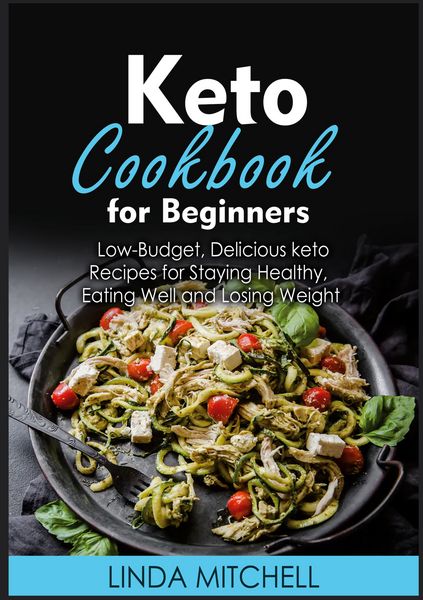
Keto Cookbook For Beginners Low-Budget, Delicious keto Recipes for Staying Healthy, Eating Well and Losing Weight
-
- Taschenbuch ausgewählt
- eBook
-
Sprache:Englisch
22,70 €
inkl. gesetzl. MwSt.,
- Kostenlose Lieferung ab 30 € Einkaufswert
- Versandkostenfrei für Bonuscard-Kund*innen
Beschreibung
Produktdetails
Einband
Taschenbuch
Erscheinungsdatum
20.11.2021
Verlag
BoD – Books on DemandSeitenzahl
100
Maße (L/B/H)
22/15,5/0,7 cm
Gewicht
173 g
Auflage
1. Auflage
Sprache
Englisch
ISBN
978-3-7557-3617-2
Keto Diet Overview The best way to break down the Keto Diet is by breaking down some terms:
Carbohydrate - Any or all forms of carbohydrates that are found in foods you eat and drink on an empty stomach. Carbohydrates are broken down in your digestive tract and released into the bloodstream as glucose, also known as blood sugar.
Fat - Fat is a molecule found in food that provides energy, structure, and protection to all types of cells in the body. It also transports some vitamins (A, D, E and K) throughout the body. Fats are made up of an array of fatty acids that differ in size and shape. Some examples include short and medium-chain fats (found in butter), along with long-chain fats (found in coconut oil).
Protein - Proteins are made up chains of amino acids which serve as the building blocks for every cell, tissue, organ and system in the human body. They also make up your hair, skin and nails. Some key examples of protein rich foods are: chicken, eggs, salmon, beef and pork.
Carbs vs. Proteins Keto Diet Carbohydrates (CHO): Nuts, legumes, whole grains and most fruits are the most common sources of CHO that consume. Foods containing CHO raise blood sugar levels the quickest and trigger insulin production which can lead to fat storage if a person consumes more CHO than they need. Keto Diet Proteins (PRO): Chicken breast, egg whites and cheese are the most common protein sources in the keto diet. PRO can be converted into glucose but at a slower rate than CHO due to their structure. When combined with fats, PRO break down into a substance called ketones which become the primary fuel source for your body
Carbohydrates The human body breaks down carbohydrates and converts them into glucose through a process called glycolysis. Glucose is then shuttled into cells throughout your body where it is either used as an immediate source of energy or stored as glycogen, which can be broken down later as a source of energy. When glycogen stores are full, the body converts excess glucose in
Noch keine Bewertungen vorhanden
Verfassen Sie die erste Bewertung zu diesem Artikel
Helfen Sie anderen Kundinnen und Kunden durch Ihre Meinung.
Kurze Frage zu unserer Seite
Vielen Dank für Ihr Feedback
Wir nutzen Ihr Feedback, um unsere Produktseiten zu verbessern. Bitte haben Sie Verständnis, dass wir Ihnen keine Rückmeldung geben können. Falls Sie Kontakt mit uns aufnehmen möchten, können Sie sich aber gerne an unseren Kund*innenservice wenden.
zum Kundenservice