Gutscheinbedingungen

**Gültig am 28.09.2026 auf fremdsprachige Bücher online auf thalia.at und in der Thalia App. Einzelne Artikel können ausgeschlossen sein. Ausgenommen sind preisgebundene Artikel & eBooks. Pro Einkauf einmal einlösbar. Click & Collect nur bei Onlinevorabzahlung möglich. Keine Barauszahlung. Nicht kombinierbar mit anderen Aktionen und Gutscheinen. Gutschein wird auf max. 500€ Bestellwert angerechnet. Nicht gültig für Geschenkkarten, Versandkosten und Services.

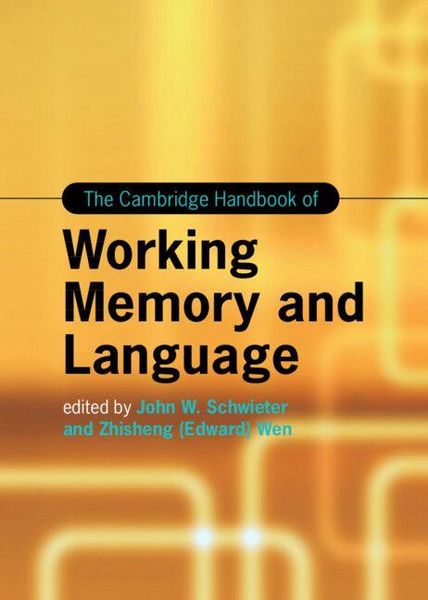
  • Produktbild: The Cambridge Handbook of Working Memory and Language
  • Produktbild: The Cambridge Handbook of Working Memory and Language

The Cambridge Handbook of Working Memory and Language

195,99 €

inkl. gesetzl. MwSt., Versandkostenfrei


Beschreibung

Produktdetails

Einband

Gebundene Ausgabe

Erscheinungsdatum

01.07.2022

Herausgeber

John W. Schwieter + weitere

Verlag

Cambridge Academic

Seitenzahl

974

Maße (L/B/H)

25/17,5/5,6 cm

Gewicht

2036 g

Sprache

Englisch

ISBN

978-1-108-84534-2

Beschreibung

Produktdetails

Einband

Gebundene Ausgabe

Erscheinungsdatum

01.07.2022

Herausgeber

Verlag

Cambridge Academic

Seitenzahl

974

Maße (L/B/H)

25/17,5/5,6 cm

Gewicht

2036 g

Sprache

Englisch

ISBN

978-1-108-84534-2

Herstelleradresse

Libri GmbH
Europaallee 1
36244 Bad Hersfeld
DE

Email: gpsr@libri.de

Noch keine Bewertungen vorhanden

Verfassen Sie die erste Bewertung zu diesem Artikel

Helfen Sie anderen Kundinnen und Kunden durch Ihre Meinung.

Kundinnen und Kunden meinen

Bewertungen (0)

Die Leseprobe wird geladen.
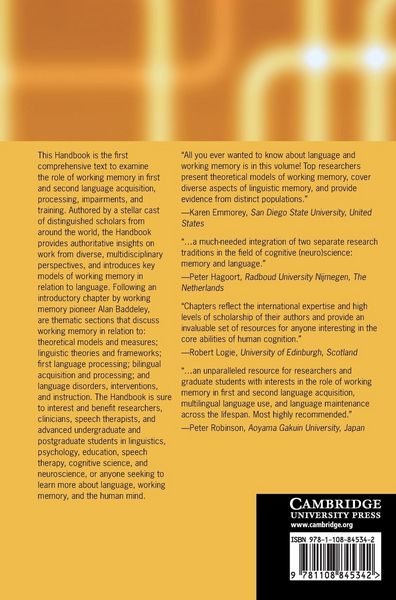
  • Produktbild: The Cambridge Handbook of Working Memory and Language
  • Produktbild: The Cambridge Handbook of Working Memory and Language
  • 1. Working memory and language: an overview of key topics; Part I. Introduction: 2. Working memory and the challenge of language; Part II. Theoretical Models and Measures: 3. The evolution of working memory and language; 4. The phonological loop as a 'language learning device': an update; 5. The Embedded-Processes Model and language use; 6. Long-term working memory and language comprehension; 7. The cognitive neuroscience of working memory and language; 8. Computational models of working memory for language; 9. The time-based resource sharing model of working memory for language; 10. The Ease of Language Understanding Model; 11. Assessing children's working memory; 12. Measuring individual differences in working memory capacity and attention control and their contribution to language comprehension; Part III. Linguistic Theories and Frameworks: 13. Have grammars been shaped by working memory and if so, how?; 14. Branching and working memory: a cross-linguistic approach; 15. Working memory and natural syntax; 16. The role of working memory in shaping syntactic dependency structures; 17. Working memory in the Modular Cognition Framework; 18. Short-term and working memory capacity and the language device: chunking and parsing complexity; Part IV. First Language Processing: 19. Working memory in word reading; 20. The role of working memory in language comprehension and production: evidence from neuropsychology; 21. Working memory and high-level text comprehension processes; 22. Working memory and speech planning; 23. How do novice and skilled writers engage working memory?; Part V. Bilingual Acquisition and Processing: 24. How measures of working memory relate to L2 vocabulary; 25. Working memory and L2 grammar development in children; 26. Working memory and L2 grammar learning among adults; 27. Working memory and L2 sentence processing; 28. Methodological issues in research on working memory and L2 reading comprehension; 29. Working memory and second language speaking tasks; 30. Working memory in second language interaction; 31. Working memory and interpreting studies; 32. A methodological synthesis of working memory tasks in L2 research; Part VI. Language Disorders, Interventions, and Instruction: 33. Specific learning disorders as a working memory deficit; 34. A new perspective on the connection between memory and sentence comprehension in children with developmental language disorder; 35. Working memory and childhood deafness; 36. Working memory training in the classroom; 37. Working memory and classroom learning; 38. Cognitive load theory and instructional design for language learning; 39. Working memory training: meta-analyses and clinical implications; Part VII. Conclusion: 40. Towards an integrated account of working memory and language; Index.