Gutscheinbedingungen

**Gültig bis 17.08.2026 auf Schreibwaren & Office-Artikel online auf thalia.at, in der Thalia App und in teilnehmenden Thalia Buchhandlungen in Österreich mit Schulsortiment. In den Buchhandlungen nur gültig auf lagernde Ware. Einzelne Artikel können ausgeschlossen sein. Ausgenommen sind preisgebundene Artikel. Pro Einkauf einmal einlösbar. Nur gültig gegen Vorlage oder im Onlineshop hinterlegter Bonuscard. Infos zur Einlösung in der Buchhandlung sind auf der Bonuscard-Vorteilspreisseite zu finden. Click & Collect nur bei Onlinevorabzahlung möglich. Keine Einlösung bei Scan & Go-Bezahlung. Keine Barauszahlung. Nicht kombinierbar mit anderen Aktionen und Gutscheinen. Gutschein wird auf max. 500€ Bestellwert angerechnet. Nicht gültig für Geschenkkarten, Versandkosten und Services.

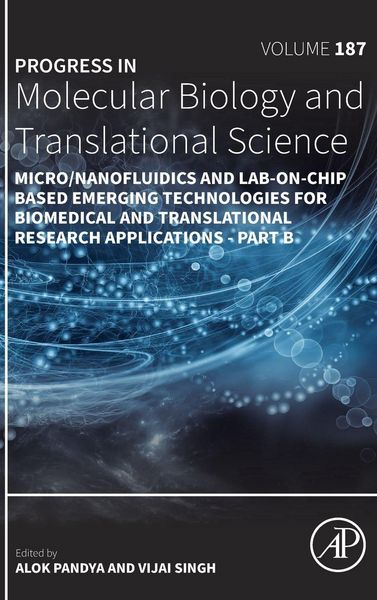
  • Produktbild: Micro/Nanofluidics and Lab-on-Chip Based Emerging Technologies for Biomedical and Translational Research Applications - Part B
  • Produktbild: Micro/Nanofluidics and Lab-on-Chip Based Emerging Technologies for Biomedical and Translational Research Applications - Part B

Micro/Nanofluidics and Lab-on-Chip Based Emerging Technologies for Biomedical and Translational Research Applications - Part B Biomedical and Translational Research Applications Part

129,99 €

inkl. gesetzl. MwSt., Versandkostenfrei


Beschreibung

Produktdetails

Einband

Gebundene Ausgabe

Erscheinungsdatum

01.02.2022

Herausgeber

Alok Pandya + weitere

Verlag

Elsevier Science & Technology

Seitenzahl

370

Maße (L/B/H)

22,9/15,2/2,2 cm

Gewicht

664 g

Sprache

Englisch

ISBN

978-0-323-85303-3

Beschreibung

Portrait

Dr. Alok Pandya is an innovator, interdisciplinary researcher, and academic leader specializing in the development of personalized biosensors for point-of-care/need diagnostics and rapid disease detection. His work focuses on developing advanced biosensing technologies for real-time health monitoring. Currently serving as an Associate Professor at the School of Applied Science and Technology, Gujarat Technological University, he brings over 11 years of research experience dedicated to biosensor-driven rapid diagnostics. Before joining GTU, Dr. Pandya spent 8 years as an Assistant Professor at the Institute of Advanced Research (IAR) and 3 years as a Research Associate at Ahmedabad University. He has also been a Visiting Professor at the University of California, San Diego, conducting research on wearable biosensors, and an Entrepreneurial Lead under the US National Science Foundation’s I-Corps™ program, gaining expertise in medical innovation and technology commercialization. A researcher and technologist, Dr. Pandya has published 60+ research articles, authored 5 books & 12+ book chapters, and holds 5 granted patents. His work has secured national and international funding to advance biomedical and forensic diagnostic technologies. He has been honored with prestigious awards, including the SERB-International Research Experience Award, the SERB Young Scientist Award, and the IAR Research Excellence Award. Dr. Pandya has developed cutting-edge biosensing platforms for rapid AMR detection, cardiovascular disease diagnostics, plant pathogen identification, and forensic body fluid analysis. With global research collaborations spanning France, the USA, and India, Dr. Pandya continues to drive innovation in biosensor technology, translating scientific discoveries into real-world applications for precision diagnostics and personalized healthcare.

Prof. Vijai Singh is currently serving as Head of the Department of Biosciences, School of Science and Dean (Research & Innovation) at Indrashil University, Rajpur, Mehsana, India. Prior to this, he held the position of Associate Professor in the same department at Indrashil University. He has also served as Assistant Professor in the Department of Biological Sciences and Biotechnology at the Institute of Advanced Research, Gandhinagar, and in the Department of Biotechnology at the Invertis University, Bareilly, India. Earlier of his career, Prof. Singh worked as a Postdoctoral Fellow in the Synthetic Biology Group at the Institute of Systems and Synthetic Biology, Paris, France and at the School of Energy & Chemical Engineering at the Ulsan National Institute of Science and Technology, Ulsan, South Korea. He earned his Ph.D. in Biotechnology in 2009 from the ICAR-National Bureau of Fish Genetic Resources, Uttar Pradesh Technical University, Lucknow, India. His doctoral research focused on the development of molecular and immunoassays for the diagnosis of Aeromonas hydrophila. Prof. Singh’s research interests lies in the design and construction of novel biosynthetic pathways for production of medically and industrially important biomolecules. His laboratory is also actively engaged in developing CRISPR-Cas systems for gene knock out, knock in, gene regulation and diagnostic. With over 15 years of research and teaching experience, his areas of expertise include synthetic biology, metabolic engineering, bioinformatics, microbiology, and industrial microbiology. He has an extensive academic record, with over 110 articles, 89 book chapters, 26 books and 3 patents to his credits. Prof. Singh has received number of prestigious awards, including the Bioclues Innovation, Research and Development Award (2023) from the BIOCLUES Society, the Vice Chancellor's Best Research Award (2023) from Indrashil University, and the Agathiyar Chemical Biology Award (2023) from the Society of Chemical and Synthetic Biology. At Indrashil University, he currently serves as chairman of the Board of Study, and is a member of the Academic Council of Indrashil University. He also holds the position of the Member Secretary of the Institutional Biosafety Committee (IBSC) at the university. Dr. Singh is actively involved in national and international scientific advisory roles.
Produktdetails

Einband

Gebundene Ausgabe

Erscheinungsdatum

01.02.2022

Herausgeber

Verlag

Elsevier Science & Technology

Seitenzahl

370

Maße (L/B/H)

22,9/15,2/2,2 cm

Gewicht

664 g

Sprache

Englisch

ISBN

978-0-323-85303-3

EU-Ansprechpartner

Zeitfracht Medien GmbH
Ferdinand-Jühlke-Straße 7|99095|Erfurt|DE
produktsicherheit@zeitfracht.de

Herstelleradresse

Elsevier Science & Technology
125 London Wall|EC2Y 5AS|London|GB
tradeorders@elsevier.com

Noch keine Bewertungen vorhanden

Verfassen Sie die erste Bewertung zu diesem Artikel

Helfen Sie anderen Kundinnen und Kunden durch Ihre Meinung.

Kundinnen und Kunden meinen

Bewertungen (0)

Die Leseprobe wird geladen.
  • Produktbild: Micro/Nanofluidics and Lab-on-Chip Based Emerging Technologies for Biomedical and Translational Research Applications - Part B
  • Produktbild: Micro/Nanofluidics and Lab-on-Chip Based Emerging Technologies for Biomedical and Translational Research Applications - Part B
  • Preface
    Vijai Singh and Alok Pandya
    1. Design and fabrication of microfluidics devices for molecular biology applications
    Rupesh Maurya, Gargi Bhattacharjee, Nisarg Gohil, Navya L Lam, Khalid J. Alzahrani and Vijai Singh
    2. Micro/nanofluidic devices for drug delivery
    Navid Kashaninejad, Ehsanollah Moradi and Hajar Moghadas
    3. From organ-on-chip to body-on-chip: The next generation of microfluidics platforms for in vitro drug efficacy and toxicity testing
    Jerome Lacombe, Maria Soldevila and Frederic Zenhausern
    4. Micro and Nanofluidics for high throughput drug screening
    Bonolo S.P. Mathekga, Zandile Nxumalo and Deepak B. Thimiri Govinda Raj
    5. Design, fabrication and assembly of lab-on-a-chip and its uses
    T. G. Satheesh Babu
    6. Advances in microfluidic 3D cell culture for preclinical drug development
    Maria Russo, Cesare M. Cejas and Gabriele Pitingolo
    7. Cultivating human tissues and organs over lab-on-a-chip models: Recent progress and applications
    Stuti Bhagat and Sanjay Singh
    8. Microfluidics based point-of-care for disease diagnostics
    Gargi Bhattacharjee, Rupesh Maurya, Khalid J. Alzahrani, Nisarg Gohil, Navya L. Lam and Vijai Singh
    9. Lab-on-a-body for biomedical electrochemical sensing applications: The next generation of microfluidic devices
    Itthipon Jeerapan, Chochanon Moonla, Panote Thavarungkul and Proespichaya Kanatharana
    10. Microfluidic tools for veterinary and zoonotic disease diagnostics
    Nidhi Verma, Rutuparna Kulkarni and Alok Pandya
    11. Continuous monitoring of molecular biomarkers in microfluidic devices
    Andrea Idili, Helena Monton, Mariana Medina-Sánchez, Bergoi Ibarlucea, Gianaurelio Cuniberti, Oliver G. Schmidt, Kevin W. Plaxco and Claudio Parolo
    12. Microfluidics device for drug discovery, screening and delivery
    Rupesh Maurya, Nisarg Gohil, Gargi Bhattacharjee, Khalid J. Alzahrani, Suresh Ramakrishna and Vijai Singh