Gutscheinbedingungen

**Gültig bis 14.09.2026 auf Spielzeug, Schreibwaren, Filme, Geschenke & Trends, Musik, tolino eReader & Zubehör, Hörbücher, nicht preisgebundene Bücher und Kalender in der Thalia App. Einzelne Artikel können ausgeschlossen sein. Aufgrund der Buchpreisbindung sind deutschsprachige Bücher und eBooks ausgenommen. Zusätzlich ausgenommen sind Abos & Flatrates, Games, Geschenkkarten/-boxen, Shelfies, Software, Zeitschriften sowie einzelne Artikel von tonies®. Pro Einkauf einmal einlösbar. Nur gültig mit im Onlineshop hinterlegter Bonuscard. Click & Collect nur bei Onlinevorabzahlung möglich. Keine Barauszahlung. Nicht kombinierbar mit anderen Aktionen und Gutscheinen. Gutschein wird auf max. 500€ Bestellwert angerechnet. Nicht gültig für Versandkosten und Services.

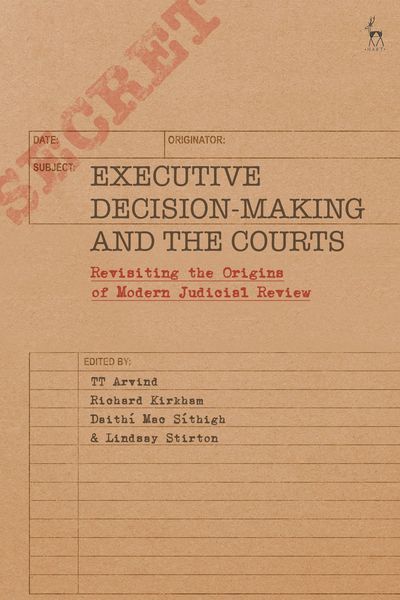
Produktbild: Executive Decision-Making and the Courts

Executive Decision-Making and the Courts Revisiting the Origins of Modern Judicial Review

66,99 €

inkl. gesetzl. MwSt., Versandkostenfrei


Beschreibung

Produktdetails

Einband

Taschenbuch

Erscheinungsdatum

20.10.2022

Herausgeber

TT Arvind + weitere

Verlag

Hart Publishing

Seitenzahl

504

Maße (L/B/H)

23,4/15,6/2,6 cm

Gewicht

700 g

Sprache

Englisch

ISBN

978-1-5099-4477-4

Beschreibung

Produktdetails

Einband

Taschenbuch

Erscheinungsdatum

20.10.2022

Herausgeber

Verlag

Hart Publishing

Seitenzahl

504

Maße (L/B/H)

23,4/15,6/2,6 cm

Gewicht

700 g

Sprache

Englisch

ISBN

978-1-5099-4477-4

Herstelleradresse

Libri GmbH
Europaallee 1
36244 Bad Hersfeld
DE

Email: gpsr@libri.de

Noch keine Bewertungen vorhanden

Verfassen Sie die erste Bewertung zu diesem Artikel

Helfen Sie anderen Kundinnen und Kunden durch Ihre Meinung.

Kundinnen und Kunden meinen

Bewertungen (0)

Die Leseprobe wird geladen.
  • Produktbild: Executive Decision-Making and the Courts
  • PART I
    SETTING THE SCENE
    1. Introduction: Judicial Review and the Quartet
    TT Arvind, University of York, UK, Richard Kirkham, University of Sheffield, UK, Daithí Mac Síthigh, Queen's University Belfast, UK and Lindsay Stirton, University of Sussex, UK
    2. Lord Reid: The Judge as Law Maker?
    Robert Reed, Lord Reed of Allermuir, President of the Supreme Court of the United Kingdom

    PART II
    THE QUARTET IN CONTEXT
    3. Ridge v Baldwin: Executive and Judicial Approaches to Administrative Law Before and During the Quartet Years
    Robert Thomas, University of Manchester, UK
    4. Judges and Parliamentary Democracy: The Lessons of Padfield v Ministry of Agriculture, Fisheries and Food
    Maurice Sunkin, University of Essex, UK
    5. Legitimacy and the Courts: The Forgotten Story of Conway v Rimmer
    TT Arvind, University of York, UK and Lindsay Stirton, University of Sussex, UK
    6. Anisminic in Retrospect
    David Feldman, University of Cambridge, UK

    PART III
    THE LEGACY OF THE QUARTET
    7. Plus ça Change? An Empirical Analysis of Judicial Review in Modern Administrative Law
    Sarah Nason, Prifysgol Bangor University, UK
    8. The Reawakening of Common Law Rights: Are they Still 'Suitable for the Winning of Freedom in the New Age'?
    Paul Bowen QC, Brick Court Chambers, UK
    9. Beyond the End of Ouster Clause History?
    Joe Tomlinson, University of York, UK

    PART IV
    THE QUARTET OUTSIDE ENGLAND
    10. Administrative Law and the Administrative Court for - or in - Wales
    David C Gardner, No5 Barristers' Chambers, Bristol, UK
    11. The Rule of Law against Judicial Review? The Quartet in Scots Administrative Law
    Paul F Scott, University of Glasgow, UK
    12. The Quartet Plus Two: Judicial Review in Northern Ireland
    Gordon Anthony, Queen's University Belfast, UK

    PART V
    COMPARATIVE PERSPECTIVES ON THE QUARTET
    13. Israeli Administrative Law and the Quartet - One Step Ahead
    Daphne Barak-Erez, Tel Aviv University, Israel
    14. Importation and Indigeneity: The Quartet in New Zealand Administrative Law
    Dean R Knight, Victoria University of Wellington, New Zealand
    15. The Quartet in the New Commonwealth
    Peter Cane, University of Cambridge, UK

    PART VI
    THE QUARTET IN THEORY, PRACTICE AND HISTORY
    16. The Quartet Cases Compared
    Stephen Bailey, University of Nottingham, UK
    17. 'Judicial Power' and Political Power: Reflections in Light of the Quartet
    Alexander Latham-Gambi, Swansea University, UK
    18. Strategic Judging: Lessons from the Reid Era of Judicial Decision-Making
    Richard Kirkham, University of Sheffield, UK and Dimitrios Tsarapatsanis, University of York, UK

    PART VII
    CONCLUSION
    19. The Real Argument about Judicial Review
    TT Arvind, University of York, UK, Richard Kirkham, University of Sheffield, UK, Daithí Mac Síthigh, Queen's University Belfast, UK and Lindsay Stirton, University of Sussex, UK