Gutscheinbedingungen

**Gültig bis 17.08.2026 auf Schreibwaren & Office-Artikel online auf thalia.at, in der Thalia App und in teilnehmenden Thalia Buchhandlungen in Österreich mit Schulsortiment. In den Buchhandlungen nur gültig auf lagernde Ware. Einzelne Artikel können ausgeschlossen sein. Ausgenommen sind preisgebundene Artikel. Pro Einkauf einmal einlösbar. Nur gültig gegen Vorlage oder im Onlineshop hinterlegter Bonuscard. Infos zur Einlösung in der Buchhandlung sind auf der Bonuscard-Vorteilspreisseite zu finden. Click & Collect nur bei Onlinevorabzahlung möglich. Keine Einlösung bei Scan & Go-Bezahlung. Keine Barauszahlung. Nicht kombinierbar mit anderen Aktionen und Gutscheinen. Gutschein wird auf max. 500€ Bestellwert angerechnet. Nicht gültig für Geschenkkarten, Versandkosten und Services.

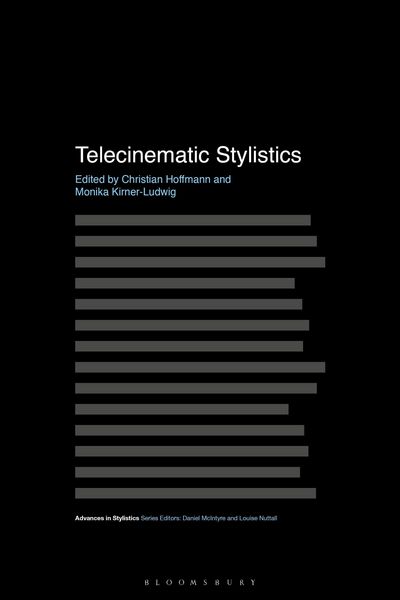
Produktbild: Telecinematic Stylistics

Telecinematic Stylistics

Aus der Reihe Advances in Stylistics

49,99 €

inkl. gesetzl. MwSt., Versandkostenfrei


Beschreibung

Produktdetails

Einband

Taschenbuch

Erscheinungsdatum

18.11.2021

Herausgeber

Christian Hoffmann + weitere

Verlag

Bloomsbury Academic

Seitenzahl

350

Maße (L/B/H)

23,4/15,6/1,9 cm

Gewicht

492 g

Sprache

Englisch

ISBN

978-1-350-29452-3

Beschreibung

Produktdetails

Einband

Taschenbuch

Erscheinungsdatum

18.11.2021

Herausgeber

Verlag

Bloomsbury Academic

Seitenzahl

350

Maße (L/B/H)

23,4/15,6/1,9 cm

Gewicht

492 g

Sprache

Englisch

ISBN

978-1-350-29452-3

Herstelleradresse

Libri GmbH
Europaallee 1
36244 Bad Hersfeld
DE

Email: GPSR Kontakt

Noch keine Bewertungen vorhanden

Verfassen Sie die erste Bewertung zu diesem Artikel

Helfen Sie anderen Kundinnen und Kunden durch Ihre Meinung.

Kundinnen und Kunden meinen

Bewertungen (0)

Die Leseprobe wird geladen.
  • Produktbild: Telecinematic Stylistics
  • 1. Introduction: introducing telecinematic stylistics, Christian R. Hoffmann (University of Augsburg, Germany) and Monika Kirner-Ludwig (University of Albany, State University of New York, USA)
    2. Adapting Medieval stuff to fit the Modern Screen: a cognitive-pragmatic approach to strategies of evoking and ridiculing obsolete frames to entertain today's recipient, Monika Kirner-Ludwig (University of Albany, State University of New York, USA)
    3. "Drucilla, we need to talk": The formulaic nature of problem-oriented talk in soap operas, Sabine Jautz (Universität Siegen, Germany) and Verena Minow (Ruhr-Universität, Germany)
    4. On the usefulness of the Sydney Corpus of television dialogue (SydTV) as a reference point for corpus linguistic and stylistic analyses of TV series, Monika Bednarek (University of Augsburg, Germany)
    5. "I shouldn't have let this happen": demonstratives in film dialogue and film representation, Maria Pavesi (Università degli Studi di Pavia, Italy)
    6. Ideology in the multimodal discourse of television documentaries on Irish travellers' and gypsies' communities in the UK, Roberta Piazza (University of Sussex, UK)
    7. Voice-over and presenter narration in TV documentaries, Jan Chovanec (Masaryk University, Czech Republic)
    8. How comics communicate on the screen: telecinematic discourse in comic-to-film adaptations, Christina Sanchez-Stockhammer (Ludwig Maximilian University of Munich, Germany)
    9. A multimethod analysis of autism spectrum disorder representation in fictional television, Susan Reichelt (University of Lancaster, UK)
    10. Metatextual devices in Alfred Hitchcock's Notorious (1946), Adriana Gordejuela (Universidad de Navarra, Spain)
    11. The Visual Discourse of Shots and Cuts: applying the Cooperative Principle to horror film cinematography, Christoph Schubert (Universität Vechta, Germany)
    12. Repetition in sitcom humour, Thomas Messerli (University of Basel, Switzerland)
    13. 'Subtitles have to become my ears not my eyes': pragmatic and stylistic choices behind Closed Captions for deaf and hard-of-hearing people: the example of the television programme Breaking Bad, Annie Dahne (Chatteris Educational Foundation (Hong Kong) and Roberta Piazza (University of Sussex, UK)
    14. Relevance in film trailer communication: a multimodal account, Heike Krebs (University of Augsburg, Germany)

    Bibliography
    Index