Gutscheinbedingungen

**Gültig nur für Bestellungen an die Wunsch-Poststation bis 10.06.2026 auf Spielzeug, Schreibwaren, Filme, Geschenke & Trends, Musik, tolino eReader & Zubehör, Hörbücher und Hörbuch-Downloads (außer Abo), nicht preisgebundene Bücher und Kalender online auf thalia.at und in der Thalia App. Einzelne Artikel können ausgeschlossen sein. Aufgrund der Buchpreisbindung sind deutschsprachige Bücher und eBooks ausgenommen. Zusätzlich ausgenommen sind preisgebundene Artikel, Abos & Flatrates, eBooks, Games, Geschenkkarten/-boxen, Shelfies, Software, Zeitschriften sowie einzelne Artikel von tonies®. Pro Einkauf einmal einlösbar. Kein Click & Collect möglich. Keine Barauszahlung. Nicht kombinierbar mit anderen Aktionen und Gutscheinen. Gutschein wird auf max. 500€ Bestellwert angerechnet. Nicht gültig für Versandkosten und Services.

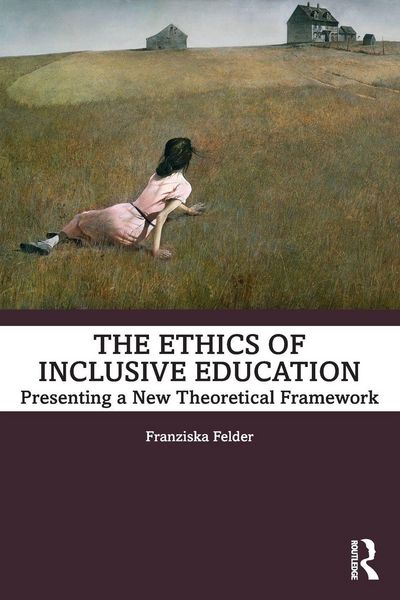
  • Produktbild: The Ethics of Inclusive Education
  • Produktbild: The Ethics of Inclusive Education

The Ethics of Inclusive Education Presenting a New Theoretical Framework

52,99 €

inkl. gesetzl. MwSt., Versandkostenfrei


Beschreibung

Produktdetails

Einband

Taschenbuch

Erscheinungsdatum

31.12.2021

Verlag

Taylor & Francis

Seitenzahl

254

Maße (L/B/H)

23,4/15,6/1,4 cm

Gewicht

439 g

Sprache

Englisch

ISBN

978-1-03-211749-2

Beschreibung

Rezension

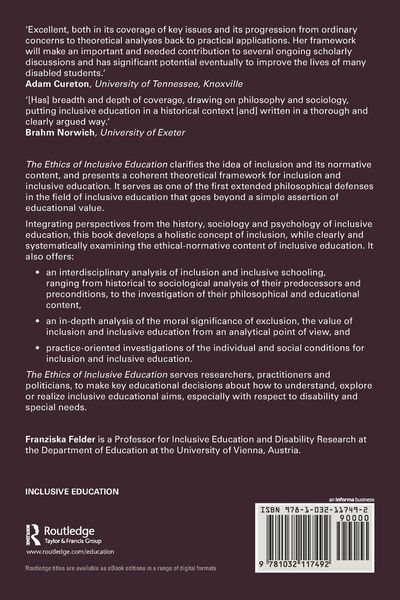
'Excellent, both in its coverage of key issues and its progression from ordinary concerns to theoretical analyses back to practical applications. Her framework will make an important and needed contribution to several ongoing scholarly discussions and has significant potential eventually to improve the lives of many disabled students.' - Adam Cureton, University of Tennessee, Knoxville

'[Has] breadth and depth of coverage, drawing on philosophy and sociology, putting inclusive education in a historical context [and] written in a thorough and clearly argued way.'- Brahm Norwich, University of Exeter

Produktdetails

Einband

Taschenbuch

Erscheinungsdatum

31.12.2021

Verlag

Taylor & Francis

Seitenzahl

254

Maße (L/B/H)

23,4/15,6/1,4 cm

Gewicht

439 g

Sprache

Englisch

ISBN

978-1-03-211749-2

Herstelleradresse

Libri GmbH
Europaallee 1
36244 Bad Hersfeld
DE

Email: gpsr@libri.de

Kundinnen und Kunden meinen

0 Bewertungen

Informationen zu Bewertungen

Zur Abgabe einer Bewertung ist eine Anmeldung im Konto notwendig. Die Authentizität der Bewertungen wird von uns nicht überprüft. Wir behalten uns vor, Bewertungstexte, die unseren Richtlinien widersprechen, entsprechend zu kürzen oder zu löschen.

Die Bewertungen sind nach Format, Anzahl Sterne und Datum sortiert.

Verfassen Sie die erste Bewertung zu diesem Artikel

Helfen Sie anderen Kund*innen durch Ihre Meinung

Kundinnen und Kunden meinen

0 Bewertungen filtern

Die Leseprobe wird geladen.
  • Produktbild: The Ethics of Inclusive Education
  • Produktbild: The Ethics of Inclusive Education
    1. Introduction
      1. The Fenty Story
      2. The missing social dimension in the inclusion debates
      3. The structure of this book

    2. The approach, scope and method

      1. The comparison with slavery
      2. The limits of rights-based approaches
      3. The methodological approach: nonideal theorizing

    1. A brief review of the history of (inclusive) education
      1. The status of disabled people before the eighteenth century
      2. The Age of Enlightenment
      3. Shifting backgrounds and the importance of compulsory education
      4. The rupture of the Second World War and the growing importance of human rights
      5. The emergence of the concept of 'inclusion'
      6. The difficult role of special education today

    2. The concept of inclusion
      1. A confusing plethora of definitions
      2. The strong focus on schools and the lack of a debate on exclusion
      3. Inclusion between description and evaluation
      4. Inclusion as a 'thick concept'
      5. Two camps and the problems associated with them
      6. Inclusion: the proposal
      7. The sociological perspective
      8. The elements of inclusion
      9. The ontogenesis of inclusion in evolutionary biology and individual psychology

    3. Disability
      1. Change of emphasis within the inclusion literature
      2. The 'deconstruction' model
      3. The 'barrier' model
      4. The difference made by disability
      5. The social-relational model

    4. Inclusive education
      1. The current inclusion discourse and its shortcomings
      2. The school as an organisation and institution
      3. School versus family
      4. The functions of school

    5. Values that matter
      1. Step 1: Exclusion
      2. Step 2: The ethical-normative significance of inclusion
      3. Step 3: Inclusion and education

    6. Conclusion: the transformation of education
      1. The shift towards inclusion
      2. Closing remarks

    7. References