KI-Beratung Beta

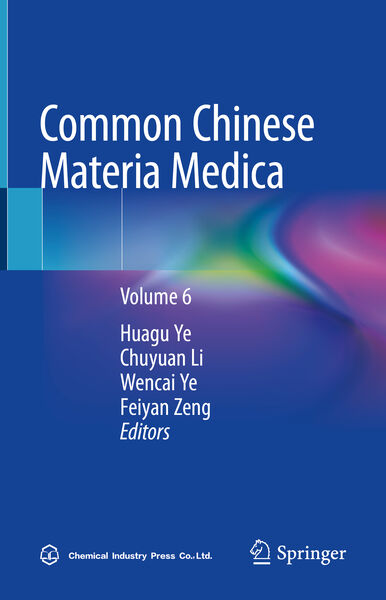
Produktbild: Common Chinese Materia Medica

Common Chinese Materia Medica Volume 6

139,99 €

inkl. gesetzl. MwSt., Versandkostenfrei


Beschreibung

This sixth volume describes 226 species of 32 families of medicinal plants, which are commonly used in Chinese medicine. The most important species are Aquilaria sinensis and Daphne genkwa of Thymelaeaceae; Benincasa hispida, Siraitia grosvenorii, Trichosanthes kirilowii and Trichosanthes rosthornii...

Beschreibung

This sixth volume describes 226 species of 32 families of medicinal plants, which are commonly used in Chinese medicine. The most important species are Aquilaria sinensis and Daphne genkwa of Thymelaeaceae; Benincasa hispida, Siraitia grosvenorii, Trichosanthes kirilowii and Trichosanthes rosthornii of Cucurbitaceae; Camellia sinensis of Theaceae; Cleistocalyx operculatus, Eugenia caryophyllata and Rhodomyrtus tomentosa of Myrtaceae; Osbeckia chinensis of Melastomataceae; Quisqualis indica and Terminalia chebula of Combretaceae; Hypericum japonicum of Hypericaceae; Microcos paniculata of Tiliaceae; Hibiscus mutabilis of Malvaceae; Croton crassifolius, C. lachnocarpus, C. tiglium, Euphorbia humifusa, E. lathyris, E. pekinensis, Phyllanthus emblica and Sauropus spatulifolius of Euphorbiaceae.

In each specie, it introduces the scientific names, medicinal names, morphologies, habitats, distributions, acquisition and processing methods of these medicinal plants, the content of medicinal properties, therapeutic effects, usage and dosage of these medicinal plants, and attaches unedited color pictures and pictures of part herbal medicines of each species.

This book series has 10 volumes in total, which covers over 2000 kinds of Chinese medicines that are commonly used. These volumes not only introduce the efficacy function and some prescriptions of the medicines, but also introduce the biological characteristics of them in detail with clear photos of the habitats, so that readers can identify them in the field. Apart from the growing environment, the books expound the distribution areas and other information to facilitate researches and other applications. The volumes are targeted at readers of general interests and it is also of high referential value for scientific researcher and teachers.  It can be used as a guide to researchers, clinical doctors, and students in the department of pharmaceutics and traditional Chinese medicine.

Portrait

Editor Huagu Ye is a professor from South China Botanical Garden, Chinese Academy of Sciences, Guangzhou, China.

Editor Chuyuan Li is from Guangzhou Pharmaceutical Holdings Limited, Guangzhou, China.

Editor Wencai Ye is a professor from the College of Pharmacy, Jinan University, Guangzhou, China.

Editor Feiyan Zeng is from South China Botanical Garden, Chinese Academy of Sciences, Guangzhou, China.

Produktdetails

Einband

Gebundene Ausgabe

Erscheinungsdatum

04.01.2022

Abbildungen

XII, 598 p. 804 illus., 802 illus. in color.

Herausgeber Huagu Ye + weitere

Produktdetails

Einband

Gebundene Ausgabe

Erscheinungsdatum

04.01.2022

Abbildungen

XII, 598 p. 804 illus., 802 illus. in color.

Herausgeber
Verlag Springer Singapore
Seitenzahl

598

Maße (L/B/H)

24,1/16/3,7 cm

Gewicht

1140 g

Auflage

1st ed. 2022

Sprache

Englisch

ISBN

978-981-16-5891-4

Herstelleradresse

Springer-Verlag GmbH
Europaplatz 3
69115 Heidelberg
DE

Email: ProductSafety@springernature.com

Noch keine Bewertungen vorhanden

Verfassen Sie die erste Bewertung zu diesem Artikel

Helfen Sie anderen Kundinnen und Kunden durch Ihre Meinung.

Kundinnen und Kunden meinen

Bewertungen (0)

  • Produktbild: Common Chinese Materia Medica
  • Aquilaria sinensis and Daphne genkwa of Thymelaeaceae.- Benincasa hispida, Siraitia grosvenorii, Trichosanthes kirilowii and Trichosanthes rosthornii of Cucurbitaceae.- Camellia sinensis of Theaceae.- Cleistocalyx operculatus, Eugenia caryophyllata and Rhodomyrtus tomentosa of Myrtaceae.- Osbeckia chinensis of Melastomataceae.- Quisqualis indica and Terminalia chebula of Combretaceae.- Hypericum japonicum of Hypericaceae.- Microcos paniculata of Tiliaceae.- Hibiscus mutabilis of Malvaceae.- Croton crassifolius, C. lachnocarpus, C. tiglium, Euphorbia humifusa, E. lathyris, E. pekinensis, Phyllanthus emblica and Sauropus spatulifolius of Euphorbiaceae.