Gutscheinbedingungen

**Gültig nur für Bestellungen an die Wunsch-Poststation bis 10.06.2026 auf Spielzeug, Schreibwaren, Filme, Geschenke & Trends, Musik, tolino eReader & Zubehör, Hörbücher und Hörbuch-Downloads (außer Abo), nicht preisgebundene Bücher und Kalender online auf thalia.at und in der Thalia App. Einzelne Artikel können ausgeschlossen sein. Aufgrund der Buchpreisbindung sind deutschsprachige Bücher und eBooks ausgenommen. Zusätzlich ausgenommen sind preisgebundene Artikel, Abos & Flatrates, eBooks, Games, Geschenkkarten/-boxen, Shelfies, Software, Zeitschriften sowie einzelne Artikel von tonies®. Pro Einkauf einmal einlösbar. Kein Click & Collect möglich. Keine Barauszahlung. Nicht kombinierbar mit anderen Aktionen und Gutscheinen. Gutschein wird auf max. 500€ Bestellwert angerechnet. Nicht gültig für Versandkosten und Services.

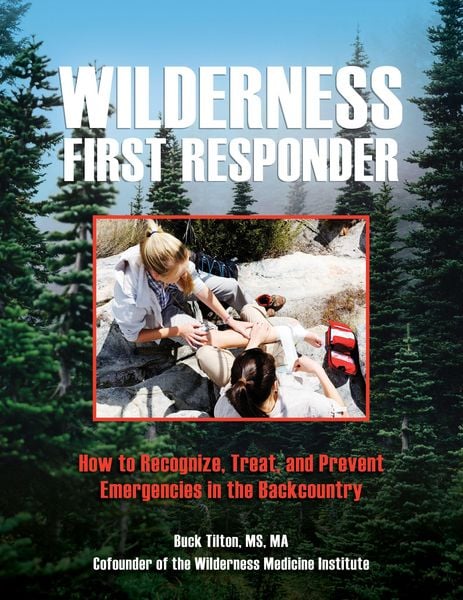
  • Produktbild: Wilderness First Responder
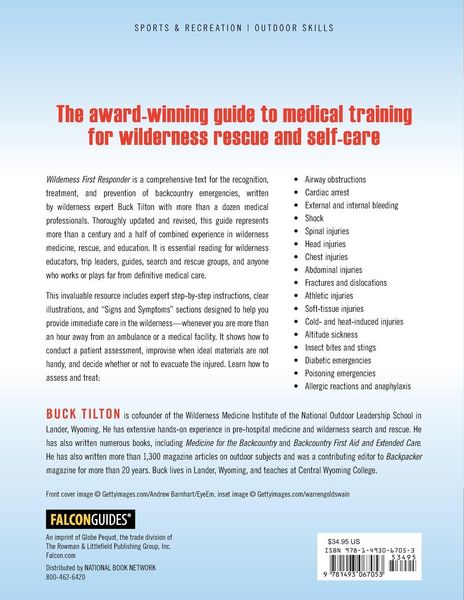
  • Produktbild: Wilderness First Responder

Wilderness First Responder How To Recognize, Treat, And Prevent Emergencies In The Backcountry

35,99 €

inkl. gesetzl. MwSt., Versandkostenfrei


Beschreibung

Produktdetails

Einband

Taschenbuch

Erscheinungsdatum

01.09.2022

Abbildungen

110 BW Illustrations, 28 BW Photos

Verlag

Rowman & Littlefield

Seitenzahl

312

Maße (L/B/H)

28/21,6/1,7 cm

Gewicht

789 g

Auflage

4 Auflage Fourth Edition

Sprache

Englisch

ISBN

978-1-4930-6705-3

Beschreibung

Produktdetails

Einband

Taschenbuch

Erscheinungsdatum

01.09.2022

Abbildungen

110 BW Illustrations, 28 BW Photos

Verlag

Rowman & Littlefield

Seitenzahl

312

Maße (L/B/H)

28/21,6/1,7 cm

Gewicht

789 g

Auflage

4 Auflage Fourth Edition

Sprache

Englisch

ISBN

978-1-4930-6705-3

Herstelleradresse

Libri GmbH
Europaallee 1
36244 Bad Hersfeld
DE

Email: gpsr@libri.de

Kundinnen und Kunden meinen

0 Bewertungen

Informationen zu Bewertungen

Zur Abgabe einer Bewertung ist eine Anmeldung im Konto notwendig. Die Authentizität der Bewertungen wird von uns nicht überprüft. Wir behalten uns vor, Bewertungstexte, die unseren Richtlinien widersprechen, entsprechend zu kürzen oder zu löschen.

Die Bewertungen sind nach Format, Anzahl Sterne und Datum sortiert.

Verfassen Sie die erste Bewertung zu diesem Artikel

Helfen Sie anderen Kund*innen durch Ihre Meinung

Kundinnen und Kunden meinen

0 Bewertungen filtern

Die Leseprobe wird geladen.
  • Produktbild: Wilderness First Responder
  • Produktbild: Wilderness First Responder
  • Contents


    List of Figures

    Acknowledgments

    Section I: Introduction


    1. Wilderness Emergency Medical Care

    First Response and Responsibility

    A Brief History of Wilderness Medicine

    Wilderness Medicine vs. Urban Medicine

    Training

    2. Legal Issues in Wilderness Medicine

    Civil Law and the WFR

    Negligence

    Legal Considerations

    Legal Protection

    Section II: Patient Assessment and Initial Concerns


    3. Patient Assessment

    Stop! Size up the Scene

    Stop! Assess the Patient for Immediate Threats to Life

    Stop! Complete a Focused Exam and Patient History

    Stop! Make a Problem List and a Plan

    Stop! Monitor the Patient’s Condition

    4. Airway and Breathing

    Basic Anatomy of the Airway

    Assessing the Airway

    Foreign-Body Airway Obstruction: Conscious Adult

    Rescue Breathing

    Recovery Position

    Evacuation Guidelines

    5. Cardiopulmonary Resuscitation

    Basic Anatomy of the Heart

    Cardiac Arrest and CPR

    Cardiopulmonary Resuscitation

    Adult One-Rescuer CPR

    Complications Caused by CPR

    Criteria for Stopping CPR

    Special Considerations for the Wilderness

    Specific Wilderness Situations

    Evacuation Guidelines

    6. Bleeding

    Types of Bleeding

    Body Response to Bleeding

    Control of External Bleeding

    Internal Bleeding

    Evacuation Guidelines

    7. Shock

    Basic Anatomy and Physiology of the Cardiovascular System

    Shock

    Types and Causes of Shock

    Stages of Shock

    Risk Factors

    Management of Shock

    Evacuation Guidelines

    Section III: Traumatic Injuries


    8. Spine Injuries

    Basic Anatomy of the Spine

    Mechanisms of Injury

    Types of Spinal Cord Injuries

    General Assessment of the Spine

    Treatment for Suspected Spinal Injury

    Lifting and Moving a Patient

    Special Considerations for the Wilderness

    The Focused Spine Assessment

    Evacuation Guidelines

    9. Head Injuries

    Basic Anatomy of the Head

    Types of Head Injuries

    Levels of Head Injury

    Treatment for Serious Head Injury

    Evacuation Guidelines

    10. Chest Injuries

    Basic Anatomy of the Chest and Normal Breathing

    Types of Chest Injuries

    General Treatment Guidelines

    Evacuation Guidelines

    11. Abdominal Injuries

    Basic Anatomy of the Abdomen

    General Abdominal Trauma Assessment

    Blunt Trauma Assessment and Treatment

    Penetrating Trauma Assessment and Treatment

    Evacuation Guidelines

    12. Athletic Injuries

    General Assessment of Athletic Injuries

    General Treatment of Athletic Injuries

    Specific Treatment for General Types of Athletic Injuries

    Specific Treatment for Specific Athletic Injuries

    Prevention of Athletic Injuries

    Evacuation Guidelines

    13. Fractures

    Basic Anatomy of the Musculoskeletal System

    Types of Fractures

    General Assessment of a Fracture

    General Principles of Fracture Treatment

    Specific Treatment for Upper Body Fractures

    Specific Treatment for Lower Body Fractures

    Complicated Fractures

    Evacuation Guidelines

    14. Dislocations

    General Assessment and Treatment of Dislocations

    Specific Treatment for Upper Body Dislocations

    Specific Treatment for Lower Body Dislocations

    Long-Term Care for Dislocations

    Evacuation Guidelines

    15. Wilderness Wound Management

    Basic Anatomy of the Skin

    Types of Wounds

    General Wound Management

    Management of Specific Wounds

    Evacuation Guidelines for Wounds

    Wilderness Burn Management

    Evacuation Guidelines for Burns

    General Wound Infection Management

    Evacuation Guidelines for Infected Wounds

    Section IV: Environmental Emergencies


    16. Cold-Induced Emergencies

    Heat Production

    Heat Loss

    Hypothermia

    Frostbite

    Nonfreezing Cold Injury

    Evacuation Guidelines

    17. Heat-Induced Emergencies

    Dehydration

    Heat Cramps

    Heat Exhaustion

    Heatstroke

    Hyponatremia

    Prevention of Heat-Induced Emergencies

    Evacuation Guidelines

    18. Altitude Illnesses

    Acclimatization

    Acute Mountain Sickness

    High-Altitude Cerebral Edema

    High-Altitude Pulmonary Edema

    Prevention of Altitude Illnesses

    Evacuation Guidelines

    19. Immersion and Submersion Incidents

    Immersion

    Drowning

    Near-Drowning

    Prevention

    Evacuation Guidelines

    20. Lightning Injuries

    Mechanisms of Injury

    Types of Injuries

    Management of the Patient

    Prevention of Lightning Injuries

    Evacuation Guidelines

    21. North American Bites and Stings

    Reptiles

    Spiders

    Scorpions

    Zoonoses

    Hymenoptera

    Centipedes

    Bears

    Dangerous Marine Life

    Evacuation Guidelines

    22. Diving Emergencies

    Physical Principles of Diving

    Types of Barotrauma

    Other Diving Disorders

    Prevention of Diving Emergencies

    Evacuation Guidelines

    Section V: Medical Emergencies


    23. Cardiac Emergencies

    Types of Cardiac Emergencies

    General Treatment for Cardiac Emergencies

    Evacuation Guidelines

    24. Respiratory Emergencies

    Types of Respiratory Emergencies

    Evacuation Guidelines

    25. Neurological Emergencies

    Basic Anatomy of the Brain

    Unconscious States

    Types of Neurological Emergencies

    Evacuation Guidelines

    26. Diabetic Emergencies

    Normal Physiology

    Diabetic Physiology

    Hyperglycemia

    Hypoglycemia

    Diabetics in the Wilderness

    Prevention of Diabetic Emergencies

    Evacuation Guidelines

    27. Poisoning Emergencies

    Ingested Poisons

    Treatment for Ingested Poisons

    Inhaled Poisons

    Treatment for Inhaled Poisons

    Absorbed Poisons

    Injected Poisons

    General Treatment Guidelines for Poisonings

    Evacuation Guidelines

    28. Allergic Reactions and Anaphylaxis

    Allergic Reactions

    Anaphylaxis

    Evacuation Guidelines

    29. Abdominal Illnesses

    General Abdominal Illness Assessment

    Some Types of Abdominal Illnesses

    General Treatment for Abdominal Illnesses

    Evacuation Guidelines

    30. Communicable Diseases and Camp Hygiene

    Agents of Infection

    Communication of Disease

    Some Specific Communicable Diseases

    Camp Hygiene

    Principles of Camp Hygiene

    Section VI: Special Emergencies


    31. Common Wilderness Medical Problems

    Headaches

    Eye Injuries

    Ear Injuries

    Nose Injuries

    Skin Damage

    Gastrointestinal Problems

    Flulike Illnesses

    Solar Radiation Problems

    Motion Sickness

    Dental Problems

    Other Mouth Problems

    32. Urinary and Reproductive Emergencies

    General Assessment Guidelines for Urinary and Reproductive Emergencies

    Basic Anatomy of Biological Male Genitalia

    Specific Emergencies for Persons with a Penis

    Basic Anatomy of Biological Female Genitalia

    Specific Emergencies for Persons with a Vagina

    33. Obstetrical Emergencies

    Basic Anatomy and Physiology of Pregnancy

    Obstetrical Emergencies

    Normal Childbirth

    Complications of Delivery

    Evacuation Guidelines

    34. Psychological and Behavioral Emergencies

    Normal Responses to Crisis

    Critical-Incident Stress

    Basic Psychological Impairment

    Evacuation Guidelines

    Section VII: Special Concerns


    35. Emergency Procedures for Outdoor Groups

    Trip Plans

    Evacuation Organization

    Managing a Lost Person Incident

    Summary

    36. Wilderness Transportation of the Sick or Injured

    Walk-Out/Ski-Out

    One-Rescuer Carries

    Two-Rescuer Carries

    Litters

    Horse Transports

    Vehicle Transports

    Summary

    37. Wilderness Medical Kits

    General Guidelines for Wilderness Medical Kits

    Specific Considerations for Wilderness Medical Kits

    Final Thoughts on Kits

    Appendixes


    A. Oxygen and Mechanical Aids to Breathing

    Oxygen and Respiration

    Supplemental Oxygen Safety

    The Tank

    The Regulator

    Oxygen Therapy

    Airway Maintenance

    Passive Delivery

    Positive Pressure Delivery

    Suction

    B. Automated External Defibrillation

    The AED

    Operational Procedures

    C. Basic Life Support for Healthcare Providers

    Adult Two-Rescuer CPR

    Child and Infant CPR

    Foreign-Body Airway Obstructions

    Rescue Breathing for Children and Infants

    Glossary


    Bibliography


    Index


    About the Author