KI-Beratung Beta

Produktbild: Modelling the Evolution of Natural Fracture Networks

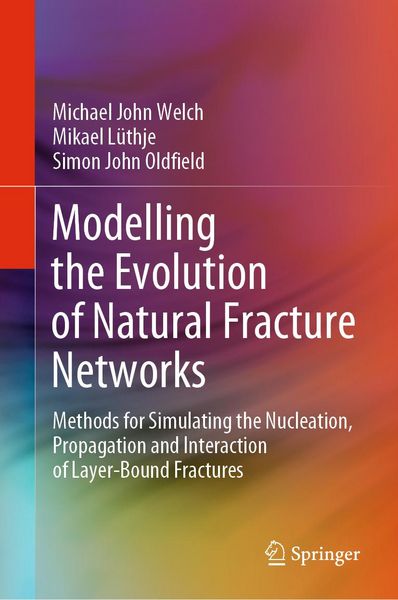
Modelling the Evolution of Natural Fracture Networks Methods for Simulating the Nucleation, Propagation and Interaction of Layer-Bound Fractures

142,99 €

inkl. gesetzl. MwSt.

Beschreibung

This book presents and describes an innovative method to simulate the growth of natural fractural networks in different geological environments, based on their geological history and fundamental geomechanical principles. The book develops techniques to simulate the growth and interaction of large populations...

Beschreibung

This book presents and describes an innovative method to simulate the growth of natural fractural networks in different geological environments, based on their geological history and fundamental geomechanical principles. The book develops techniques to simulate the growth and interaction of large populations of layer-bound fracture directly, based on linear elastic fracture mechanics and subcritical propagation theory. It demonstrates how to use these techniques to model the nucleation, propagation and interaction of layer-bound fractures in different orientations around large scale geological structures, based on the geological history of the structures. It also explains how to use these techniques to build more accurate discrete fracture network (DFN) models at a reasonable computational cost. These models can explain many of the properties of natural fracture networks observed in outcrops, using actual outcrop examples. Finally, the book demonstrates how it can be incorporated into flow modelling workflows using subsurface examples from the hydrocarbon and geothermal industries. Modelling the Evolution of Natural Fracture Networks will be of interest to anyone curious about understanding and predicting the evolution of complex natural fracture networks across large geological structures. It will be helpful to those modelling fluid flow through fractures, or the geomechanical impact of fracture networks, in the hydrocarbon, geothermal, CO2 sequestration, groundwater and engineering industries.

Produktdetails

Format

PDF

Kopierschutz

Nein

Family Sharing

Nein

Text-to-Speech

Nein

Produktdetails

Format

PDF

Format

eBooks im PDF-Format haben eine festgelegte Seitengröße und eignen sich daher nur bedingt zum Lesen auf einem tolino eReader oder Smartphone. Für den vollen Lesegenuss empfehlen wir Ihnen bei PDF-eBooks die Verwendung eines Tablets oder Computers.

Kopierschutz

Nein

Kopierschutz

Dieses eBook können Sie uneingeschränkt auf allen Geräten der tolino Familie, allen sonstigen eReadern und am PC lesen. Das eBook ist nicht kopiergeschützt und kann ein personalisiertes Wasserzeichen enthalten. Weitere Hinweise zum Lesen von eBooks mit einem personalisierten Wasserzeichen finden Sie unter Hilfe/Downloads.

Family Sharing

Nein

Family Sharing

Mit Family Sharing können Sie eBooks innerhalb Ihrer Familie (max. sechs Mitglieder im gleichen Haushalt) teilen. Sie entscheiden selbst, welches Buch Sie mit welchem Familienmitglied teilen möchten. Auch das parallele Lesen durch verschiedene Familienmitglieder ist durch Family Sharing möglich. Um eBooks zu teilen oder geteilt zu bekommen, muss jedes Familienmitglied ein Konto bei Thalia oder einem anderen tolino-Buchhändler haben. Weitere Informationen finden Sie unter Hilfe/Family-Sharing.

Text-to-Speech

Nein

Text-to-Speech

Bedeutet Ihnen Stimme mehr als Text? Mit der Funktion Text-to-Speech können Sie sich im tolino webReader und in der aktuellen Thalia – Lesen & Hören App das eBook vorlesen lassen. Weitere Informationen finden Sie unter Hilfe/Text-to-Speech.

Erscheinungsdatum

18.09.2020

Verlag Springer
Seitenzahl

230 (Printausgabe)

Dateigröße

11794 KB

Sprache

Englisch

EAN

9783030524142

Barrierefreiheit
  • keine Information zur Barrierefreiheit bekannt

Noch keine Bewertungen vorhanden

Verfassen Sie die erste Bewertung zu diesem Artikel

Helfen Sie anderen Kundinnen und Kunden durch Ihre Meinung.

Kundinnen und Kunden meinen

Bewertungen (0)

Weitere Artikel finden Sie in

  • Produktbild: Modelling the Evolution of Natural Fracture Networks