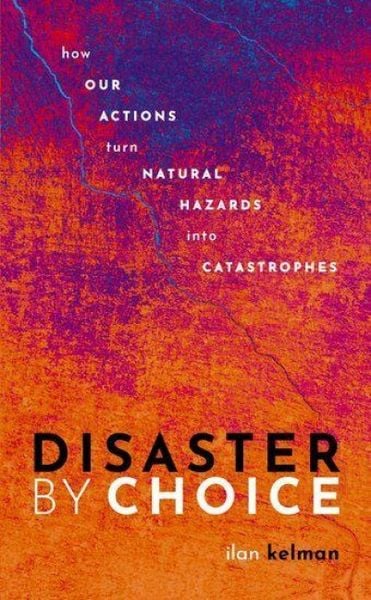
Disaster by Choice How our actions turn natural hazards into catastrophes
-
- Taschenbuch ausgewählt
- eBook
-
Sprache:Englisch
17,99 €
inkl. gesetzl. MwSt.,
- Kostenlose Lieferung ab 30 € Einkaufswert
- Versandkostenfrei für Bonuscard-Kund*innen
Beschreibung
Produktdetails
Einband
Taschenbuch
Erscheinungsdatum
24.02.2022
Verlag
Oxford AcademicSeitenzahl
192
Maße (L/B/H)
19,7/13,2/1,7 cm
Gewicht
165 g
Sprache
Englisch
ISBN
978-0-19-884135-7
An earthquake shatters Haiti and a hurricane slices through Texas. We hear that nature runs rampant, seeking to destroy us through these 'natural disasters'. Science recounts a different story, however: disasters are not the consequence of natural causes; they are the consequence of human choices and decisions. We put ourselves in harm's way; we fail to take measures which we know would prevent disasters, no matter what the environment does. This can be both hard to accept, and hard to unravel. A complex of factors shape disasters. They arise from the political processes dictating where and what we build, and from social circumstances which create and perpetuate poverty and discrimination. They develop from the social preference to blame nature for the damage wrought, when in fact events such as earthquakes and storms are entirely commonplace environmental processes. We feel the need to fight natural forces, to reclaim what we assume is ours, and to protect ourselves from what we perceive to be wrath from outside our communities. This attitude distracts us from the real causes of disasters: humanity's decisions, as societies and as individuals. It stops us accepting the real solutions to disasters: making better decisions. This book explores stories of some of our worst disasters to show how we can and should act to stop people dying when nature unleashes its energies. The disaster is not the tornado, the volcanic eruption, or climate change, but the deaths and injuries, the loss of irreplaceable property, and the lack and even denial of support to affected people, so that a short-term interruption becomes a long-term recovery nightmare. But we can combat this, as Kelman shows, describing inspiring examples of effective human action that limits damage, such as managing flooding in Toronto and villages in Bangladesh, or wildfires in Colorado. Throughout, his message is clear: there is no such thing as a natural disaster. The disaster lies in our inability to deal with the environment and with ourselves.
Noch keine Bewertungen vorhanden
Verfassen Sie die erste Bewertung zu diesem Artikel
Helfen Sie anderen Kundinnen und Kunden durch Ihre Meinung.
Kurze Frage zu unserer Seite
Vielen Dank für Ihr Feedback
Wir nutzen Ihr Feedback, um unsere Produktseiten zu verbessern. Bitte haben Sie Verständnis, dass wir Ihnen keine Rückmeldung geben können. Falls Sie Kontakt mit uns aufnehmen möchten, können Sie sich aber gerne an unseren Kund*innenservice wenden.
zum Kundenservice