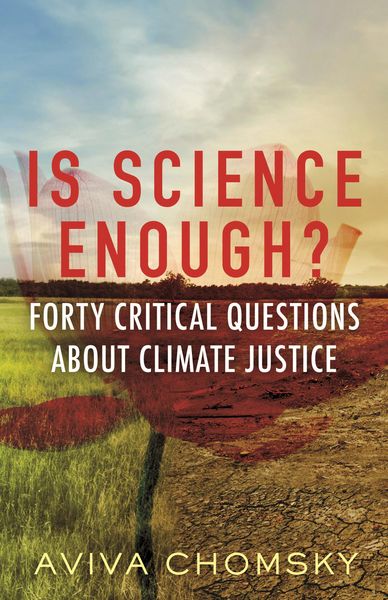
Is Science Enough? Forty Critical Questions about Climate Justice
-
- Taschenbuch ausgewählt
- eBook
-
Sprache:Englisch
15,99 €
inkl. gesetzl. MwSt.,
- Kostenlose Lieferung ab 30 € Einkaufswert
- Versandkostenfrei für Bonuscard-Kund*innen
Beschreibung
Produktdetails
Einband
Taschenbuch
Erscheinungsdatum
05.04.2022
Verlag
Beacon PressSeitenzahl
232
Maße (L/B/H)
21,4/13,8/1,8 cm
Gewicht
270 g
Sprache
Englisch
ISBN
978-0-8070-1576-6
— Kirkus Reviews
“This is a worthwhile contribution to the growing body of work on the ethics of climate change.”
— Publishers Weekly
“Avi Chomsky’s essential primer on climate change goes beyond the usual scientific, technical, and policy dimensions to focus much-needed attention on the ways power and inequality matter too. It deftly and lucidly puts the impending ecological disaster in proper perspective, framing it as an environmental and social crisis.”
—Chad Montrie, author of A People’s History of Environmentalism in the United States
“In a world where everyone seems to have answers but only to the wrong questions, Chomsky offers clear, next-level inquiries into what science and technology can actually deliver. Should you buy an EV? Become a vegetarian? Invest in energy tech? Chomsky’s grounded and astute questioning charts a brave path through the dubious assumptions and hype holding us back from meaningful action.”
—Ozzie Zehner, author of Green Illusions and producer of Planet of the Humans
“When reading books or articles purporting to address the climate emergency, I typically find plenty to disagree with. But reading Aviva Chomsky’s Is Science Enough? Forty Critical Questions About Climate Justice, I found myself nodding my head all the way through. Dr. Chomsky asks all of the most crucial questions and answers each in clear-eyed, logical, fearless, plain-spoken prose. She brings to life the scientific, technical, and economic concepts that must be understood if predatory exploitation and degradation of the ecosphere, including our own species, is to be ended. Every climate bookshelf should include Is Science Enough? in a prime spot.”
—Stan Cox, author of The Green New Deal and Beyond
“This is a book every aspiring—or even seasoned—climate activist should read. Climate activism can only be climate justice activism, Aviva Chomsky argues, guiding future activists along the way on everything they need to know about the science and politics of climate change.”
—Giorgos Kallis, author of Limits: Why Malthus Was Wrong and Why Environmentalists Should Care
“Are you feeling a bit lost in the climate change debate? This book will provide a clear, concise, and incisive response to all your questions. This is one of the most important issues of the twenty-first century, and Is Science Enough? one of the most important books about it. Don’t miss it!”
—Federico Demaria, coauthor of The Case for Degrowth
“Climate change isn’t just about science. It’s also about justice. Chomsky ties it all together in this book: a brilliant primer on the most important issues of our generation.”
—Jason Hickel, author of Less Is More: How Degrowth Will Save the World
“ Is Science Enough? clearly and cogently explains the physical, social, and political issues raised by climate change, including the consequences of inaction. It is an excellent introduction for undergraduates.”
—Joan Martínez Alier, senior researcher in the Environmental Science and Technology Institute of the Autonomous University of Barcelona, past president of the International Society for Ecological Economics, and author of Ecological Economics
“Coming to terms with climate change can feel overwhelming. But Aviva Chomsky is an expert guide to the most pressing questions facing us today, from the dilemmas of individual action to the structural forces driving the climate crisis. Comprehensive, frank, and lucid, Is Science Enough? is an indispensable primer for those who are just beginning to explore the social and political dimensions of climate change and an invaluable reference for those returning to them.”
—Alyssa Battistoni, coauthor of A Planet to Win
“From COVID to climate change, ‘Believe the science’ is a mantra. But as Aviva Chomsky’s powerful book shows, science is not enough to confront the planetary emergency of global warming and environmental destruction. Despite decades of research, politicians and firms have engaged in predatory delay; meanwhile, technology alone won’t solve a multifaceted crisis with roots in capitalism and social inequality. Chomsky provides a compelling, accessible guide to the causes and consequences of climate change—and the thorny debates over the policies and technologies deployed to address it. Ultimately, she argues, the only way forward is widespread collective action for climate, economic, and racial justice.”
—Thea Riofrancos, coauthor of A Planet to Win
Noch keine Bewertungen vorhanden
Verfassen Sie die erste Bewertung zu diesem Artikel
Helfen Sie anderen Kundinnen und Kunden durch Ihre Meinung.
Kurze Frage zu unserer Seite
Vielen Dank für Ihr Feedback
Wir nutzen Ihr Feedback, um unsere Produktseiten zu verbessern. Bitte haben Sie Verständnis, dass wir Ihnen keine Rückmeldung geben können. Falls Sie Kontakt mit uns aufnehmen möchten, können Sie sich aber gerne an unseren Kund*innenservice wenden.
zum Kundenservice