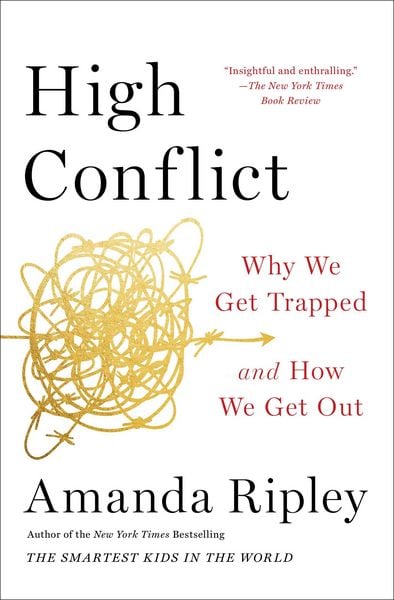
High Conflict Why We Get Trapped and How We Get Out
-
- Taschenbuch ausgewählt
- eBook
- Hörbuch
-
Sprache:Englisch
19,79 €
inkl. gesetzl. MwSt.,
- Kostenlose Lieferung ab 30 € Einkaufswert
- Versandkostenfrei für Bonuscard-Kund*innen
Beschreibung
Produktdetails
Einband
Taschenbuch
Erscheinungsdatum
05.04.2022
Abbildungen
b&w photos throughout
Verlag
Simon & Schuster UkSeitenzahl
368
Maße (L/B/H)
21/13,8/2,3 cm
Gewicht
333 g
Farbe
Wollweiß
Sprache
Englisch
ISBN
978-1-982128-57-9
A “compulsively readable” (Evan Osnos, National Book Award–winning author) book from the New York Times bestselling author of The Unthinkable and award-winning journalist Amanda Ripley investigating how good people get captured by high conflict—and how they break free.
When we are baffled by the insanity of the “other side”—in our politics, at work, or at home—it’s because we aren’t seeing how the conflict itself has taken over. That’s what “high conflict” does. High conflict is what happens when discord distills into a good-versus-evil kind of feud, the kind with an us and a them. In this state, the brain behaves differently. We feel increasingly certain of our own superiority, and everything we do to try to end the conflict, usually makes it worse. Eventually, we can start to mimic the behavior of our adversaries, harming what we hold most dear.
Our journey spans California, Chicago, Colombia, New York, and beyond, following people caught in political feuds, gang vendettas, and deep ideological divides as they confront the stories fueling their conflicts and seek a path forward. All these people, in dramatically different situations, were drawn into high conflict by similar forces, including conflict entrepreneurs, humiliation, and false binaries. But ultimately, all of them found ways to transform high conflict into good conflict, the kind that made them better people. They rehumanized and recategorized their opponents, and they revived curiosity and wonder, even as they continued to fight for what they knew was right.
People do escape high conflict. Individuals—even entire communities—can short-circuit the feedback loops of outrage and blame, if they want to. “Insightful and enthralling” (The New York Times Book Review) High Conflict provides a mind-opening new way to think about conflict that will transform how we move through the world.
Noch keine Bewertungen vorhanden
Verfassen Sie die erste Bewertung zu diesem Artikel
Helfen Sie anderen Kundinnen und Kunden durch Ihre Meinung.
Kurze Frage zu unserer Seite
Vielen Dank für Ihr Feedback
Wir nutzen Ihr Feedback, um unsere Produktseiten zu verbessern. Bitte haben Sie Verständnis, dass wir Ihnen keine Rückmeldung geben können. Falls Sie Kontakt mit uns aufnehmen möchten, können Sie sich aber gerne an unseren Kund*innenservice wenden.
zum Kundenservice