KI-Beratung Beta

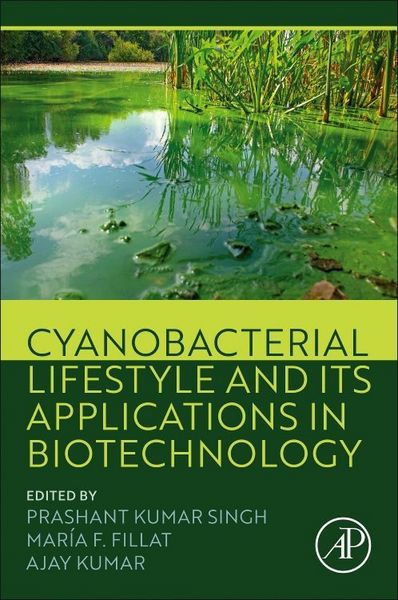
Produktbild: CYANOBACTERIAL LIFESTYLE & ITS

CYANOBACTERIAL LIFESTYLE & ITS

166,99 €

inkl. gesetzl. MwSt., Versandkostenfrei


Beschreibung

Environmental change is affecting the world's agricultural productivity. This is coupled with an increase in population: according to the United Nations Department for Economic and Social Affairs, the global population is estimated to reach 9.7 billion by 2050. Therefore, the current situation requires...

Beschreibung

Environmental change is affecting the world's agricultural productivity. This is coupled with an increase in population: according to the United Nations Department for Economic and Social Affairs, the global population is estimated to reach 9.7 billion by 2050. Therefore, the current situation requires that we develop climate-smart technologies to improve crop productivity to sustain the ever-rising global population. Current-day farmers are introducing a considerable amount of agrochemicals to enhance crop productivity. Indiscriminate agrochemical application has altered not only the soil's physic-chemical and biological properties but also affected human health through food chain contamination. Cyanobacteria, under these changing environmental conditions, may help to resolve the problem significantly without changing the natural soil properties. In spite of their well-known stress tolerance potential, most of the cyanobacterial stress management and signaling pathways are yet to be fully characterized. Therefore, there is an urgent need to explore cyanobacterial metabolism under stress as well as their regulatory pathways to exploit them for sustainable agriculture. In recent decades, the application of cyanobacteria has attracted scientists because of uniqueness, better adaptability, and synthetic products.

Diverse cyanobacterial communities with the ability to fix atmospheric nitrogen, together with their photosynthetic properties, have demonstrated their application under field conditions. Several cyanobacterial species have thus been exploited to enhance soil fertility, mitigate biotic and abiotic stress, and contamination management.

Cyanobacterial Lifestyle and its Applications in Biotechnology has been designed to discuss different aspects of cyanobacterial physiology with the aim of helping to provide a better understanding of advanced cyanobacterial molecular biology and their metabolism to uncover the potential of cyanobacteria in the tailoring of stress smart crops for sustainable agriculture. Chapters include valuable information about the role of cyanobacteria in the evolution of life, cyanobacterial photosynthesis, stress-tolerant cyanobacterium, biological nitrogen fixation, circadian rhythms, genetics and molecular biology of abiotic stress responses.

Produktdetails

Einband

Taschenbuch

Erscheinungsdatum

14.10.2021

Abbildungen

50 illustrations (25 in full color)

Herausgeber Prashant Kumar Singh + weitere

Produktdetails

Einband

Taschenbuch

Erscheinungsdatum

14.10.2021

Abbildungen

50 illustrations (25 in full color)

Herausgeber
Verlag Elsevier Science & Technology
Seitenzahl

382

Maße (L/B/H)

22,9/15,2/1,8 cm

Gewicht

621 g

Sprache

Englisch

ISBN

978-0-323-90634-0

EU-Ansprechpartner

Elsevier B.V.
Radarweg 29
1043 NX Amsterdam
NL
productsafety@elsevier.com

Herstelleradresse

Elsevier Science & Technology
London Wall 125
EC2Y 5AS London
GB
tradeorders@elsevier.com

Noch keine Bewertungen vorhanden

Verfassen Sie die erste Bewertung zu diesem Artikel

Helfen Sie anderen Kundinnen und Kunden durch Ihre Meinung.

Kundinnen und Kunden meinen

Bewertungen (0)

Die Leseprobe wird geladen.
  • Produktbild: CYANOBACTERIAL LIFESTYLE & ITS
  • 1. Cyanobacterial diversity concerning the extreme environment and their bioprospecting
    Arun Kumar Kashyap, Sumit Kumar Dubey, and Buddhi Prakash Jain
    2. Cyanobacterial nanoparticles: Application in agriculture and allied sectors
    Vaishali Gupta, Naveen Kumar Verma, and Kaushal Kishore Choudhary
    3. Cyanobacterial photosynthetic reaction center in wobbly light: Modulation of light energy by orange carotenoid proteins (OCPs)
    Rahul Prasad Singh, Sandeep Kumar Singh, Ajay Kumar, Arpan Modi, Mukesh Kumar Yadav, Punuri Jayasekhar Babu, Garima Singh, Kaushlendra, Naveen Chandra Joshi, Avinash Chandra Rai, Sandip Ghuge, Anil Kumar, Avinash Singh, Prashant Kumar Singh, and Wenjing Wang
    4. Back to the past: improving photosynthesis with cyanobacterial genes
    Rocío Arce, Paula Vicino, Mariana Demarchi, and Anabella Fernanda Lodeyro
    5. Promises and challenges for expanding the use of N2-fixing cyanobacteria as a fertilizer for sustainable agriculture
    Rafael Ambrosio, Lara Sanchez Rizza, Mauro Do Nascimiento, Hugo Guillermo Jimenez Pacheco, Lilia Mary Miranda Ramos, Jose A. Hernandez, and Leonardo Curatti
    6. Thermophilic and Thermotolerant Cyanobacteria: Environmental and Biotechnological Perspectives
    Gajanan T. Mehetre, Zothanpuia, Purbajyoti Deka, William Carrie, Lalrokimi, Bhim Pratap Singh
    7. Exploring the ability of cyanobacterial ferric uptake regulator (FUR) proteins to increase yeast tolerance to abiotic stresses
    Violeta C. Sein-Echaluce, José Miguel Mulet, María V. Barja, M. Luisa Peleato, María F. Fillat
    8. Exploring ecological diversity and biosynthetic potential of cyanobacteria for biofuel production
    Galyna Kufryk
    9. Cyanobacterial availability for CRISPR-based genome editing: Current and future challenges
    Sandeep Kumar Singh, Ajay Kumar, Mukesh Kumar Yadav, Garima Singh, Punuri Jayasekhar Babu, Zothanpuia, Liansangmawii Chhakchhuak, Naveen Chandra Joshi, Avinash Chandra Rai, Avinash Singh, Kaushlendra, Rosie Lalmuanpuii, Esther Lalnunmawii, Bendangchuchang Longchur, and Prashant Kumar Singh
    10. Cyanobacteria and Salinity Stress Tolerance
    Rahul Prasad Singh, Priya Yadav, Reena Kujur, Kapil Deo Pandey, Rajan Kumar Gupta
    11. Cyanobacteria as biostimulants in the paddy fields
    Prashant Kumar Singh, Ajay Kumar, Mukesh Kumar Yadav, Kushlendra, and Savita Singh
    12. Molecular Characterization of Local Cyanobacterial Isolates Using 16S rRNA, rpoB And nifH Biomarkers
    Nidhi Kumari and Lal Chand Rai
    13. Cyanobacteria-mediated heavy metal and xenobiotics bioremediation
    Shweta Pandey, Sumit Kumar Dubey, Arun Kumar Kashyap, and Buddhi Prakash Jain
    14. Cyanobacteria: As a promising candidate for nanoparticles synthesis
    Dnyaneshwar K. Kulal, Dinesh N. Navale, Santosh W. Zote, Prasanna B. Ranade, and Pramod K. Kalambate