Gutscheinbedingungen

**Gültig nur für Bestellungen an die Wunsch-Poststation bis 10.06.2026 auf Spielzeug, Schreibwaren, Filme, Geschenke & Trends, Musik, tolino eReader & Zubehör, Hörbücher und Hörbuch-Downloads (außer Abo), nicht preisgebundene Bücher und Kalender online auf thalia.at und in der Thalia App. Einzelne Artikel können ausgeschlossen sein. Aufgrund der Buchpreisbindung sind deutschsprachige Bücher und eBooks ausgenommen. Zusätzlich ausgenommen sind preisgebundene Artikel, Abos & Flatrates, eBooks, Games, Geschenkkarten/-boxen, Shelfies, Software, Zeitschriften sowie einzelne Artikel von tonies®. Pro Einkauf einmal einlösbar. Kein Click & Collect möglich. Keine Barauszahlung. Nicht kombinierbar mit anderen Aktionen und Gutscheinen. Gutschein wird auf max. 500€ Bestellwert angerechnet. Nicht gültig für Versandkosten und Services.

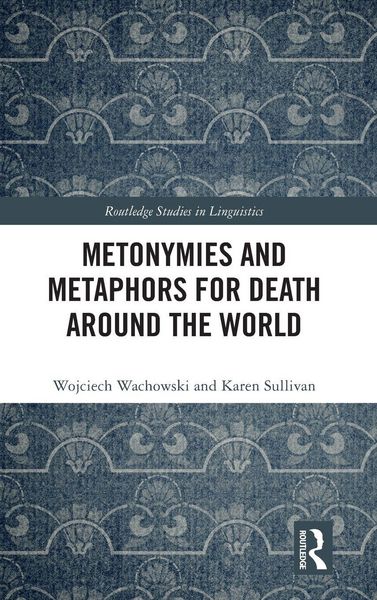
Produktbild: Metonymies and Metaphors for Death Around the World

Metonymies and Metaphors for Death Around the World

235,99 €

inkl. gesetzl. MwSt., Versandkostenfrei


Beschreibung

Produktdetails

Einband

Gebundene Ausgabe

Erscheinungsdatum

30.11.2021

Abbildungen

schwarz-weiss Illustrationen, Raster, schwarz-weiss, Zeichnungen, schwarz-weiss

Verlag

Taylor and Francis

Seitenzahl

171

Maße (L/B/H)

23,5/15,7/1,4 cm

Gewicht

371 g

Sprache

Englisch

ISBN

978-1-03-202528-5

Beschreibung

Produktdetails

Einband

Gebundene Ausgabe

Erscheinungsdatum

30.11.2021

Abbildungen

schwarz-weiss Illustrationen, Raster, schwarz-weiss, Zeichnungen, schwarz-weiss

Verlag

Taylor and Francis

Seitenzahl

171

Maße (L/B/H)

23,5/15,7/1,4 cm

Gewicht

371 g

Sprache

Englisch

ISBN

978-1-03-202528-5

Herstelleradresse

Produktsicherheitsverantwortliche/r
Europaallee 1
36244 Bad Hersfeld
DE

Email: gpsr@libri.de

Kundinnen und Kunden meinen

0 Bewertungen

Informationen zu Bewertungen

Zur Abgabe einer Bewertung ist eine Anmeldung im Konto notwendig. Die Authentizität der Bewertungen wird von uns nicht überprüft. Wir behalten uns vor, Bewertungstexte, die unseren Richtlinien widersprechen, entsprechend zu kürzen oder zu löschen.

Die Bewertungen sind nach Format, Anzahl Sterne und Datum sortiert.

Verfassen Sie die erste Bewertung zu diesem Artikel

Helfen Sie anderen Kund*innen durch Ihre Meinung

Kundinnen und Kunden meinen

0 Bewertungen filtern

Die Leseprobe wird geladen.
  • Produktbild: Metonymies and Metaphors for Death Around the World
  • Table of Contents

    Chapter 1. Introduction

    1.1 Why not be direct about death?

    1.2 Taboo, euphemism and dysphemism

    1.3 Highlighting and hiding

    1.4 Do metonymy and metaphor let us achieve a long-lasting backgrounding effect?

    1.5 The structure of the book

    1.6 Sources and methods

    PART I METONYMY

    Chapter 2. Why have metonymies for death?

    2.1 Types of metonymic relation

    2.2 Why are part for whole and whole for part metonymies so important?

    2.3 Why are part for whole and whole for part used to talk about death?

    2.4 How do we select the source?

    2.5 Conclusion

    Chapter 3. How is the part for whole used to talk about death?

    3.1 The initial stage

    3.2 The central and post-central stage

    3.3 The final stage

    3.4 The post-final stage – the effect of death

    3.5 Multiple part for whole metonymies

    3.6 Part for whole in metaphor and blending

    3.7 Form metonymy

    3.8 Conclusion

    Chapter 4. How is the whole for part used to talk about death?

    4.1 Whole for part – euphemising death and dying

    4.2 Whole for part and deliberately caused death

    4.3 Whole for part and suicide

    4.4 Whole for part in militarese and other specialised discourse genres

    4.5 Whole for part – multiple levels of euphemism

    4.6 Whole for part euphemisms for death-related concepts

    4.3 Conclusion

    PART II METAPHOR

    Chapter 5. Why Use Metaphors for Death?

    Chapter 6. The Death of Sleep

    6.1 The experiential basis of death is sleep

    6.2 The state of the ‘soul’ during death and sleep

    6.3 Funerary customs that extend the correspondences between death and sleep

    6.4 Dreams and the afterlife

    6.5 Awakening and resurrection

    6.6 The manifestations of the death is sleep metaphor

    6.7 Examples of blending

    6.8 Conclusion

    Chapter 7. Darkness, night and winter

    7.1 A lifetime is a fire

    7.2 A lifetime is a year and a lifetime is a day

    7.3 Blending

    7.4 Conclusion

    Chapter 8. The End of a Journey

    8.1 The deceased are 'gone', but where did they 'go'?

    8.2 The Source of the voyage in death is departure

    8.3 'Going' to Heaven, eternity, or another Goal

    8.4 How do we 'get there'? The Path in death is departure

    8.5 When the body is a container

    8.6 'Going to one’s grave' as a conceptual blend

    8.7 Conclusion: To what extent are we all going together?

    Chapter 9. Game Over

    9.1 Death as a game/entertainment

    9.2 Cultural frames in death is the end of a game/entertainment

    9.3 Death as a player: A conceptual blend

    9.4 The deceased as a player – a conceptual blend

    9.5 Conclusion

    Chapter 10. The Unseemly Sights and Sounds of Death

    10.1 Position of the body

    10.2 The sounds of life and death

    10.3 Burial of the body

    10.4 Funerary rites and artefacts

    10.5 Manner of death

    10.6 Processes of decay

    10.7 Blending

    10.8 Conclusion

    Chapter 11. Conclusion

    11.1 The hiding power of death metonymies

    11.2 Near-universals in the human experience of death

    References

    Attributions