KI-Beratung Beta

Gutscheinbedingungen

**Gültig bis 05.10.2026 ab einem Mindestbestellwert von 30€ auf Spielzeug, Schreibwaren, Filme, Geschenke & Trends, Musik, tolino eReader & Zubehör, Hörbücher und Hörbuch-Downloads, nicht preisgebundene Bücher und Kalender online auf thalia.at und in der Thalia App. Einzelne Artikel können ausgeschlossen sein. Aufgrund der Buchpreisbindung sind deutschsprachige Bücher und eBooks ausgenommen. Zusätzlich ausgenommen sind Abos & Flatrates, Games, Geschenkkarten/-boxen, Shelfies, Software, Zeitschriften sowie einzelne Artikel von tonies®. Pro Einkauf einmal einlösbar. Nur gültig mit im Onlineshop hinterlegter Bonuscard. Click & Collect nur bei Onlinevorabzahlung möglich. Keine Barauszahlung. Nicht kombinierbar mit anderen Aktionen und Gutscheinen. Gutschein wird auf max. 500€ Bestellwert angerechnet. Nicht gültig für Versandkosten und Services. Preisgebundene Artikel sind vom Mindestbestellwert ausgeschlossen.

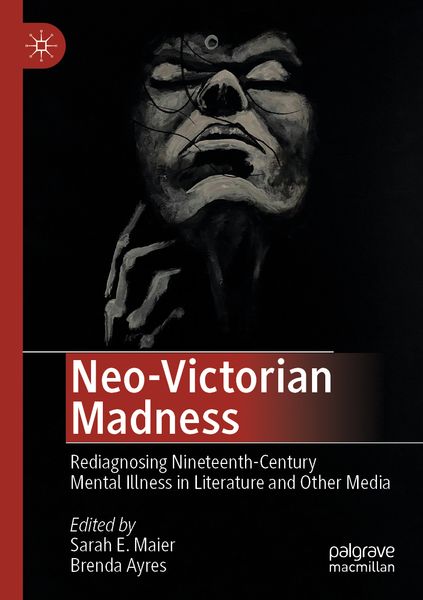
  • Produktbild: Neo-Victorian Madness
  • Produktbild: Neo-Victorian Madness
- 10%

Neo-Victorian Madness Rediagnosing Nineteenth-Century Mental Illness in Literature and Other Media

10% sparen

137,99 € UVP 153,99 €

inkl. gesetzl. MwSt., Versandkostenfrei


Beschreibung

Produktdetails

Einband

Taschenbuch

Erscheinungsdatum

02.06.2021

Abbildungen

XV, 308 p. 3 illus., 2 illus. in color.

Herausgeber

Sarah E. Maier + weitere

Verlag

Springer

Seitenzahl

308

Maße (L/B/H)

21/14,8/1,8 cm

Gewicht

421 g

Auflage

21001 Auflage 1st edition 2020

Sprache

Englisch

ISBN

978-3-030-46584-1

Beschreibung

Rezension

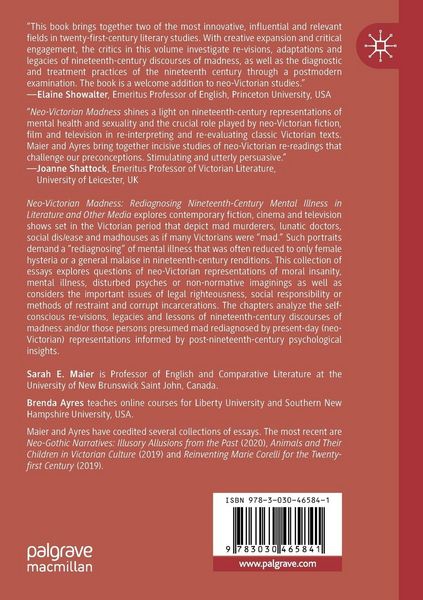
“The volume … offers a good overview of the different shapes Neo-Victorian engagements with madness can take, a thorough exploration of Victorian mental-health-related medical discourses and some very strong individual contributions.” (Anne Reus, The Wilkie Collins Journal, wilkiecollinssociety.org, Vol. 18, 2021)

Portrait


Sarah E. Maier
is

Professor of English and Comparative Literature at the University of New Brunswick Saint John, Canada.


Brenda Ayres
 teaches online courses for Liberty University and Southern New Hampshire University, USA.


Maier and Ayres have coedited several collections of essays. The most recent are
Neo-Gothic Narratives: Illusory Allusions from the Past
(2020),
Animals and Their Children in Victorian Culture
(2019) and
Reinventing Marie Corelli for the Twenty-first Century
(2019).

Produktdetails

Einband

Taschenbuch

Erscheinungsdatum

02.06.2021

Abbildungen

XV, 308 p. 3 illus., 2 illus. in color.

Herausgeber

Verlag

Springer

Seitenzahl

308

Maße (L/B/H)

21/14,8/1,8 cm

Gewicht

421 g

Auflage

21001 Auflage 1st edition 2020

Sprache

Englisch

ISBN

978-3-030-46584-1

Herstelleradresse

Springer-Verlag GmbH
Tiergartenstr. 17
69121 Heidelberg
DE

Email: ProductSafety@springernature.com

Noch keine Bewertungen vorhanden

Verfassen Sie die erste Bewertung zu diesem Artikel

Helfen Sie anderen Kundinnen und Kunden durch Ihre Meinung.

Kundinnen und Kunden meinen

Bewertungen (0)

  • Produktbild: Neo-Victorian Madness
  • Produktbild: Neo-Victorian Madness

  • Chapter 1/Introduction: Neo-Victorian Maladies of the Mind, 
    Brenda Ayres and Sarah E. Maier
    .- Chapter 2/“I Am Not an Angel”: Madness and Addiction in Neo–Victorian Appropriations of 
    Jane Eyre, 
    Kate Faber Oestreich
    .- Chapter 3/ “We Should Go Mad”: The Madwoman and Her Nurse, 
    Rachel M. Friars
    and
    Brenda Ayres.- 
    Chapter 4/The Daughters of Bertha Mason: Caribbean Madwomen in Laura Fish’s
    Strange Music
    , Olivia Tjon-A-Meeuw.- Chapter 5/“A Necessary Madness”: PTSD in Mary Balogh’s Survivors’ Club Novels,
     
    Brenda Ayres
    .- Chapter 6/Unreliable Neo-Victorian Narrators, “Unwomen,” and
    Femmes Fatales
    : Nell Lyshon’s
    The Colour of Milk
    and Jane Harris’
    Gillespie and I, 
    Eckart Voigts.- Chapter 7/“Dear Holy Sister”: Narrating Madness, Bodily Horror and Religious Ecstasy in Michel Faber’s
    The Crimson Petal and the White, 
    Marshall Needleman Armintor.- Chapter 8/The Unmentionable Madness of Being a Woman,
    B
    renda Ayres
    and
    Sarah E. Maier
    .- Chapter 9/ Queering the Madwoman: A Mad/Queer Narrative in Margaret Atwood’s
    Alias Grace
    and Its Adaptation, 
    Barbara Braid.- 
    Chapter 10/Old Monsters, Old Curses: The New Hysterical Woman and
    Penny Dreadful, 
    Tim Posada.- 
    Chapter 11/The Glamorisation of Mental Illness in BBC’s
    Sherlock, 
    John C. Murray.- 
    Chapter 12/ Gendered (De)Illusions: Imaginative Madness in Neo-Victorian Childhood Trauma Narratives, 
    Sarah E. Maier.