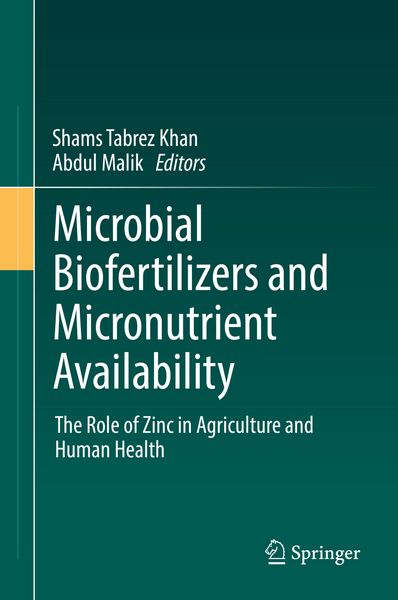
Microbial Biofertilizers and Micronutrient Availability The Role of Zinc in Agriculture and Human Health
-
- Hardcover ausgewählt
- Taschenbuch
- eBook
-
Sprache:Englisch
129,99 €
inkl. gesetzl. MwSt.,
Beschreibung
Produktdetails
Einband
Gebundene Ausgabe
Erscheinungsdatum
07.12.2021
Abbildungen
XIX, 461 p. 49 illus. in color.
Herausgeber
Khan Shams Tabrez + weitereVerlag
SpringerSeitenzahl
461
Maße (L/B/H)
24,1/16/3 cm
Gewicht
975 g
Auflage
21001 Auflage 1st edition 2022
Sprache
Englisch
ISBN
978-3-030-76608-5
This volume addresses various issues related to micronutrient deficiency, especially zinc, and discusses the possible approaches for combating mineral deficiency among humans and plants. The book mainly focuses on the zinc biofortification of vegetable and cereal crops and highlights the consequences of zinc deficiency and the health risks associated with zinc deficiency, especially in children and expecting mothers. The authors discuss different types of food that are rich in zinc and other minerals, how diets can be designed to meet the daily zinc requirements, and the impact of zinc deficiency on plant health and quality of agricultural products and the role of micronutrients in abiotic stress tolerance. The book also covers sustainable approaches to zinc biofortification in crops, such as the microbial solubilization of zinc in soil to improve zinc uptake by plants, and the formulation of these microbes into biofertilizers. The book will be of interest to dieticians, agricultural scientists, students and microbiologists.
Noch keine Bewertungen vorhanden
Verfassen Sie die erste Bewertung zu diesem Artikel
Helfen Sie anderen Kundinnen und Kunden durch Ihre Meinung.
Kurze Frage zu unserer Seite
Vielen Dank für Ihr Feedback
Wir nutzen Ihr Feedback, um unsere Produktseiten zu verbessern. Bitte haben Sie Verständnis, dass wir Ihnen keine Rückmeldung geben können. Falls Sie Kontakt mit uns aufnehmen möchten, können Sie sich aber gerne an unseren Kund*innenservice wenden.
zum Kundenservice