KI-Beratung Beta

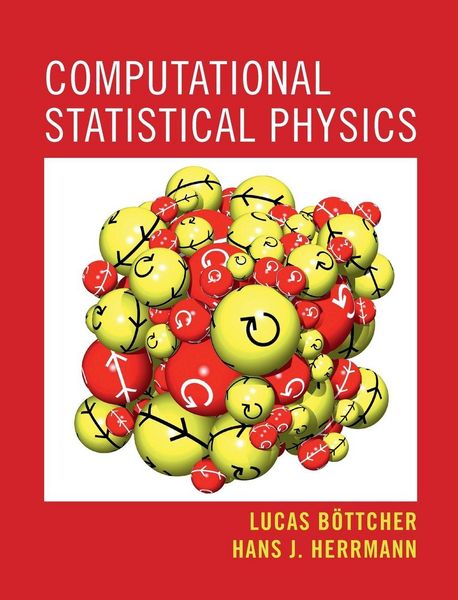
Produktbild: Computational Statistical Physics

Computational Statistical Physics

124,99 €

inkl. gesetzl. MwSt., Versandkostenfrei


Beschreibung

Providing a detailed and pedagogical account of the rapidly-growing field of computational statistical physics, this book covers both the theoretical foundations of equilibrium and non-equilibrium statistical physics, and also modern, computational applications such as percolation, random walks, magnetic...

Beschreibung

Providing a detailed and pedagogical account of the rapidly-growing field of computational statistical physics, this book covers both the theoretical foundations of equilibrium and non-equilibrium statistical physics, and also modern, computational applications such as percolation, random walks, magnetic systems, machine learning dynamics, and spreading processes on complex networks. A detailed discussion of molecular dynamics simulations is also included, a topic of great importance in biophysics and physical chemistry. The accessible and self-contained approach adopted by the authors makes this book suitable for teaching courses at graduate level, and numerous worked examples and end of chapter problems allow students to test their progress and understanding.

Produktdetails

Einband

Gebundene Ausgabe

Erscheinungsdatum

26.08.2021

Abbildungen

Worked examples or Exercises

Verlag Cambridge Academic

Produktdetails

Einband

Gebundene Ausgabe

Erscheinungsdatum

26.08.2021

Abbildungen

Worked examples or Exercises

Verlag Cambridge Academic
Seitenzahl

272

Maße (L/B/H)

26/20,8/1,9 cm

Gewicht

812 g

Sprache

Englisch

ISBN

978-1-108-84142-9

Herstelleradresse

Libri GmbH
Europaallee 1
36244 Bad Hersfeld
DE

Email: gpsr@libri.de

Noch keine Bewertungen vorhanden

Verfassen Sie die erste Bewertung zu diesem Artikel

Helfen Sie anderen Kundinnen und Kunden durch Ihre Meinung.

Kundinnen und Kunden meinen

Bewertungen (0)

  • Produktbild: Computational Statistical Physics
  • Preface; Part I. Stochastic Methods: 1. Random Numbers; 2. Random-Geometrical Models; 3. Equilibrium Systems; 4. Monte-Carlo Methods; 5. Phase Transitions; 6. Cluster Algorithms; 7. Histogram Methods; 8. Renormalization Group; 9. Learning and Optimizing; 10. Parallelization; 11. Non-Equilibrium Systems; Part II. Molecular Dynamics: 12. Basic Molecular Dynamics; 13. Optimizing Molecular Dynamics; 14. Dynamics of Composed Particles; 15. Long-Range Potentials; 16. Canonical Ensemble; 17. Inelastic Collisions in Molecular Dynamics; 18. Event-Driven Molecular Dynamics; 19. Non-Spherical Particles; 20. Contact Dynamics; 21. Discrete Fluid Models; 22. Ab-Initio Simulations; References; Index.