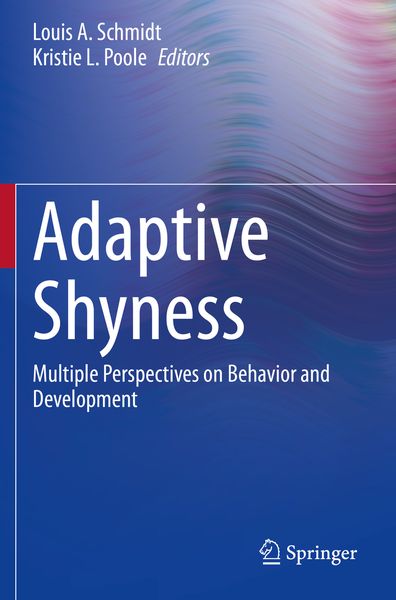

Adaptive Shyness Multiple Perspectives on Behavior and Development
-
- Hardcover
- Taschenbuch ausgewählt
- eBook
-
Sprache:Englisch
99,99 €
inkl. gesetzl. MwSt.,
Beschreibung
Produktdetails
Einband
Taschenbuch
Erscheinungsdatum
06.05.2021
Herausgeber
Louis A. Schmidt + weitereVerlag
SpringerSeitenzahl
327
Maße (L/B/H)
23,5/15,5/1,9 cm
Gewicht
528 g
Auflage
1st ed. 2020
Sprache
Englisch
ISBN
978-3-030-38879-9
This book examines the adaptive aspects of shyness. It addresses shyness as a ubiquitous phenomenon that reflects a preoccupation of the self in response to social interaction, resulting in social inhibition, social anxiety, and social withdrawal. The volume reviews the ways in which shyness has traditionally been conceptualized and describes the movement away from considering it as a disorder in need of treatment. In addition, it examines the often overlooked history and current evidence across evolution, animal species, and human culture, demonstrating the adaptive aspects of shyness from six perspectives: developmental, biological, social, cultural, comparative, and evolutionary.
Topics featured in this book include:- The study of behavioral inhibition and shyness across four academic generations.
- The development of adaptive subtypes of shyness.
- Shy children’s adaptation to academic challenges.
- Adaptiveness of introverts in the workplace.
- The role of cultural norms and values in shaping shyness.
- Perspectives of shyness as adaptive from Indigenous Peoples of North America.
- The role that personality differences play on ecology and evolution.
Adaptive Shyness is a must-have resource for researchers and professors, clinicians and related professionals as well as graduate students in developmental psychology, pediatrics, and social work as well as related disciplines, including social/personality, evolutionary, biological, and clinical child psychology, anthropology, sociology, and cultural studies.
Noch keine Bewertungen vorhanden
Verfassen Sie die erste Bewertung zu diesem Artikel
Helfen Sie anderen Kundinnen und Kunden durch Ihre Meinung.
Kurze Frage zu unserer Seite
Vielen Dank für Ihr Feedback
Wir nutzen Ihr Feedback, um unsere Produktseiten zu verbessern. Bitte haben Sie Verständnis, dass wir Ihnen keine Rückmeldung geben können. Falls Sie Kontakt mit uns aufnehmen möchten, können Sie sich aber gerne an unseren Kund*innenservice wenden.
zum Kundenservice