KI-Beratung Beta

Gutscheinbedingungen

**Gültig am 25.11.2026 auf fremdsprachige Bücher online auf thalia.at und in der Thalia App. Einzelne Artikel können ausgeschlossen sein. Ausgenommen sind preisgebundene Artikel & eBooks. Pro Einkauf einmal einlösbar. Click & Collect nur bei Onlinevorabzahlung möglich. Keine Barauszahlung. Nicht kombinierbar mit anderen Aktionen und Gutscheinen. Gutschein wird auf max. 500€ Bestellwert angerechnet. Nicht gültig für Geschenkkarten, Versandkosten und Services.

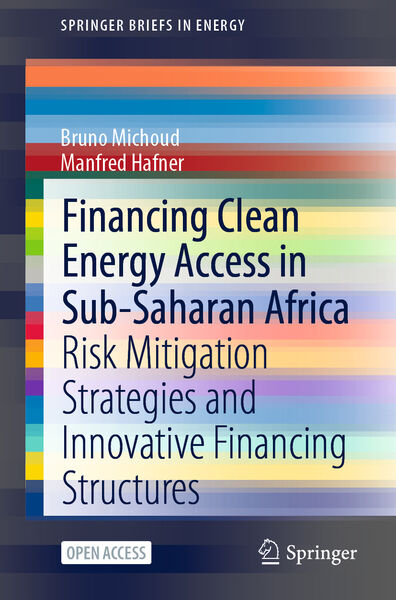
  • Produktbild: Financing Clean Energy Access in Sub-Saharan Africa
  • Produktbild: Financing Clean Energy Access in Sub-Saharan Africa

Financing Clean Energy Access in Sub-Saharan Africa Risk Mitigation Strategies and Innovative Financing Structures

Aus der Reihe SpringerBriefs in Energy

31,99 €

inkl. gesetzl. MwSt., Versandkostenfrei


Beschreibung

This open access book analyses barriers and challenges associated with the financing of clean energy access in sub-Saharan Africa. By considering various economic, financial, political, environmental and social factors, it explores the consequences of energy poverty across the region and maps the real...

Beschreibung

This open access book analyses barriers and challenges associated with the financing of clean energy access in sub-Saharan Africa. By considering various economic, financial, political, environmental and social factors, it explores the consequences of energy poverty across the region and maps the real and perceived investment risks for potential capital providers, both domestic and international. Furthermore, it analyses risk mitigation strategies and innovative financing structures available to the public and private sectors, which are aimed at leveraging capital in the clean energy sector at scale and fostering the creation of an enabling business and investment environment.

More specifically, the present book analyses how to (i) enhance capital allocation in projects and organisations that foster clean energy access in the region, (ii) mobilize private capital at scale and (iii) decrease the cost of financing through risk mitigation strategies. Going beyond traditional approaches, the book also considers socioeconomic and cultural aspects associated with investment barriers across the subcontinent. Moreover, it urges the public and private spheres to become more actively involved in tackling this pressing development issue, and provides policy recommendations for the public sector, including proposals for business model evolution at multilateral agencies and development institutions. It will appeal to a wide readership of both academics and professionals working in the energy industry, the financial sector and the political sphere, as well as to general readers interested in the ongoing debate about energy, sustainable development and finance.


Produktdetails

Einband

Taschenbuch

Erscheinungsdatum

16.07.2021

Abbildungen

XIII, 197 p. 21 illus., 20 illus. in color.

Verlag Springer

Produktdetails

Einband

Taschenbuch

Erscheinungsdatum

16.07.2021

Abbildungen

XIII, 197 p. 21 illus., 20 illus. in color.

Verlag Springer
Seitenzahl

197

Maße (L/B/H)

23,5/15,5/1,2 cm

Gewicht

330 g

Auflage

1st ed. 2021

Sprache

Englisch

ISBN

978-3-030-75828-8

Herstelleradresse

Springer-Verlag GmbH
Tiergartenstr. 17
69121 Heidelberg
DE

Email: ProductSafety@springernature.com

Noch keine Bewertungen vorhanden

Verfassen Sie die erste Bewertung zu diesem Artikel

Helfen Sie anderen Kundinnen und Kunden durch Ihre Meinung.

Kundinnen und Kunden meinen

Bewertungen (0)

  • Produktbild: Financing Clean Energy Access in Sub-Saharan Africa
  • Produktbild: Financing Clean Energy Access in Sub-Saharan Africa
  • Introduction.- Energy Access in Sub-Saharan Africa: General Context.- Risk Analysis and Mitigation Strategy Identification.- Public Policies and Initiatives in the Energy Sector.- Direct and Indirect Investments in the Energy Sector.- Capital Markets for the Financing of Clean Energy Access in Sub-Saharan Africa.- Risk Mitigation Instruments Targeting Specific Investment Risks.- Business Model Adaptation.- The Role of Multilateral Agencies and Development Banks.- Conclusions and Policy Recommendations.- Further Areas of Work.- Annex