Gutscheinbedingungen

**Gültig bis 06.07.2026 auf fremdsprachige Bücher online auf thalia.at, in der Thalia App ab einem Mindestbestellwert von 30€ und in allen Thalia Buchhandlungen in Österreich. In den Buchhandlungen nur gültig auf lagernde Ware. Einzelne Artikel können ausgeschlossen sein. Ausgenommen sind preisgebundene Artikel & eBooks. Pro Einkauf einmal einlösbar. Nur gültig gegen Vorlage oder im Onlineshop hinterlegter Bonuscard. Infos zur Einlösung in der Buchhandlung sind auf der Bonuscard-Vorteilspreisseite zu finden. Click & Collect nur bei Onlinevorabzahlung möglich. Keine Einlösung bei Scan & Go-Bezahlung. Keine Barauszahlung. Nicht kombinierbar mit anderen Aktionen und Gutscheinen. Gutschein wird auf max. 500€ Bestellwert angerechnet. Nicht gültig für Versandkosten und Services.

Produktbild: The Biomedical Empire

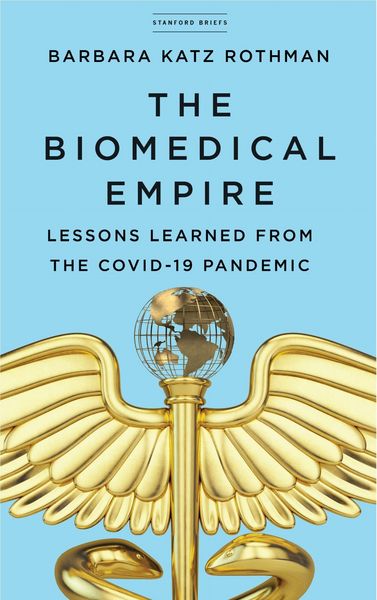
The Biomedical Empire Lessons Learned from the COVID-19 Pandemic

17,99 €

inkl. gesetzl. MwSt., zzgl. Versandkosten


  • Kostenlose Lieferung ab 30 € Einkaufswert
  • Versandkostenfrei für Bonuscard-Kund*innen

Beschreibung

Produktdetails

Einband

Taschenbuch

Erscheinungsdatum

22.06.2021

Verlag

Stanford University Press

Seitenzahl

164

Maße (L/B/H)

20,1/12,4/1 cm

Gewicht

186 g

Sprache

Englisch

ISBN

978-1-5036-2881-6

Beschreibung

Rezension

"Women have always been healers, the wise women. Barbara Katz Rothman shows how medicine has taken over the gates of life, the care of our bodies, and what has cost communities and cultures around the world."-Barbara Ehrenreich, author of Natural Causes "After the post-colonial critique of empire and the Foucauldian critique of biopower, Katz Rothman exposes the insidious reach of the biomedical empire, a global industry that has appropriated our capacity to care, commodified our sense of well-being, and seized full control over the beginning and end of life. Essential sociological reading for anyone interested in rescuing critical medical sociology from the clutches of right-wing populism."-Finn Bowring, Cardiff University "This book identifies the Biomedical Empire as the global leviathan monopolizing control of medicalized/industrialized healthcare, a truly imperial system defined by the bottom-line logic of 21st-century corporate- and finance-dominated global capitalism. This short, provocative account wonderfully illustrates how all this top-down-controlled machinery impacts intimate human events like birth, death, and the lonely terror of COVID-19 pandemic victims."-David Smith, University of California, Irvine "This work is a crisp critique of biomedicine which shows hope for a way out of the Biomedical Empire wherein the public, health and care may be infused back into public health."-Meghna Roy, Sociology of Health and Illness "While the book primarily draws on examples from the United States and the author's own lived experience, Rothman makes the case that the biomedical empire is transnational and transcends the nation-state. Unfolding over ten chapters, the book contributes to existing work in the sociology of medicine and scholarship on empire in contemporary contexts."-Durgesh Solanki, Journal of World-Systems Research "This book provides a compelling argument that only by naming the Biomedical Empire and recognizing biomedical citizenship can we begin to transform societies to act on the fundamental determinants of health."-Crystal Adams, Contemporary Sociology "Taken together... this book is a powerful damnation of contemporary health care systems, particularly in the United States where every service is itemized and billed."-Jill Thistlethwaite, Fulbright Chronicles "In a nutshell, [Katz Rothman's] book is a must-have not just for scholars and researchers interested in medical sociology but also for anybody seeking to familiarize themselves with the biomedical empire. Anyone who has visited a hospital or used biomedical services will be able to connect to the book. As a result, practically everyone should read the book."-Pankaj Singh, H-Death "[The Biomedical Empire is] an invitation to us all to rethink how we theorize the local and the global, class and power, and our subjection to persistent, escalating inequality worldwide."-Lenore Manderson, American Journal of Sociology

Produktdetails

Einband

Taschenbuch

Erscheinungsdatum

22.06.2021

Verlag

Stanford University Press

Seitenzahl

164

Maße (L/B/H)

20,1/12,4/1 cm

Gewicht

186 g

Sprache

Englisch

ISBN

978-1-5036-2881-6

Herstelleradresse

Libri GmbH
Europaallee 1
36244 Bad Hersfeld
DE

Email: gpsr@libri.de

Noch keine Bewertungen vorhanden

Verfassen Sie die erste Bewertung zu diesem Artikel

Helfen Sie anderen Kundinnen und Kunden durch Ihre Meinung.

Kundinnen und Kunden meinen

Bewertungen (0)

  • Produktbild: The Biomedical Empire
  • Contents and Abstracts 1A Moment of Crisis chapter abstract

    The covid pandemic has laid bare many of the structural problems and inequalities of biomedicine as a global industry. Inequalities across nation-states as well as within them have been made apparent, as have some of the dehumanizing and isolating practices of medical treatment. We must both acknowledge the good that medicine does and recognize its failures.

    2A Sociologist Walks into a Pandemic chapter abstract

    This chapter lays out the basic elements of sociological thinking, the understanding of structural and cultural factors. It explains the concept of 'social construction' and shows how that is applied to medicine.

    3Bringing Medical Sociology into the 21st Century chapter abstract

    Sociology must go beyond thinking of individual 'societies' and understand the globalization of power. This applies to biopower, the ways that the imperial power of Biomedicine has expanded its reach. Biomedicine functions globally in much the way we think of other imperial powers, from the Roman Empire to the British and onward, colonizing arenas of knowledge and practice, and turning them into sources of income for the colonizer.

    4The Three Elements of an Empire chapter abstract

    To understand Biomedicine as an Imperial power means seeing it as not only one of the largest industries on earth, but also as a governmental force and as a religious force. This chapter details the wide economic reach of biomedicine as one of the largest industries on earth, which also has a rule of law, bestowing citizenship, legitimating individuals as having the right to have rights; certifying both birth and death certificates; and legitimating mental states of being. Biomedicine also functions as a religion, a source of belief and comfort.

    5What Have We Lost? Where Did the Care Go? chapter abstract

    We must distinguish 'health care' from 'medical services.' Public health is increasingly presented as access to medical services, the 'ask your doctor' approach. Public health in its origins was about creating a health-enabling environment, providing clean air, water, safe housing and this chapter argues we must return to that. Within biomedical control, individuals are best understood as 'patients,' consumers of medical services. The language of 'patient' is itself explored.

    6The Land of the Sick chapter abstract

    This chapter builds on Sontag's words, identifying illness as 'land of the sick.' Diagnosis serves the administrative purpose of admitting, or denying admission, to that land, via the 'sick role,' the position of patient. Where in traditional societies religion stood at the gates of life, welcoming and legitimating newly created people and ushering out the dying, in the contemporary world Biomedicine has taken over that function. This is apparent in the world of procreation, in which biomedicine controls the definition of embryonic and fetal personhood, and in death in which a medical declaration and certificate is required. Birth and death have become procedural moments under biomedical control.

    7Death and Dying: Seen Through the Lens of Covid-19 chapter abstract

    This chapter discusses sudden death and the history of attempts at resuscitation; slow death, the increasing movement of death into hospital-management; and the slowest death, the growth of nursing homes and long-term-care facilities. The role of nursing home in covid deaths has been dramatic, and the inherent risks of these facilities laid clear.

    8The Other Gate: Birth in the Time of Covid chapter abstract

    Birth was one of the early examples of colonization in medicine, as doctors pushed midwives out of practice and turned birth into a medical procedure, with (contrary to popular belief) increased risks and loss of life. As the pandemic made the dangers of hospitalization more clear, the contemporary movement for out-of-hospital birth received more attention. The risks of hospitalization are not randomly distributed, social class and -in the United States in particular - race are risk factors for medical mistreatment.

    9The Empire Strikes Back chapter abstract

    Among the more dramatic images to come out of the covid epidemic have been the isolation of the sick, elderly and the dying. The absence of caring attention has become apparent as people are blocked from bedside presence. Some attempts were made to move outside of the 'hot bed' of infection that hospitals are, the place where the infectious and sick are congregated. And attempts were made to control the spread of the disease using variations on 'lockdowns,' closing borders and limiting interpersonal connection in what was called 'social distancing,' all with limited success.

    10Lessons Learned chapter abstract

    Points of resistance to the control of biomedicine as an imperial power can be seen in different communities around the globe and can give indications of how such resistance might be furthered. In this as in the rest of the book, the good that medicine can do is recognized. The development of a vaccine is a powerful force for good, but resistance or fear can be best understood in the context of the larger imperial power. We must put a focus on health, and a valuing of care, into what is called 'healthcare' but should more accurately be called 'medical services'.