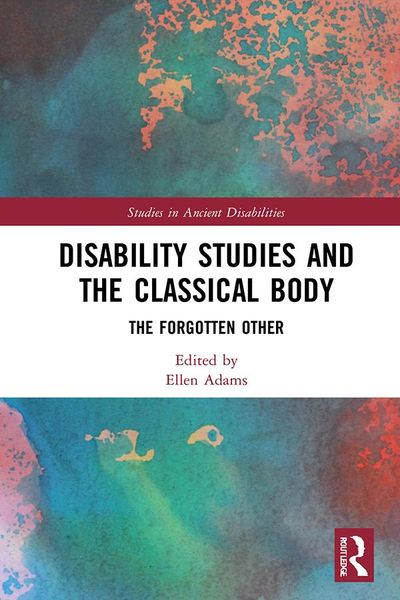
Disability Studies and the Classical Body The Forgotten Other
-
- Hardcover
- Taschenbuch
- eBook ausgewählt
-
Form:Einzelkauf Download
-
Sprache:Englisch
-
eBook Format:PDF
- ePUB 3 60,20 €
- PDF 60,20 € ausgewählt
60,20 €
inkl. gesetzl. MwSt.Beschreibung
Produktdetails
Format
Kopierschutz
Ja
Family Sharing
Nein
Text-to-Speech
Nein
Erscheinungsdatum
13.05.2021
Herausgeber
Ellen AdamsVerlag
Taylor & Francis eBooksSeitenzahl
294 (Printausgabe)
Auflage
1. Auflage
Sprache
Englisch
EAN
9781000381337
By triangulating the Greco-Roman world, classical reception, and disability studies, this book presents a range of approaches that reassess and reimagine traditional themes, from the narrative voice to sensory studies.
It argues that disability and disabled people are the 'forgotten other' of not just Classics, but also the Humanities more widely. Beyond the moral merits of rectifying this neglect, this book also provides a series of approaches and case studies that demonstrate the intellectual value of engaging with disability studies as classicists and exploring the classical legacy in the medical humanities. The book is presented in four parts: 'Communicating and controlling impairment, illness and pain'; 'Using, creating and showcasing disability supports and services'; 'Real bodies and retrieving senses: disability in the ritual record'; and 'Classical reception as the gateway between Classics and disability studies'. Chapters by scholars from different academic backgrounds are carefully paired in these sections in order to draw out further contrasts and nuances and produce a sum that is more than the parts. The volume also explores how the ancient world and its reception have influenced medical and disability literature, and how engagements with disabled people might lead to reinterpretations of familiar case studies, such as the Parthenon.
This book is primarily intended for classicists interested in disabled people in the Greco-Roman past and in how modern disability studies may offer insights into and reinterpretations of historic case studies. It will also be of interest to those working in medical humanities, sensory studies, and museum studies, and those exploring the wider tension between representation and reality in ancient contexts. As such, it will appeal to people in the wider Humanities who, notwithstanding any interest in how disabled people are represented in literature, art, and cinema, have had less engagement with disability studies and the lived experience of people with impairments.
Noch keine Bewertungen vorhanden
Verfassen Sie die erste Bewertung zu diesem Artikel
Helfen Sie anderen Kundinnen und Kunden durch Ihre Meinung.
Kurze Frage zu unserer Seite
Vielen Dank für Ihr Feedback
Wir nutzen Ihr Feedback, um unsere Produktseiten zu verbessern. Bitte haben Sie Verständnis, dass wir Ihnen keine Rückmeldung geben können. Falls Sie Kontakt mit uns aufnehmen möchten, können Sie sich aber gerne an unseren Kund*innenservice wenden.
zum Kundenservice