Gutscheinbedingungen

**Gültig bis 06.07.2026 auf fremdsprachige Bücher online auf thalia.at, in der Thalia App ab einem Mindestbestellwert von 30€ und in allen Thalia Buchhandlungen in Österreich. In den Buchhandlungen nur gültig auf lagernde Ware. Einzelne Artikel können ausgeschlossen sein. Ausgenommen sind preisgebundene Artikel & eBooks. Pro Einkauf einmal einlösbar. Nur gültig gegen Vorlage oder im Onlineshop hinterlegter Bonuscard. Infos zur Einlösung in der Buchhandlung sind auf der Bonuscard-Vorteilspreisseite zu finden. Click & Collect nur bei Onlinevorabzahlung möglich. Keine Einlösung bei Scan & Go-Bezahlung. Keine Barauszahlung. Nicht kombinierbar mit anderen Aktionen und Gutscheinen. Gutschein wird auf max. 500€ Bestellwert angerechnet. Nicht gültig für Versandkosten und Services.

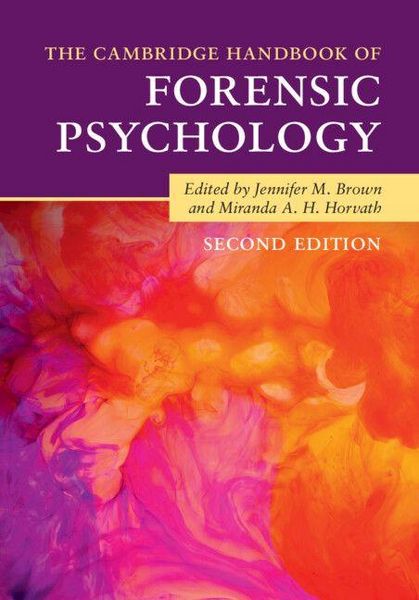
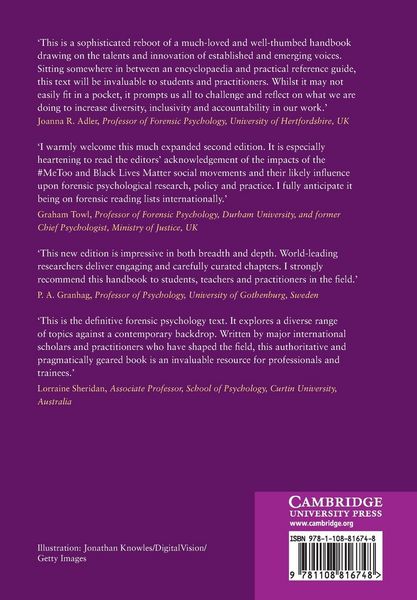
  • Produktbild: The Cambridge Handbook of Forensic Psychology
  • Produktbild: The Cambridge Handbook of Forensic Psychology

The Cambridge Handbook of Forensic Psychology

84,99 €

inkl. gesetzl. MwSt., Versandkostenfrei


Beschreibung

Produktdetails

Einband

Taschenbuch

Erscheinungsdatum

09.11.2021

Herausgeber

Brown Jennifer M. + weitere

Verlag

Cambridge Academic

Seitenzahl

944

Maße (L/B/H)

24,4/17/5,1 cm

Gewicht

1599 g

Sprache

Englisch

ISBN

978-1-108-81674-8

Beschreibung

Produktdetails

Einband

Taschenbuch

Erscheinungsdatum

09.11.2021

Herausgeber

Verlag

Cambridge Academic

Seitenzahl

944

Maße (L/B/H)

24,4/17/5,1 cm

Gewicht

1599 g

Sprache

Englisch

ISBN

978-1-108-81674-8

Herstelleradresse

Libri GmbH
Europaallee 1
36244 Bad Hersfeld
DE

Email: gpsr@libri.de

Noch keine Bewertungen vorhanden

Verfassen Sie die erste Bewertung zu diesem Artikel

Helfen Sie anderen Kundinnen und Kunden durch Ihre Meinung.

Kundinnen und Kunden meinen

Bewertungen (0)

Die Leseprobe wird geladen.
  • Produktbild: The Cambridge Handbook of Forensic Psychology
  • Produktbild: The Cambridge Handbook of Forensic Psychology
  • Preface; Forensic psychology: ten years on Jennifer M. Brown and Miranda A. H. Horvath; Part I. Psychological Underpinnings: 1.1 Cognitive theories of crime Clive R. Hollin; 1.2 Child and adolescent offending Elizabeth Paddock, Shihning Chou and Kevin Browne; 1.3 Investigative psychology C. Gabrielle Salfati; 1.4 Neurological theories Hope Kent, Huw Williams and James Tonks; 1.5 Personality Sean Hammond and Vincent Egan; 1.6 Theories of sexual offending Jacinta R. Cording and Tony Ward; 1.7 The psychology of violent behaviour Andrew Welsh; 1.8 Investigative decision-making Rebecca Howman, Marie Eyre and Laurence Alison; Part II. Psychology and Criminal Behaviour: 2.1 Current understandings of sex-based harassment and stalking perpetration Thomas E. Page and Adrian Scott; 2.2 The behaviour of sex offenders Kari Davies, Heather Flowe and Theresa Ferraz-da-Silva; 2.3 Intimate partner violence Elizabeth Gilchrist; 2.4 Acquisitive crime Helen Gavin; 2.5 Terrorism research: current issues and debates Margaret A. Wilson; 2.6 Online child sexual exploitation and abuse Ethel Quayle; 2.7 Arson Katarina Fritzon, Sarah Miller and Danielle Perks; 2.8 Serial killings and mass murder Andreas Kapardis and Sasha Reid; Part III. Assessment: 3.1 Credibility and investigative interviewing Mark Kebbell and Rebecca Milne; 3.2 Eyewitness testimony Geralda Odinot, Eva A. J. van Rosmalen, and Annelies Vredeveldt; 3.3 Psychopathic personality disorder David J. Cooke; 3.4 Forensic mental health assessments Derek Perkins and Susannah Hughes; 3.5 Intellectual disabilities and offending behaviour John L. Taylor and Ian Freckleton; 3.6 Head injury and offending Thomas M. McMillan; 3.7 Parole decision-making: contemporary practice and challenges Ralph C. Serin and Kaitlyn Wardrop; 3.8 Risk and dangerousness in adults Martin Rettenberger, Grant T. Harris, Marnie E. Rice and Reinhard Eher; Part IV. Interventions: 4.1 Forensic mental health interventions Emily Glorney; 4.2 Restorative justice: drawing from the old to develop new justice alternatives Mark Briskey; 4.3 Treatment of persons with sexual offence histories Kristina Shatokhina and Leigh Harkins; 4.4 Strength-based approaches to addiction recovery and desistance from crime: broadening the base for community engagement Steve Broome and David Best; 4.5 Victimology and victim interventions Sandra Walklate; 4.6 Interventions with violent offenders Devon L. L. Polaschek; 4.7 Women offenders Joanne Belknap and Jacqueline Mora Manzo; 4.8 Preventing delinquency and later criminal offending Brandon C. Welsh, David P. Farrington and Alexis Yohros; Part V. Civil Proceedings: 5.1 Court decisions about the upbringing of children Aoife Daly and Aisling Parkes; 5.2 Parenting Christine Puckering; 5.3 Immigration, asylum seekers and refugees Nora Honkala; 5.4 Occupational stress and traumatic stress Paula Brough, Amanda Biggs, Briana Brandon and Victoria Follette; 5.5 Capacity and consent in the criminal and civil contexts Ailbhe O'Loughlin; Part VI. Professional Practices: 6.1 Courtroom testimony in cases of disputed confessions Gisli H. Gudjonsson; 6.2 Evaluating offending behaviour programmes in prison and probation Helen Wakeling and Rosie Travers; 6.3 Working effectively with multicultural offenders in a clinical context Stephane Shepherd, Arran Rose and Mary Madu; 6.4 Professional training and accreditation Geraldine O'Hare, Andrew Day, Randy Otto and Laura Guy; 6.5 Ethics Simon Duff and James McGuire; 6.6 Forensic case formulation Leam A. Craig and Martin Rettenberger; 6.7 Staff supervision in forensic contexts Jason Davies.