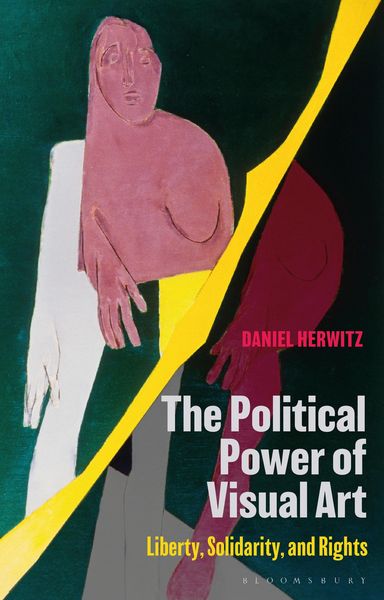
The Political Power of Visual Art Liberty, Solidarity, and Rights
-
- Einzelkauf Download ausgewählt
-
Sprache:Englisch
-
eBook Format:PDF
- PDF 27,30 € ausgewählt
- ePUB 27,30 €
27,30 €
inkl. gesetzl. MwSt.Beschreibung
Produktdetails
Format
Kopierschutz
Ja
Family Sharing
Nein
Text-to-Speech
Nein
Erscheinungsdatum
08.04.2021
Verlag
Bloomsbury eBooks UKSeitenzahl
216 (Printausgabe)
Auflage
1. Auflage
Sprache
Englisch
EAN
9781350182400
Visual art has a ubiquitous political cast today. But which politics? Daniel Herwitz seeks clarity on the various things meant by politics, and how we can evaluate their presumptions or aspirations in contemporary art.
Drawing on the work of William Kentridge, drenched in violence, race, and power, and the artworld immolations of Banksy, Herwitz's examples range from the NEA 4 and the question of offense-as-dissent, to the community driven work of George Gittoes, the identity politics of contemporary American art and (for contrast with the power of visual media) literature written in dialogue with truth commissions. He is interested in understanding art practices today in the light of two opposing inheritances: the avant-gardes and their politicization of the experimental art object, and 18th-century aesthetics, preaching the autonomy of the art object, which he interprets as the cultural compliment to modern liberalism. His historically-informed approach reveals how crucial this pair of legacies is to reading the tensions in voice and character of art today.
Driven by questions about the capacity of the visual medium to speak politically or acquire political agency, this book is for anyone working in aesthetics or the art world concerned with the fate of cultural politics in a world spinning out of control, yet within reach of emancipation.
Drawing on the work of William Kentridge, drenched in violence, race, and power, and the artworld immolations of Banksy, Herwitz's examples range from the NEA 4 and the question of offense-as-dissent, to the community driven work of George Gittoes, the identity politics of contemporary American art and (for contrast with the power of visual media) literature written in dialogue with truth commissions. He is interested in understanding art practices today in the light of two opposing inheritances: the avant-gardes and their politicization of the experimental art object, and 18th-century aesthetics, preaching the autonomy of the art object, which he interprets as the cultural compliment to modern liberalism. His historically-informed approach reveals how crucial this pair of legacies is to reading the tensions in voice and character of art today.
Driven by questions about the capacity of the visual medium to speak politically or acquire political agency, this book is for anyone working in aesthetics or the art world concerned with the fate of cultural politics in a world spinning out of control, yet within reach of emancipation.
Noch keine Bewertungen vorhanden
Verfassen Sie die erste Bewertung zu diesem Artikel
Helfen Sie anderen Kundinnen und Kunden durch Ihre Meinung.
Kurze Frage zu unserer Seite
Vielen Dank für Ihr Feedback
Wir nutzen Ihr Feedback, um unsere Produktseiten zu verbessern. Bitte haben Sie Verständnis, dass wir Ihnen keine Rückmeldung geben können. Falls Sie Kontakt mit uns aufnehmen möchten, können Sie sich aber gerne an unseren Kund*innenservice wenden.
zum Kundenservice