Gutscheinbedingungen

**Gültig bis 06.07.2026 auf fremdsprachige Bücher online auf thalia.at, in der Thalia App ab einem Mindestbestellwert von 30€ und in allen Thalia Buchhandlungen in Österreich. In den Buchhandlungen nur gültig auf lagernde Ware. Einzelne Artikel können ausgeschlossen sein. Ausgenommen sind preisgebundene Artikel & eBooks. Pro Einkauf einmal einlösbar. Nur gültig gegen Vorlage oder im Onlineshop hinterlegter Bonuscard. Infos zur Einlösung in der Buchhandlung sind auf der Bonuscard-Vorteilspreisseite zu finden. Click & Collect nur bei Onlinevorabzahlung möglich. Keine Einlösung bei Scan & Go-Bezahlung. Keine Barauszahlung. Nicht kombinierbar mit anderen Aktionen und Gutscheinen. Gutschein wird auf max. 500€ Bestellwert angerechnet. Nicht gültig für Versandkosten und Services.

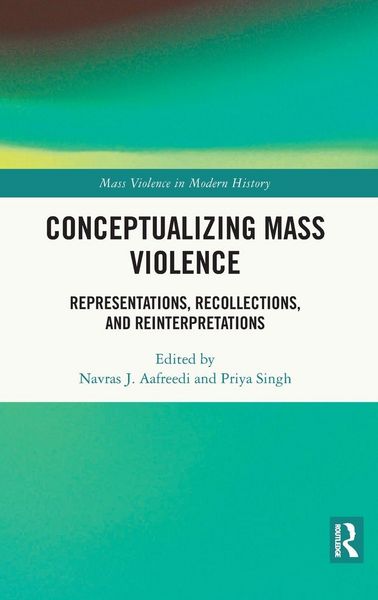
Produktbild: Conceptualizing Mass Violence

Conceptualizing Mass Violence Representations, Recollections, and Reinterpretations

236,99 €

inkl. gesetzl. MwSt., Versandkostenfrei


Beschreibung

Produktdetails

Einband

Gebundene Ausgabe

Erscheinungsdatum

14.05.2021

Abbildungen

schwarz-weiss Illustrationen, Raster, schwarz-weiss, Zeichnungen, schwarz-weiss, Tabellen, schwarz-weiss

Herausgeber

Navras J. Aafreedi + weitere

Verlag

Taylor and Francis

Seitenzahl

268

Maße (L/B/H)

24/16,1/2 cm

Gewicht

520 g

Sprache

Englisch

ISBN

978-0-367-69997-0

Beschreibung

Produktdetails

Einband

Gebundene Ausgabe

Erscheinungsdatum

14.05.2021

Abbildungen

schwarz-weiss Illustrationen, Raster, schwarz-weiss, Zeichnungen, schwarz-weiss, Tabellen, schwarz-weiss

Herausgeber

Verlag

Taylor and Francis

Seitenzahl

268

Maße (L/B/H)

24/16,1/2 cm

Gewicht

520 g

Sprache

Englisch

ISBN

978-0-367-69997-0

Herstelleradresse

Libri GmbH
Europaallee 1
36244 Bad Hersfeld
DE

Email: gpsr@libri.de

Noch keine Bewertungen vorhanden

Verfassen Sie die erste Bewertung zu diesem Artikel

Helfen Sie anderen Kundinnen und Kunden durch Ihre Meinung.

Kundinnen und Kunden meinen

Bewertungen (0)

Die Leseprobe wird geladen.
  • Produktbild: Conceptualizing Mass Violence
  • Introduction 1. Reading Mass Violence Part 1: Narratives 2. Violence and Violations: Betrayal Narratives in Atrocity Accounts 3. Holocaust survivors in Mexico: Intersecting and Conflicting Narratives of Open Doors, Welcoming Society and Personal Hardships 4. Historical Narratives, the Perpetuation of Trauma, and the Work of Vamık Volkan Part 2: Revisionism & Reconstruction 5. Holocaust, Propaganda, and the Distortion of History in the Former Soviet Space 6. The Genocide of 1971 in Bangladesh: Lessons from History 7. Holocaust Denial and Minimization in the Indian Urdu Press Part 3: Education 8. Holocaust Studies in Australia: Moving from family and community remembrance to human rights and prevention of mass violence 9. New Developments in Holocaust & Genocide Education in South Africa: : The case study of the Johannesburg Holocaust & Genocide Centre 10. A Case of Naive Normalization? India's Misbeliefs about Hitler and Schooling on the Holocaust 11. Holocaust Education in India and its Challenges Part 4: Reflections 12. Sonderkommando Photo 4 and the Portrayal of the Invisible 13. Overcoming "Intimate Hatreds:" Reflections on Violence against Yazidis 14. The State and its Margins: Changing Notions of Marginality in Turkey Part 5: Trauma 15. Pinochet's Dictatorship and Reflections on Trauma in Chile: How much have we learned in terms of human rights? Part 6: Memorialization 16. ‘Grassroots’ Holocaust Museums: Revealing Untold Stories 17. Fabric, Food, Song: The Quiet Continuities in Bengali Life Seventy Years After Partition Part 7: Literature 18. The Failure of Secular Publics and the Rise of the Jewish Religious Public in Nathan Englander’s For the Relief of Unbearable Urges Part 8: Dialogue & Reconciliation 19.The 2002 Alexandria Summit and Its Follow Up