Gutscheinbedingungen

**Gültig bis 25.06.2026 auf fremdsprachige Bücher online auf thalia.at und in der Thalia App. Einzelne Artikel können ausgeschlossen sein. Ausgenommen sind preisgebundene Artikel & eBooks. Pro Einkauf einmal einlösbar. Click & Collect nur bei Onlinevorabzahlung möglich. Keine Barauszahlung. Nicht kombinierbar mit anderen Aktionen und Gutscheinen. Gutschein wird auf max. 500€ Bestellwert angerechnet. Nicht gültig für Geschenkkarten, Versandkosten und Services.

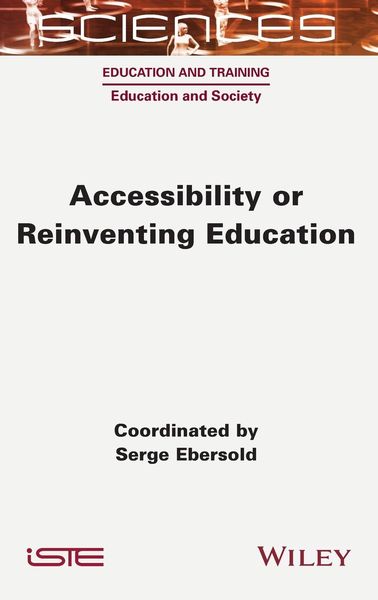
Produktbild: Accessibility or Reinventing Education

Accessibility or Reinventing Education

199,99 €

inkl. gesetzl. MwSt., Versandkostenfrei


Beschreibung

Produktdetails

Einband

Gebundene Ausgabe

Erscheinungsdatum

13.04.2021

Herausgeber

Serge Ebersold

Verlag

John Wiley & Sons

Seitenzahl

256

Maße (L/B/H)

24/16,1/1,8 cm

Gewicht

554 g

Auflage

1. Auflage

Sprache

Englisch

ISBN

978-1-78945-011-8

Beschreibung

Produktdetails

Einband

Gebundene Ausgabe

Erscheinungsdatum

13.04.2021

Herausgeber

Serge Ebersold

Verlag

John Wiley & Sons

Seitenzahl

256

Maße (L/B/H)

24/16,1/1,8 cm

Gewicht

554 g

Auflage

1. Auflage

Sprache

Englisch

ISBN

978-1-78945-011-8

Herstelleradresse

Libri GmbH
Europaallee 1
36244 Bad Hersfeld
DE

Email: gpsr@libri.de

Kundinnen und Kunden meinen

0 Bewertungen

Informationen zu Bewertungen

Zur Abgabe einer Bewertung ist eine Anmeldung im Konto notwendig. Die Authentizität der Bewertungen wird von uns nicht überprüft. Wir behalten uns vor, Bewertungstexte, die unseren Richtlinien widersprechen, entsprechend zu kürzen oder zu löschen.

Die Bewertungen sind nach Format, Anzahl Sterne und Datum sortiert.

Verfassen Sie die erste Bewertung zu diesem Artikel

Helfen Sie anderen Kund*innen durch Ihre Meinung

Kundinnen und Kunden meinen

0 Bewertungen filtern

Weitere Artikel finden Sie in

Die Leseprobe wird geladen.
  • Produktbild: Accessibility or Reinventing Education
  • Introduction xi
    Serge EBERSOLD

    Part 1. Accessibility as a Societal Imperative 1

    Chapter 1. The Accessibility Imperative: Outlines and Implications 3
    Serge EBERSOLD

    1.1. Introduction 3

    1.2. Accessibility, or school as a social protection vector 4

    1.3. Accessibility, an imperative focused on the ergonomization of practices 7

    1.3.1. Preventing vulnerabilities through a universal approach

    to accessibility 8

    1.3.2. An integrated approach to accessibility targeting the fight against educational failure 9

    1.3.3. A corrective approach to accessibility aimed at restoring school legitimacy 11

    1.4. An ergonomization of practices related to the fight against institutional discrimination 12

    1.5. Accessibility, or the advent of new forms of normativity 13

    1.6. Conclusion 15

    1.7. References 16

    Chapter 2. Inclusion and Accessibility: 50 Years of Change 23
    Peter EVANS

    2.1. Introduction 23

    2.2. Developing a continuum of support for promoting accessible learning environments 25

    2.3. Developing accessible learning environments; results of international case studies 30

    2.3.1. Recognizing and planning for diversity 30

    2.3.2. Using evaluation for improvement 31

    2.3.3. Professional development of staff 32

    2.3.4. External support services 33

    2.3.5. Within-school services 34

    2.3.6. Co-operation between schools 34

    2.3.7. Parental and community involvement 35

    2.3.8. Whole-school development organization and management strategies 36

    2.3.9. Curriculum development 36

    2.3.10. Classroom organization 37

    2.4. Promoting accountable education systems supporting accessible learning environments 38

    2.5. Conclusion 40

    2.6. References 41

    Chapter 3. Accessibility Requirements and Evaluation Policies 45
    Nathalie MONS

    3.1. Introduction 45

    3.2. New governance of education systems based on performance and social justice 47

    3.3. Evaluation: intellectual movements and political discourse 51

    3.4. Assessment policies and the accessibility imperative 56

    3.5. Conclusion 57

    3.6. References 58

    Part 2. How Do Schools Meet the Accessibility Imperative? 61

    Chapter 4. Educational Accessibility: A Catalyst for Innovative Practices 63
    Michele MAINARDI

    4.1. Introduction 63

    4.2. The heuristics of innovative teaching practices 64

    4.2.1. The catalytic potential of innovative forces and practices 66

    4.3. School environments and the pedagogical imperative of accessibility 67

    4.3.1. The grouping of learners 67

    4.3.2. The grouping of professionals 69

    4.3.3. The planning of learning and its collocation over time 70

    4.3.4. Pedagogies and assessment practices 73

    4.4. Collaboration and accessibility: beyond "mainstream" and "special" 74

    4.4.1. An emergency condition 76

    4.5. References 77

    Chapter 5. School Form and Pedagogical and Didactic Accessibilization 81
    Sylviane FEUILLADIEU, Anne GOMBERT and Hervé BENOIT

    5.1. Introduction 81

    5.2. Characteristics of the school form 84

    5.3. Practical ways of making school situations more accessible 87

    5.3.1. Study aid gestures 87

    5.3.2. The use of digital tools 89

    5.3.3. Pedagogical and didactic adaptations 91

    5.4. Elements for reflection on a model of analysis of teachers' gestures and postures with a view to accessibilization 94

    5.5. Conclusion 96

    5.6. References 96

    Chapter 6. The Contribution of ICT to Accessible Learning Environments 99
    Harald WEBER

    6.1. Introduction 99

    6.2. Clarifications on the terminology 100

    6.3. ICT to develop accessible learning environments - more than a purchasing decision 102

    6.4. Embedding ICT in educational organizations to promote accessible learning environments 103

    6.5. The transformation of teaching 108

    6.6. Learners becoming accountable for their learning 112

    6.7. Conclusion 114

    6.8. References 114

    Chapter 7. The Reconfiguration of the Teaching Profession within the Dynamics of Accessibility 117
    Éric PLAISANCE

    7.1. Introduction 117

    7.2. From the "special" professional to the educational accessibility professional 118

    7.3. A new professionalism that reconfigures teaching legitimacy 120

    7.4. New dimensions of the profession 125

    7.5. Teachers' requests and concerns 127

    7.6. Conclusion: new issues, new questions 129

    7.7. References 130

    Part 3. Accessibility, or Reconfiguration of Academic Difficulties 133

    Chapter 8. Modes of Accessibilization and the Redefinition of Schooling in Accessibility 135
    Daniel FRANDJI

    8.1. Introduction 135

    8.2. Accessibility as a source of democratization through compensatory policies? 137

    8.3. Accessibility as a source of efficiency and equity, in the name of combating exclusion? 142

    8.4. Accessibility as a source of inclusion, to maximize opportunities? 145

    8.4.1. A profusion of categories and devices 145

    8.4.2. An individualizing and essentializing reading of school productions 147

    8.4.3. Transformation of the curriculum and school culture 149

    8.5. Conclusion 150

    8.6. References 151

    Chapter 9. Externalized Teaching Units: A Tool for Making School Institutions More Accessible? 155
    Hugo DUPONT

    9.1. Introduction 155

    9.2. Making the school environment more accessible through subcontracting 157

    9.3. Hierarchical access to the facility 164

    9.4. Conclusion 171

    9.5. References 172

    Chapter 10. Social Figures of Allophony, Approaches to Accessibility and Social Inequalities 175
    Maïtena ARMAGNAGUE-ROUCHER

    10.1. Introduction 175

    10.2. Two approaches to accessibility: a dual staging of school legitimacy 178

    10.3. The principles of justice underlying the various approaches to school accessibility 185

    10.4. Conclusion: accessibilization strategies as a source of educational inequalities 191

    10.5. References 192

    Chapter 11. The Grammar of Accessibility 195
    Serge EBERSOLD

    11.1. Introduction 195

    11.2. Access as social visibility 196

    11.2.1. Access as "taking part" 196

    11.2.2. Access as "being part" 197

    11.2.3. Access as "acting on" 198

    11.2.4. Access as a "sense of existing" 200

    11.3. Accessibility as social legibility 201

    11.3.1. A finalist approach to the concept of accessibility 202

    11.3.2. A procedural approach to the concept of accessibility 203

    11.3.3. An ergonomic approach to the concept of accessibility 205

    11.4. The concept of accessibilization as social legitimacy 207

    11.4.1. Accessibilization refers to the institutional legitimization of facilities 208

    11.4.2. Accessibilization builds upon the legitimization of the schooling process 209

    11.4.3. Accessibilization results from the driving force of conventions 211

    11.4.4. Accessibilization is correlated with agents' art of creating 212

    11.5. Conclusion 214

    11.6. References 215

    List of Authors 219

    Index 221