KI-Beratung Beta

Gutscheinbedingungen

**Gültig am 27.11.2026 auf Spielzeug, Schreibwaren, Filme, Geschenke & Trends, Musik, tolino eReader & Zubehör, Hörbücher und Hörbuch-Downloads, nicht preisgebundene Bücher und Kalender online auf thalia.at und in der Thalia App. Einzelne Artikel können ausgeschlossen sein. Aufgrund der Buchpreisbindung sind deutschsprachige Bücher und eBooks ausgenommen. Zusätzlich ausgenommen sind Abos & Flatrates, Games, Geschenkkarten/-boxen, Shelfies, Software, Zeitschriften sowie einzelne Artikel von tonies®. Pro Einkauf einmal einlösbar. Click & Collect nur bei Onlinevorabzahlung möglich. Keine Barauszahlung. Nicht kombinierbar mit anderen Aktionen und Gutscheinen. Gutschein wird auf max. 500€ Bestellwert angerechnet. Nicht gültig für Versandkosten und Services.

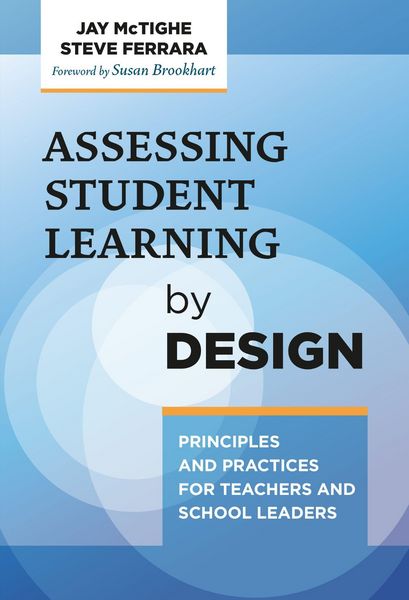
Produktbild: Assessing Student Learning by Design

Assessing Student Learning by Design Principles and Practices for Teachers and School Leaders

29,99 €

inkl. gesetzl. MwSt., zzgl. Versandkosten


  • Kostenlose Lieferung ab 30 € Einkaufswert
  • Versandkostenfrei für Bonuscard-Kund*innen

Beschreibung

How can we help teachers use classroom assessments to gather appropriate evidence for all valued learning goals, and to use those assessments not just to measure learning but to promote it? This book provides an answer in a practical, proven, and principled Assessment Planning Framework that moves away...

Beschreibung

How can we help teachers use classroom assessments to gather appropriate evidence for all valued learning goals, and to use those assessments not just to measure learning but to promote it? This book provides an answer in a practical, proven, and principled Assessment Planning Framework that moves away from solely multiple-choice tests toward a wide range of approaches to classroom assessment activities, including performance-based assessments. The Framework examines four different types of learning goals, considers various purposes and audiences for assessment information, reviews five categories of classroom assessment methods, and presents options for communicating actionable results. To the authors, the primary purpose of classroom assessment is to inform teaching and learning, rather than simply to assign grades. This concise resource will be a reliable go-to reference for teachers, school leaders, mentors, and coaches in guiding classroom assessment practices and understanding their underlying principles.

Book Features:

  • Builds on the classic book Understanding by Design, written by Grant Wiggins and Jay McTighe.
  • Offers a practical, nontechnical presentation appropriate for teacher preparation and busy practitioners (K-16).
  • Explores different purposes for, and methods of, classroom assessment and grading.
  • Addresses assessment of academic standards as well as transdisciplinary outcomes, such as 21st-century skills.
  • Describes the principles and practices underlying standards-based grading.

Produktdetails

Einband

Taschenbuch

Erscheinungsdatum

16.04.2021

Verlag Teachers College Press
Seitenzahl

112

Produktdetails

Einband

Taschenbuch

Erscheinungsdatum

16.04.2021

Verlag Teachers College Press
Seitenzahl

112

Maße (L/B/H)

22,7/15,7/1 cm

Gewicht

167 g

Sprache

Englisch

ISBN

978-0-8077-6540-1

Herstelleradresse

Libri GmbH
Europaallee 1
36244 Bad Hersfeld
DE

Email: gpsr@libri.de

Noch keine Bewertungen vorhanden

Verfassen Sie die erste Bewertung zu diesem Artikel

Helfen Sie anderen Kundinnen und Kunden durch Ihre Meinung.

Kundinnen und Kunden meinen

Bewertungen (0)

  • Produktbild: Assessing Student Learning by Design
    • Contents (Tentative)
    • Foreword
    • Introduction
    • 1. Principles of Effective Classroom Assessment
    • Principle #1-Assessment Should Serve Learning
    • Principle #2-Multiple Measures Provide More Evidence
    • Principle #3-Assessments Should Align with Goals
    • Principle #4-Assessments Should Measure What Matters
    • Principle #5-Assessments Should Be Fair
    • Conclusion
    • 2. An Assessment Planning Framework
    • Begin with the End in Mind
    • Classroom Assessment and National Content Standards
    • Purpose and Audience Matter
    • Classroom Assessment and Statewide Accountability Testing
    • Conclusion
    • 3. Assessment Methods
    • Selected Response
    • Brief Constructed Response
    • Performance-Based Assessments
    • Process-focused Assessments
    • Conclusion
    • 4. Evaluating Student Performance
    • Criterion Lists
    • Rubrics
    • Evaluation Roles
    • Conclusion
    • 5. Communicating Assessment Results
    • Communication Methods
    • Grading Principles and Practices
    • Formative Assessment and Feedback
    • Conclusion
    • 6. Classroom Assessment Strategies for Teachers
    • Practice 1. Use assessments to frame learning goals
    • Practice 2: Diagnose before you start teaching.
    • Practice 3: Create an authentic context for performance-based assessments
    • Practice 4: Show evaluative criteria in the beginning
    • Practice 5: Provide illustrative models
    • Practice 6: Offer appropriate choices
    • Practice 7: Provide ongoing feedback
    • Practice 8: Encourage self-assessment and goal setting
    • Conclusion
    • 7. Tips for School Leaders
    • 1. Assess the Staff
    • 2. Conduct a School Assessment Audit
    • 3. Offer Targeted Professional Development
    • 4. Share and Discuss Assessment-Related Articles
    • 5. Develop or Adopt Principles of Assessment and Grading
    • 6. Share Successful Practices
    • 7. Schedule Peer Visitations
    • 8. Design Assessments Collaboratively
    • 9. Examine Assessment Results in Teams
    • 10. Discourage Excessive Test Prep
    • 11. Organize a Voluntary Book Study
    • Conclusion
    • Glossary of Assessment Terms
    • References
    • Index
    • About the Authors