KI-Beratung Beta

  • Produktbild: The Political Economy of the Eurozone in Central and Eastern Europe
  • Produktbild: The Political Economy of the Eurozone in Central and Eastern Europe

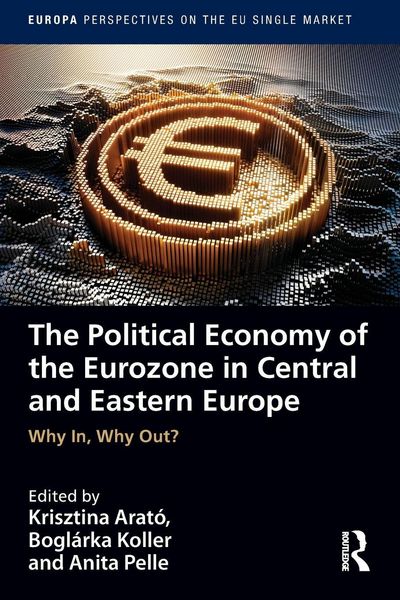
The Political Economy of the Eurozone in Central and Eastern Europe Why In, Why Out?

54,99 €

inkl. gesetzl. MwSt., Versandkostenfrei


Beschreibung

The idea for this volume came from the enigma that some Central and Eastern European (CEE) European Union (EU) member states have been keen to join the Eurozone while others have shown persistent reluctance. Moreover, the attitudes towards joining have seemingly not correlated with either the level of...

Beschreibung

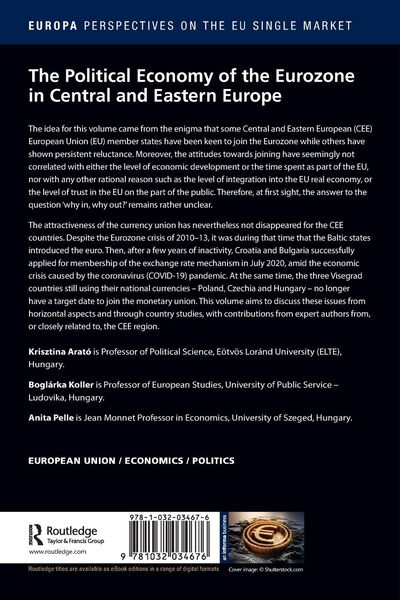
The idea for this volume came from the enigma that some Central and Eastern European (CEE) European Union (EU) member states have been keen to join the Eurozone while others have shown persistent reluctance. Moreover, the attitudes towards joining have seemingly not correlated with either the level of economic development or the time spent as part of the EU, nor with any other rational reason such as the level of integration into the EU real economy, or the level of trust in the EU on the part of the public. Therefore, at first sight, the answer to the question 'why in, why out?' remains rather unclear.

The attractiveness of the currency union has nevertheless not disappeared for the CEE countries. Despite the Eurozone crisis of 2010-13, it was during that time that the Baltic states introduced the euro. Then, after a few years of inactivity, Croatia and Bulgaria successfully applied for membership of the exchange rate mechanism in July 2020, amid the economic crisis caused by the coronavirus (COVID-19) pandemic. At the same time, the three Visegrad countries still using their national currencies - Poland, Czechia and Hungary - no longer have a target date to join the monetary union. This volume aims to discuss these issues from horizontal aspects and through country studies, with contributions from expert authors from, or closely related to, the CEE region.

Produktdetails

Einband

Taschenbuch

Erscheinungsdatum

01.07.2021

Abbildungen

48 SW-Abb., 48 SW-Fotos, 17 Tabellen

Herausgeber Krisztina Arató + weitere

Produktdetails

Einband

Taschenbuch

Erscheinungsdatum

01.07.2021

Abbildungen

48 SW-Abb., 48 SW-Fotos, 17 Tabellen

Herausgeber
Verlag Taylor & Francis
Seitenzahl

310

Maße (L/B/H)

23,4/15,6/1,7 cm

Gewicht

474 g

Sprache

Englisch

ISBN

978-1-03-203467-6

Herstelleradresse

Libri GmbH
Europaallee 1
36244 Bad Hersfeld
DE

Email: gpsr@libri.de

Noch keine Bewertungen vorhanden

Verfassen Sie die erste Bewertung zu diesem Artikel

Helfen Sie anderen Kundinnen und Kunden durch Ihre Meinung.

Kundinnen und Kunden meinen

Bewertungen (0)

Die Leseprobe wird geladen.
  • Produktbild: The Political Economy of the Eurozone in Central and Eastern Europe
  • Produktbild: The Political Economy of the Eurozone in Central and Eastern Europe
  • Part I: Horizontal Issues

    1 Seventeen Years in the European Union: The Questions of Monetary Integration in Central and Eastern Europe

    Krisztina Arató, Boglárka Koller and Anita Pelle

    2 International Political Economy and Eurozone Membership of Post-transition Economies: A Theoretical Framework

    Anita Pelle

    3 Eurozone Membership, Economic and Political Gains and Losses

    Christian Schweiger

    4 Are Democratic Backsliding and Staying out of the Eurozone Interconnected?

    Krisztina Arató and István Benedek

    5 The Euro and the Collective Identities of Central and Eastern European Nationals

    Boglárka Koller

    6 The Global and the Eurozone Crises and their Effects on Central and Eastern Europe's Economic Performance

    Gabriella Tabajdi and Marcell Zoltán Végh

    7 Companies in Central and Eastern Europe and Eurozone Membership: An Attempt at a Microeconomic Analysis

    Marta Götz and Barbara Jankowska

    8 The Banking Union and the Central and Eastern Europe Countries

    Katalin Mérö

    Part II: Country Studies

    9 Eurozone Integrational Project Assessment: Economic Lessons from Slovenia and Croatia

    Maks Tajnikar, Petra Dosenovic Bonca and Ivan Rubinic

    10 Slovakia in the Eurozone: Tatra Tiger or Mafia State inside the Elite Club?

    Zsolt Gál and Darina Malová

    11 Poland and Euro Adoption: From Integration-driven Enthusiasm to Post-pandemic Uncertainty

    Jakub Borowski

    12 The Hungarian Eurolessness: From Eulogy to Neutrality and Beyond

    Olivér Kovács

    13 The Czech Republic and the Euro: Not Now, or Not Ever?

    Vladan Hodulák and Zdenek Sychra

    14 The Baltic States and the Eurozone

    Magnus Feldmann and Vytautas Kuokstis

    15 A Tale of Two Peripheries: The Euro Accession in Bulgaria and Romania

    Cornel Ban and Clara Volintiru

    16 Central and Eastern Europe and the Euro in the 2020s: What is on the Horizon?

    Krisztina Arató, Boglárka Koller and Anita Pelle