Gutscheinbedingungen

**Gültig bis 06.07.2026 auf fremdsprachige Bücher online auf thalia.at, in der Thalia App ab einem Mindestbestellwert von 30€ und in allen Thalia Buchhandlungen in Österreich. In den Buchhandlungen nur gültig auf lagernde Ware. Einzelne Artikel können ausgeschlossen sein. Ausgenommen sind preisgebundene Artikel & eBooks. Pro Einkauf einmal einlösbar. Nur gültig gegen Vorlage oder im Onlineshop hinterlegter Bonuscard. Infos zur Einlösung in der Buchhandlung sind auf der Bonuscard-Vorteilspreisseite zu finden. Click & Collect nur bei Onlinevorabzahlung möglich. Keine Einlösung bei Scan & Go-Bezahlung. Keine Barauszahlung. Nicht kombinierbar mit anderen Aktionen und Gutscheinen. Gutschein wird auf max. 500€ Bestellwert angerechnet. Nicht gültig für Versandkosten und Services.

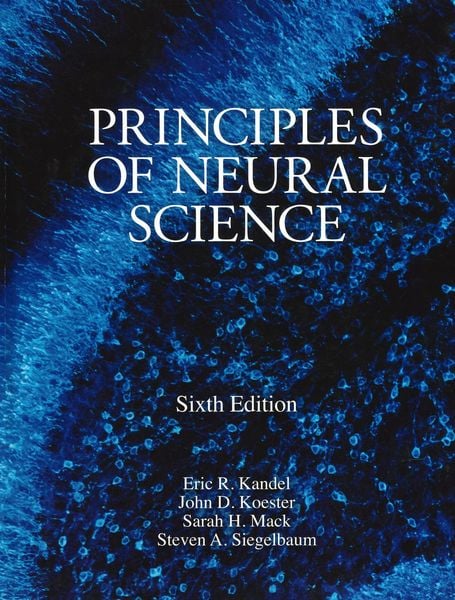
Produktbild: Principles of Neural Science, Sixth Edition

Principles of Neural Science, Sixth Edition 6th ed

201,99 €

inkl. gesetzl. MwSt., Versandkostenfrei


Beschreibung

Produktdetails

Verkaufsrang

23320

Einband

Taschenbuch

Erscheinungsdatum

12.04.2021

Abbildungen

Illustrationen, nicht spezifiziert

Verlag

Mcgraw Hill Higher Education

Seitenzahl

1696

Maße (L/B/H)

28,3/22/8 cm

Gewicht

3722 g

Auflage

6. Auflage

Sprache

Englisch

ISBN

978-1-259-64223-4

Beschreibung

Produktdetails

Verkaufsrang

23320

Einband

Taschenbuch

Erscheinungsdatum

12.04.2021

Abbildungen

Illustrationen, nicht spezifiziert

Verlag

Mcgraw Hill Higher Education

Seitenzahl

1696

Maße (L/B/H)

28,3/22/8 cm

Gewicht

3722 g

Auflage

6. Auflage

Sprache

Englisch

ISBN

978-1-259-64223-4

Herstelleradresse

Libri GmbH
Europaallee 1
36244 Bad Hersfeld
DE

Email: gpsr@libri.de

Noch keine Bewertungen vorhanden

Verfassen Sie die erste Bewertung zu diesem Artikel

Helfen Sie anderen Kundinnen und Kunden durch Ihre Meinung.

Kundinnen und Kunden meinen

Bewertungen (0)

  • Produktbild: Principles of Neural Science, Sixth Edition
  • Part I: Overall Perspective
    Chapter 1: The Brain and Behavior
    Chapter 2: Genes and Behavior
    Chapter 3: Nerve Cells, Neural Circuitry, and Behavior
    Chapter 4: The Neuroanatomical Bases by Which Neural Circuits Mediate Behavior
    Chapter 5: The Computational Bases of Neural Circuits That Mediate Behavior
    Chapter 6: Imaging and Behavior

    Part II: Cell and Molecular Biology of Cells of the Nervous System
    Chapter 7: The Cells of the Nervous System
    Chapter 8: Ion Channels
    Chapter 9: Membrane Potential and the Passive Electrical Properties of the Neuron
    Chapter 10: Propagated Signaling: The Action Potential

    Part III: Synaptic Transmission
    Chapter 11: Overview of Synaptic Transmission
    Chapter 12: Directly Gated Transmission: The Nerve-Muscle Synapse
    Chapter 13: Synaptic Integration in the Central Nervous System
    Chapter 14: Modulation of Synaptic Transmission and Neuronal Excitability: Second Messengers
    Chapter 15: Transmitter Release
    Chapter 16: Neurotransmitters

    Part IV: Perception
    Chapter 17: Sensory Coding
    Chapter 18: Receptors of the Somatosensory System
    Chapter 19: Touch
    Chapter 20: Pain
    Chapter 21: The Constructive Nature of Visual Processing
    Chapter 22: Low-Level Visual Processing: The Retina
    Chapter 23: Intermediate-Level Visual Processing and Visual Primitives
    Chapter 24: High-Level Visual Processing: From Vision to Cognition
    Chapter 25: Visual Processing for Attention and Action
    Chapter 26: Auditory Processing by the Cochlea
    Chapter 27: The Vestibular System
    Chapter 28: Auditory Processing by the Central Nervous System
    Chapter 29: Smell and Taste: The Chemical Senses

    Part V: Movement
    Chapter 30: Principles of Sensorimotor Control
    Chapter 31: The Motor Unit and Muscle Action
    Chapter 32: Sensory-Motor Integration in the Spinal Cord
    Chapter 33: Locomotion
    Chapter 34: Voluntary Movement: Motor Cortices
    Chapter 35: The Control of Gaze
    Chapter 36: Posture
    Chapter 37: The Cerebellum
    Chapter 38: The Basal Ganglia
    Chapter 39: Brain-Machine Interfaces

    Part VI: The Biology of Emotion, Motivation, and Homeostasis
    Chapter 40: The Brain Stem
    Chapter 41: The Hypothalamus: Autonomic, Hormonal, and Behavioral Control of Survival
    Chapter 42: Emotion
    Chapter 43: Motivation, Reward, and Addictive States
    Chapter 44: Sleep and Wakefulness

    Part VII: Development and the Emergence of Behavior
    Chapter 45: Patterning the Nervous System
    Chapter 46: Differentiation and Survival of Nerve Cells
    Chapter 47: The Growth and Guidance of Axons
    Chapter 48: Formation and Elimination of Synapses
    Chapter 49: Experience and the Refinement of Synaptic Connections
    Chapter 50: Repairing the Damaged Brain
    Chapter 51: Sexual Differentiation of the Nervous System

    Part VIII: Learning, Memory, Language and Cognition
    Chapter 52: Learning and Memory
    Chapter 53: Cellular Mechanisms of Implicit Memory Storage and the Biological Basis of Individuality
    Chapter 54: The Hippocampus and the Neural Basis of Explicit Memory Storage
    Chapter 55: Language
    Chapter 56: Decision-Making and Consciousness

    Part IX: Diseases of the Nervous System
    Chapter 57: Diseases of the Peripheral Nerve and Motor Unit
    Chapter 58: Seizures and Epilepsy
    Chapter 59: Disorders of Conscious and Unconscious Mental Processes
    Chapter 60: Disorders of Thought and Volition in Schizophrenia
    Chapter 61: Disorders of Mood and Anxiety
    Chapter 62: Disorders Affecting Social Cognition: Autism Spectrum Disorder
    Chapter 63: Genetic Mechanisms in Neurodegenerative Diseases of the Nervous System
    Chapter 64: The Aging Brain